Hey everyone. During my journey to understand the flow of the Fineract
project, I found the following videos which helped me to figure out
multiple things, and found it useful to share, if it would help anyone.
Modularizing Fineract <https://youtu.be/8qp3zQGh5s4>
Monolith to Microservices: Modularizing Fineract 1.x
<https://youtu.be/fn9uhpOWrHk>
Expanding Fineract capabilities <https://youtu.be/sfp7ox3wMKk>
I took some bullet points here as a summary, but for sure the videos are
much more valuable.


   - @aleksvidakovic is the release manager of Fineract and he contributes
   with frequent electricity outages (No excuses for you xD)
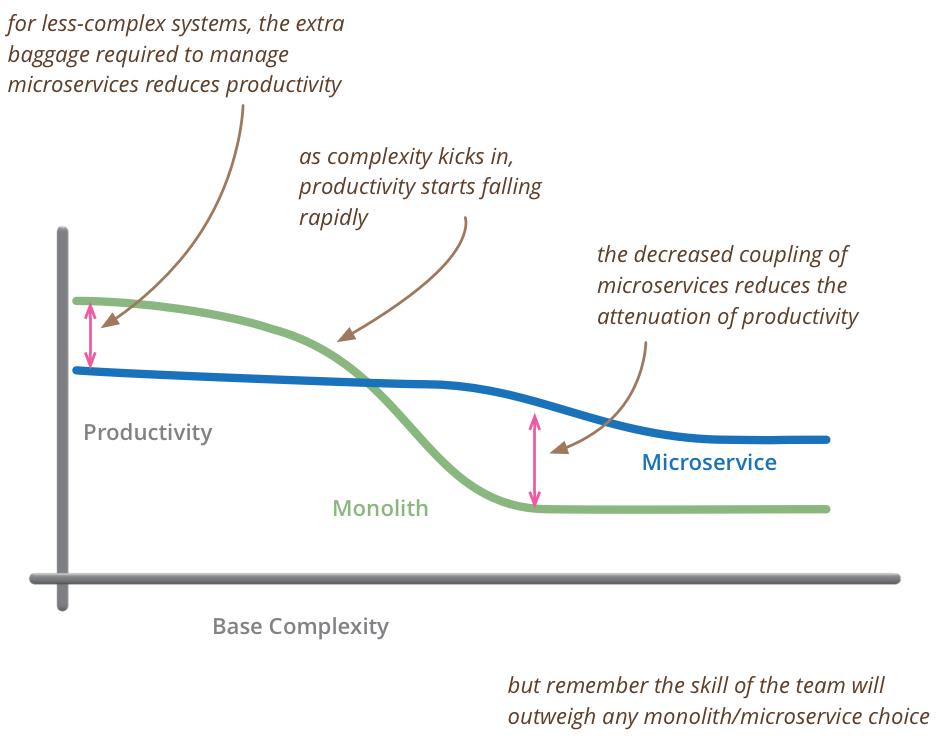
   - After community growth and time passes, things get more complicated
   with monolithic architecture (Loan.java exceeded 7000 LOC)
   - For that, the need for modularity and separation comes into the scene,
   check this Picture
   <https://martinfowler.com/bliki/images/microservice-verdict/productivity.png>
   .
   - The flow of the application goes as follows:
      - Requests are sent from the client to the Fineract server.
      - API layer (RESTful APIs developed with JAX-RS) receives the request
      - When receiving PUT or POST requests the attached JSON is stored as
      a string blob and is converted manually with GSON library to Java POJO.
      - A portion of the requests are translated into commands.
      - The commands are related to CQRS pattern for separation between
      Reads & Writes. (e.g. GLAccountReadPlatformService and
      GLAccountWritePlatformService)
      - The commands go to a spring injectable service for command
      processing (handler packages) which delegates the command to the service
      layer to be executed.
      - The execution flow happens synchronously.
      - Check this image

<https://github.com/apache/fineract/assets/87117386/d66494ec-41b2-467d-9ba3-4c6de7a4f2a0>
   - The code structure consists of around 12 top-level categories listed
   here
   - Identifiable patterns in the codebase:
      - api => The API layer that receives the client requests and is
      implemented with JAX-RS, which exposes some end-points that the client
      communicates with.
      - data => The Data Transfer Objects which encapsulates the data and
      transports it among different parts of the application.
      - domain => Contain entities that map between database tables and
      java classes and contain some legacy logic in some files :)
      - serialization => responsible for de/serializing between JSON files
      and java POJOs
      - exception => hold the project custom exceptions.
      - utility => some utility classes that contain some shared and
      reusable code.
      - handler => delegate the commands to the suitable service.
      - mapper => contains the mapper classes that are responsible for
      mapping between entities and DTOs.
      - service => the service layer which applies the business logic.


Finally, I'd like to highlight that these insights are just personal
effort, there's a high possibility of mistakes (any feedback would be very
appreciated). For sure I strongly recommend referring to the videos and
documentation <https://fineract.apache.org/docs/current/> where you will
find more info about the history and the challenges for scalability and
consistency and how they have been tackled.

Special thanks to @edcable and @aleksvidakovic for these wonderful sessions
<3