Hello,

As a quick followup to my prior comments:
http://forum.icann.org/lists/new-gtlds-pdp-comments/msg00005.html

I wanted to provide a graphical representation of the choice between
many new gTLDs, vs few new gTLDs.

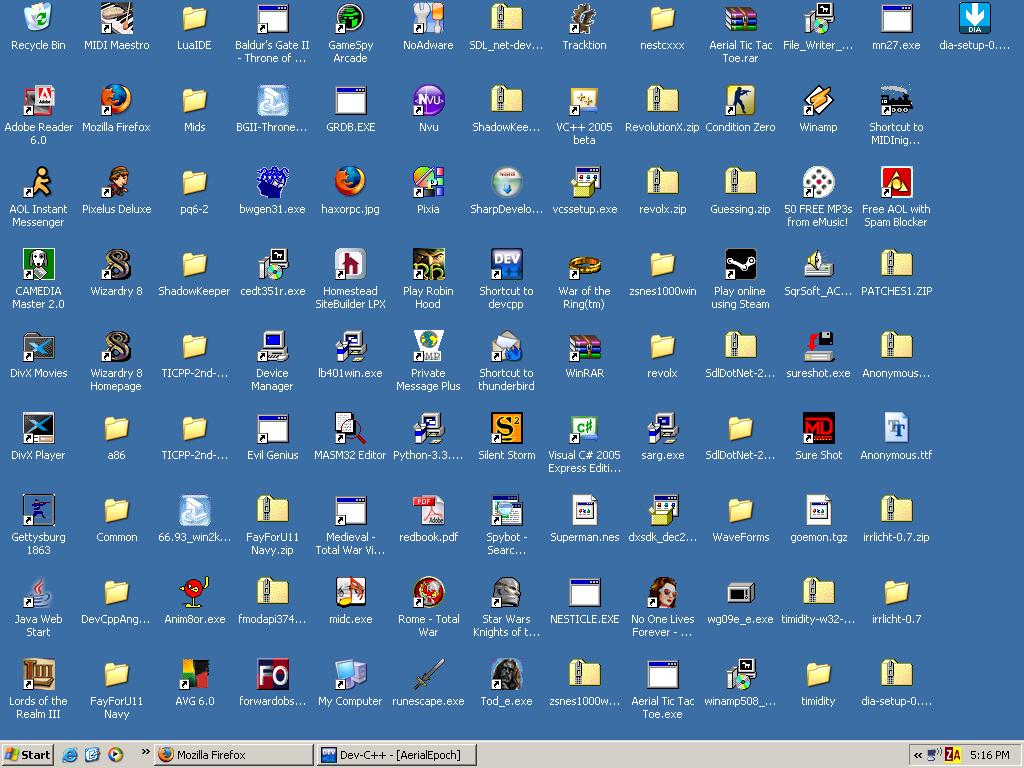
A good representation of an internet with many gTLDs would be:

http://www.kirikos.com/media/many_gtlds.jpg

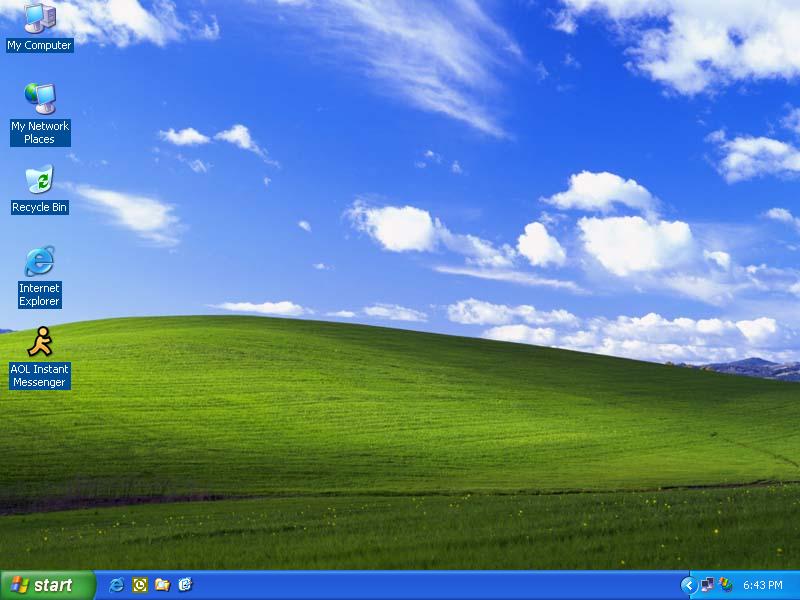
An internet with few gTLDs can be represented by:

http://www.kirikos.com/media/few_gtlds.jpg

If the folks who are making submissions simply click on the "My
Computer" icon on their desktop, or "Finder" (on a Mac), or take a look
at their own desktop, they can get a sense of whether we need thousands
of new gTLDs, or whether a smaller number is better. The DNS is a
hierarchical naming system. If we look at the analogy between the DNS
and our own computer desktops, the "root" would be comparable to our
desktop (or the top folder in our computer hard disk).

I think most ordinary users would find the "many gTLDs" image to be
cluttered, disorganized, irrational, non-sensical, and not a good model
upon which to design a system to be used by billions of users. People
who are advocating thousands of new gTLDs presumably have desktops that
look like that -- scary! It's been good for the internet that ICANN has
resisted the urge to pollute the purity of the namespace with a design
of that nature.

If one read my prior comments about an "Ascension allocation method", a
quasi-gTLD that got promoted to the root would be comparable to having
a subfolder on one's computer that gets accessed very often, and gets
large enough to deserve having a "Shortcut" created on the Desktop of
the computer.

If we  look at two other models of information organzization, namely
the "Library of Congress Classification Outline (LOC)" and the "Dewey
Decimal System", they too show the advantages of a hierarchical
structure with relatively few top nodes.

The LOC structure can be seen at:

http://www.loc.gov/catdir/cpso/lcco/lcco.html

and has 21 top levels. [as an aside, reserving the single letter .com
domains for the Library of Congress might be a nice idea, to allow them
to create an information index based on their classification system]

The Dewey structure can be seen at:

http://www.lib.duke.edu/libguide/fi_books_dd.htm

and has 10 top levels. These are 2 proven designs that have been used
by hundreds of millions of people worldwide.

I hope the above has provided useful input to show the advantages of a
system with few new gTLDs, instead of one with many new gTLDs.

Sincerely,

George Kirikos
http://www.kirikos.com/
_______________________________________________
domains-gen mailing list
[email protected]
http://discuss.tucows.com/mailman/listinfo/domains-gen