Kimiko Small wrote:
At 09:08 PM 11/22/2005, you wrote:
have two big quandaries right now. The first is how should the
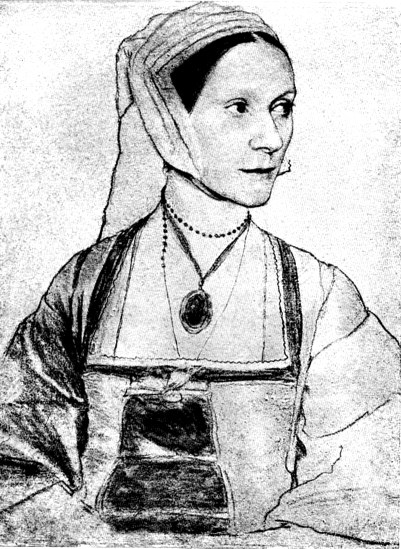
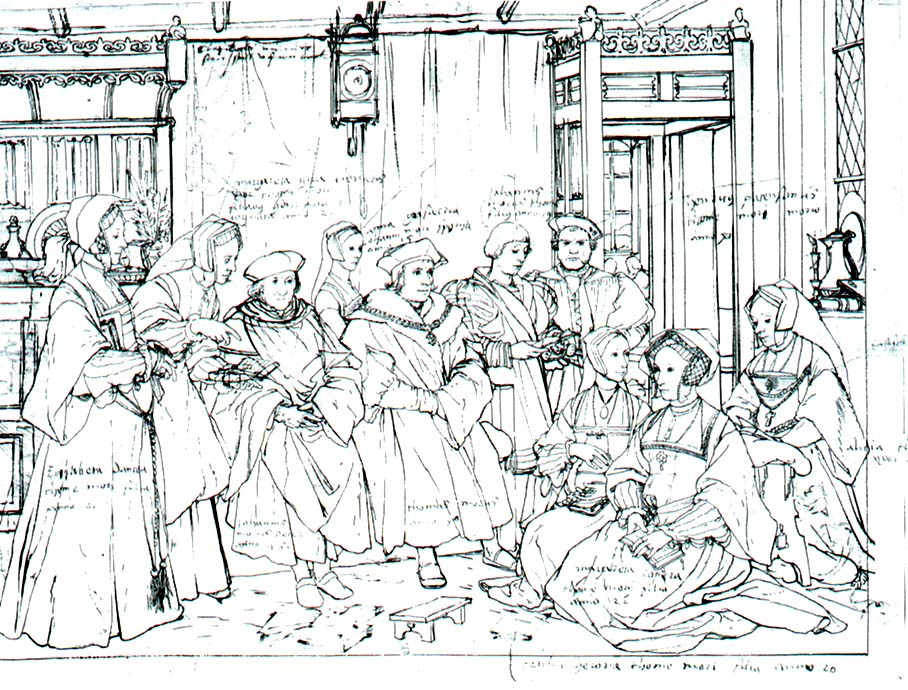
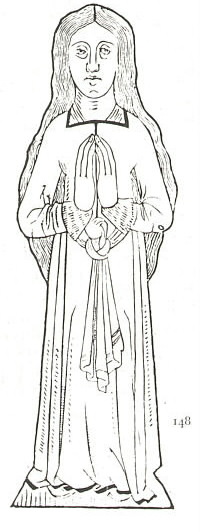
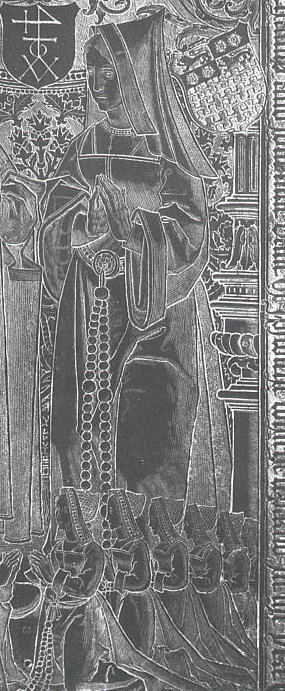
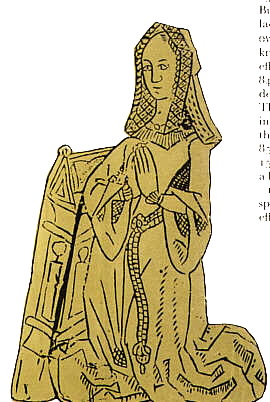
undergown fasten? Looking at the sketches of Cecilia Heron and the
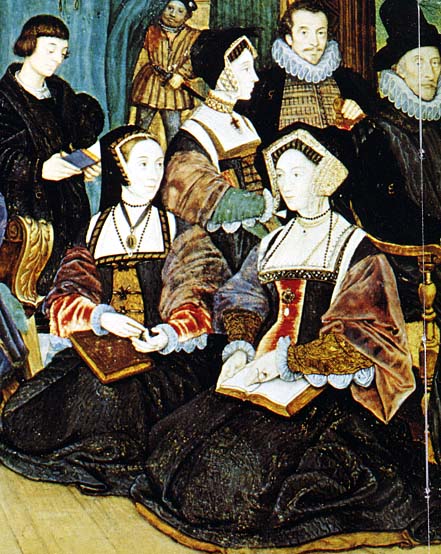
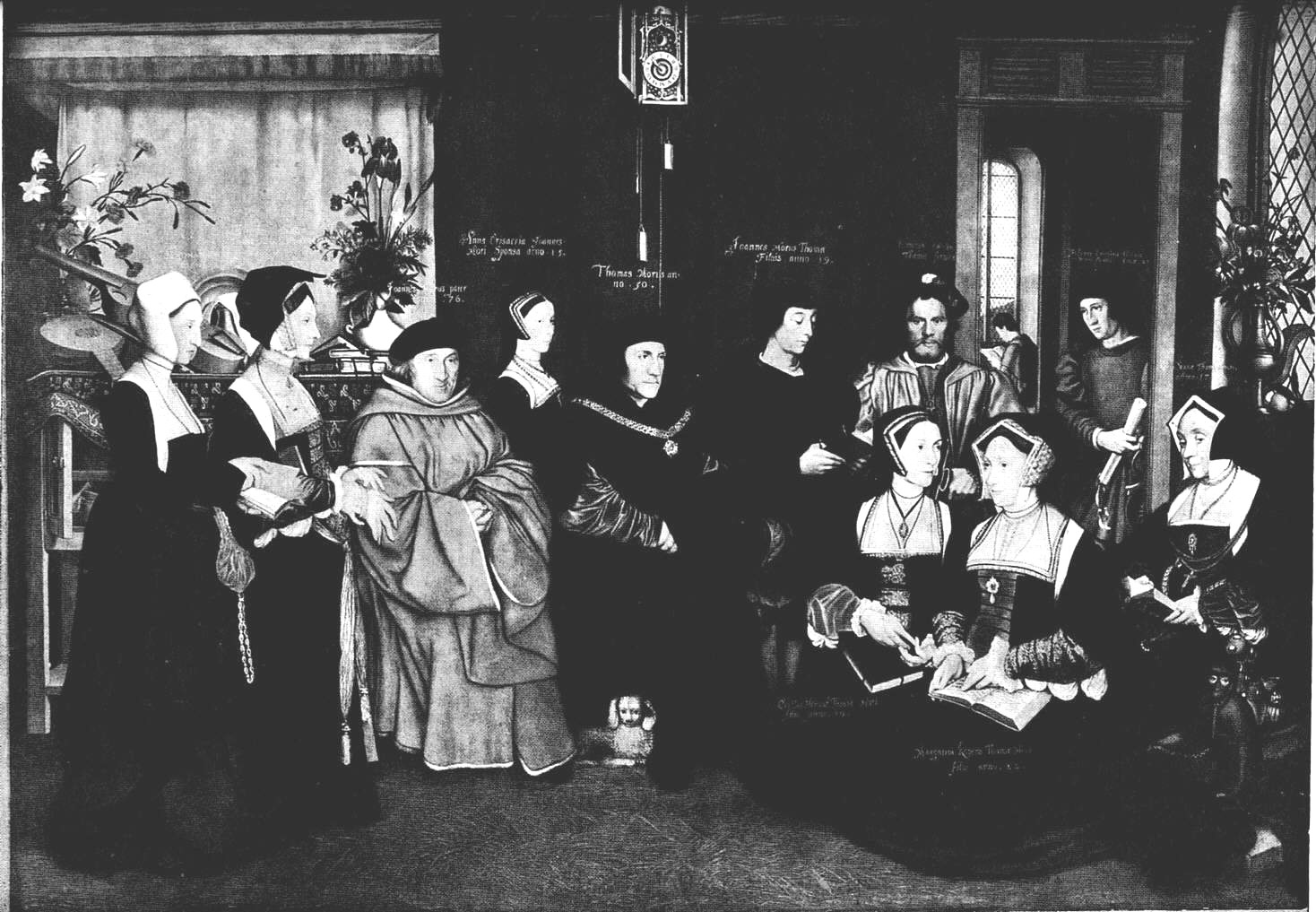
More family, the undergown is definitely NOT front-fastening. Is
side-lacing period-appropriate or would it be back-laced? I'm trying
to find images from earlier/later periods, even in other countries,
particularly of lower-class dress but I'm having little success.
My second question is what pattern should I use for the skirt portion?
I see skirts of just a few panels all the way to multiple gored
pieces (like Alcega's farthingale or kirtle for a fat woman f.58a
patterns). I want to take an authentic bent so I've been scouring
portraits but I just can't tell and I need to figure this out NOW so
I can purchase fabric, hopefully this weekend. I do remember one
earlier portrait (from Spain?) showing a tapestry fabric kirtle
pieced as in an Alcega gored pattern. And what proportions should I
do it in? Do I just figure out an appropriate circumferance for the
hem and take up the rest in pleating? I'm a little leery of doing
that since I have 50" of waist to deal with and I need plenty of
fabric to pleat at the back as in the style of the Holbein back view
sketch.
Some quick thoughts.
http://costume.dm.net/fabuse.html is a website that details amounts of
fabrics used for 16th c. women's clothes. I just happened to be
reading it as your question came over the list. It might help you.
On the kirtle (undergown) and how it fastens, that's something I am
trying to determine as well. The Cunningtons in _Handbook of English
Costume in the 16th Century_ mentions "Fastened down the front to
waist invisibly, probably by hooks and eyes. Occasionally buttoned or
laced." They also mention stomachers (1516/1517) and placards (1547)
that are suitably vague enough to maybe covering the actual fasteners
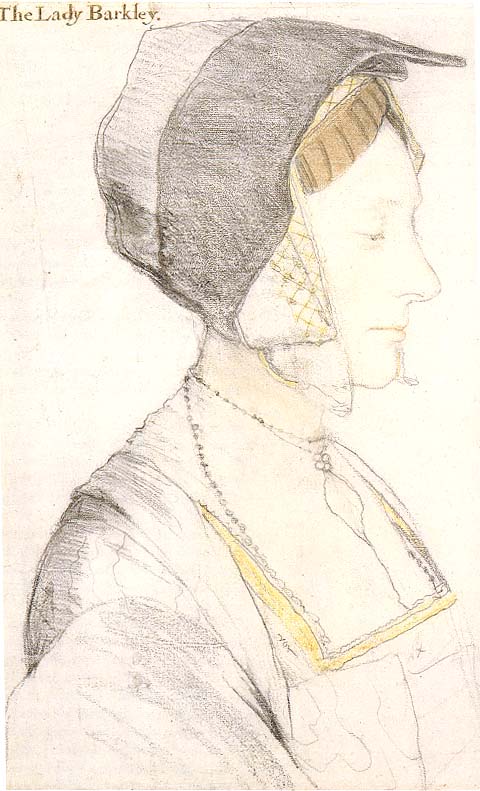
under the gown. Most images I have seen are not detailed enough to
know for sure what was done under the gown.
As to the amount of fabric for the skirt to pleat in the back, if you
have even two panels of 45" material, you will have more than plenty
to pleat at the back in that style. I really wouldn't go with more
fabric, and may even consider doing less. It might be something you
might want to drape onto a form and see what gives you the right look.
Kimiko
I wish that the website could help, but not a lot of women back then
were ever my size, at least not any pictured (which is why I like Lady
Guildford's portrait - she's plump and she's only a little younger than
I am - 27). That's why I was really interested to see the Alcega layout
for a "fat woman".
Here's what I've found so far for depictions of fastening:
Front of overgown tied shut, no depiction of undergown fastening, but is
not front-fastened
Elizabeth Dauncey, 1526-8, http://www.uvm.edu/~hag/sca/tudor/dauncey.jpg
Cecilia Heron, 1527, http://www.uvm.edu/~hag/sca/tudor/cecilia.jpg
Margaret Grigg, 1527, http://www.uvm.edu/~hag/sca/tudor/holb5.jpg
More Family, 1527, http://www.uvm.edu/~hag/sca/tudor/morefamily.jpg
More Family, 1593 copy, http://www.uvm.edu/~hag/sca/tudor/moregirls.jpg
Front of overgown widely laced shut, no depiction of undergown
fastening, but is not front-fastened
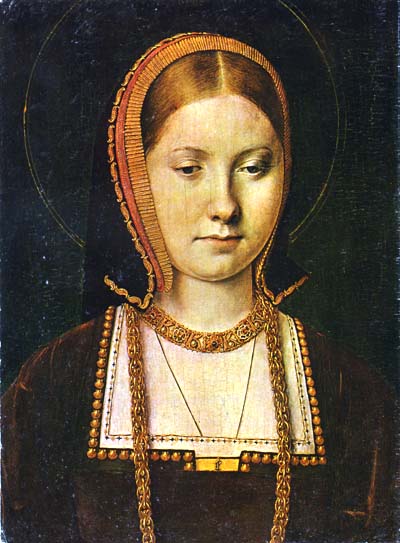
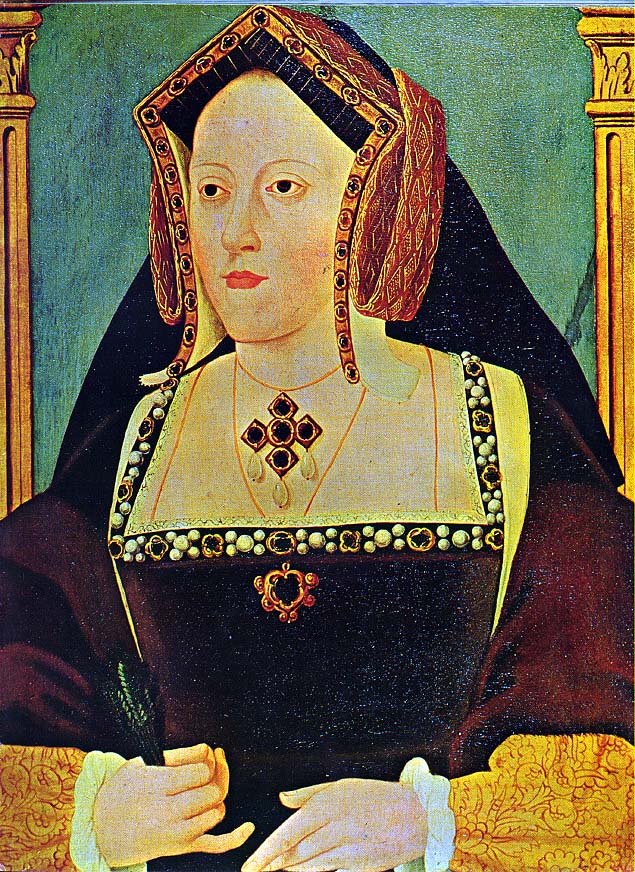
Catherine of Aragon, 1509, http://www.uvm.edu/~hag/sca/tudor/aragon.jpg
More Family, 1530 copy, http://www.uvm.edu/~hag/sca/tudor/lockley.jpg
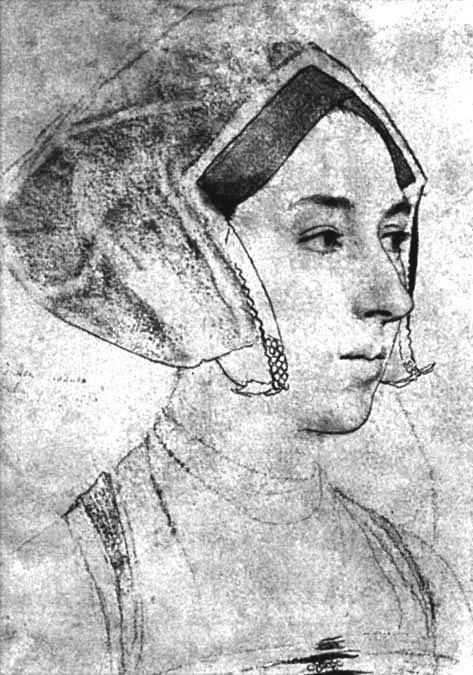
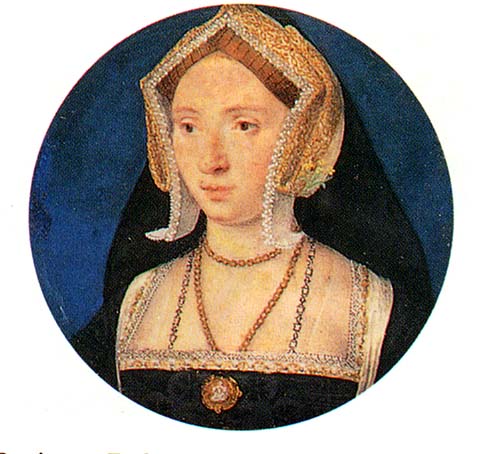
Anne Boleyn?, ?, http://www.tudorplace.com.ar/images/Boleyn,Anne03.jpg
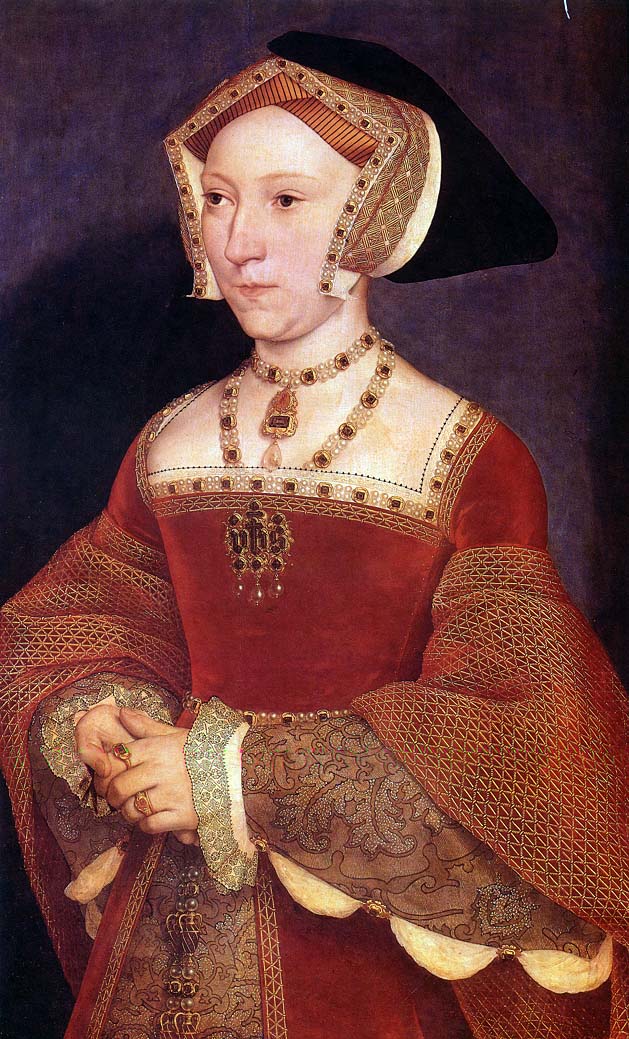
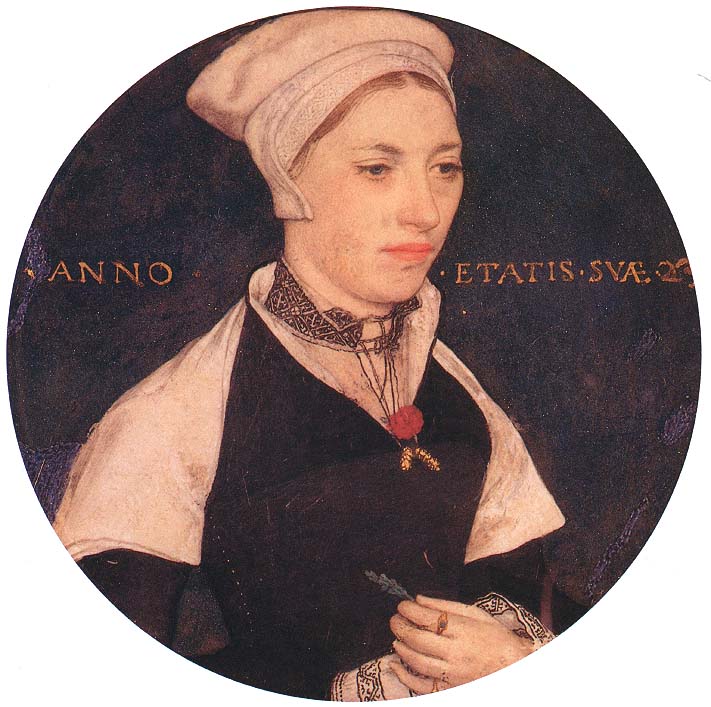
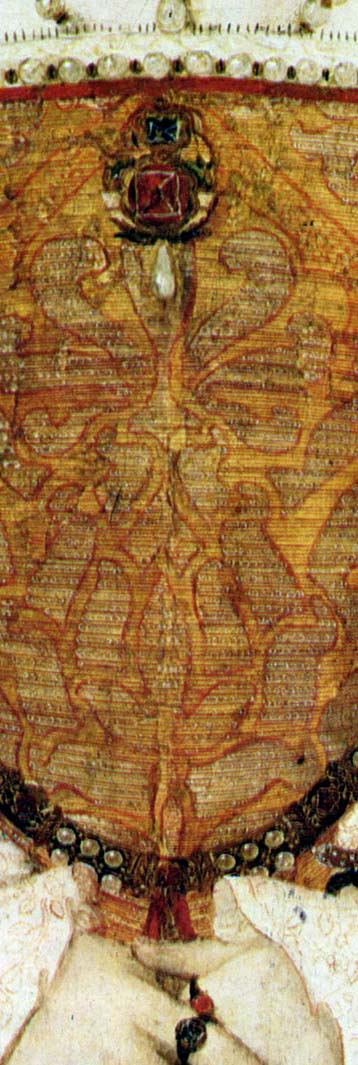
Overgown with placard/stomacher, probably covering up front-tying,
probably attached with pins
Jane Seymour, 1537, http://www.uvm.edu/~hag/sca/tudor/redjane.jpg
Mrs. Pemberton, 1540, http://www.uvm.edu/~hag/sca/tudor/pemberton.jpg
Front of overgown closely front-fastened, not laced, probably
hook-and-eye (see Margaret)
Elizabeth Broughton, 1525, http://www.uvm.edu/~hag/sca/tudor/trivick04.jpg
Wife of Thomas Pownder, 1525, http://www.uvm.edu/~hag/sca/tudor/norris01.jpg
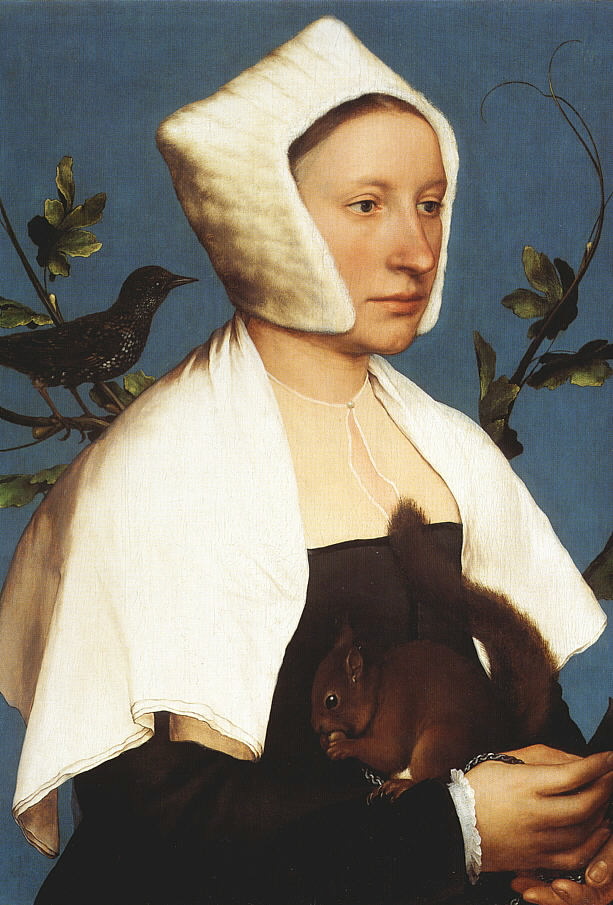
Lady with a Squirrel, 1527-28, http://www.uvm.edu/~hag/sca/tudor/holbsq.jpg
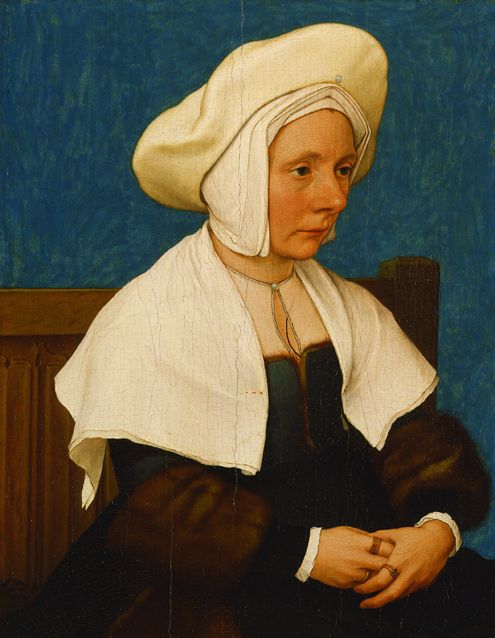
Elizabeth Payne, 1528, http://www.uvm.edu/~hag/sca/tudor/trivick03.jpg
Portrait of a Woman, 1532-35,
http://www.uvm.edu/~hag/sca/tudor/1532woman.jpg
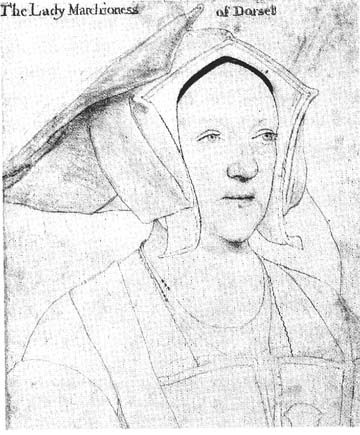
Margaret Marchioness of Dorset, 1541,
http://www.uvm.edu/~hag/sca/tudor/margaret.jpg
(possibly) Princess Mary, 1544,
http://www.uvm.edu/~hag/sca/tudor/prinmary2.jpg
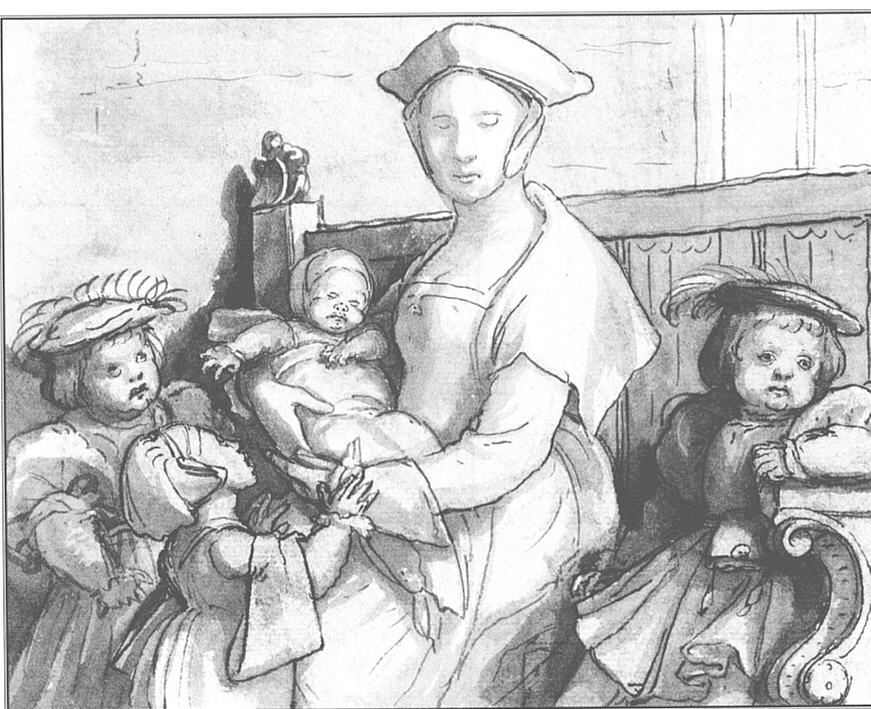
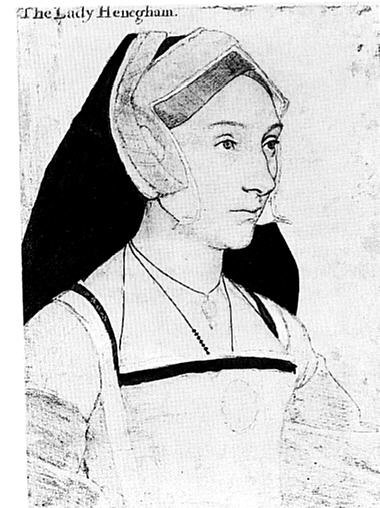
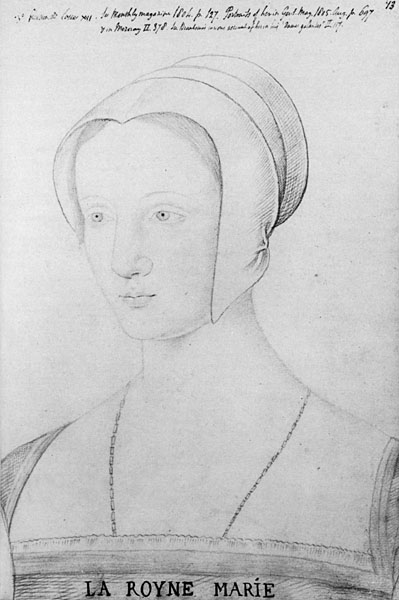
No visible means of closing gown
Woman and her children, ?, http://www.uvm.edu/~hag/sca/tudor/holb-fam.jpg
Lady Henegham, ?, http://www.uvm.edu/~hag/sca/tudor/henegham.jpg
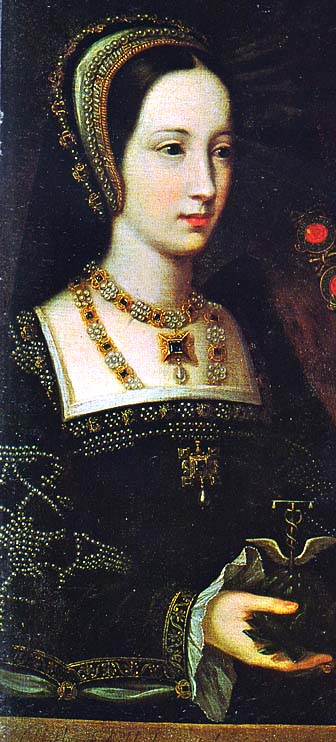
Mary Tudor, 1514-15,
http://www.tudorplace.com.ar/images/Tudor,Marysketch.jpg
Mary Tudor, 1515, http://www.uvm.edu/~hag/sca/tudor/marytudor.jpg
Unknown Woman (was Margaret Tudor), 1520,
http://www.npg.org.uk/live/OC_Data/images/weblg/0/2/mw04202.jpg
Catherine of Aragon, 1525, http://www.uvm.edu/~hag/sca/tudor/cathyold1.jpg
Anne Boleyn, 1525-27, http://www.uvm.edu/~hag/sca/tudor/boleyn1525.jpg
Anne Cresacre, 1526-27, http://www.tudor-portraits.com/AnneCresacre.jpg
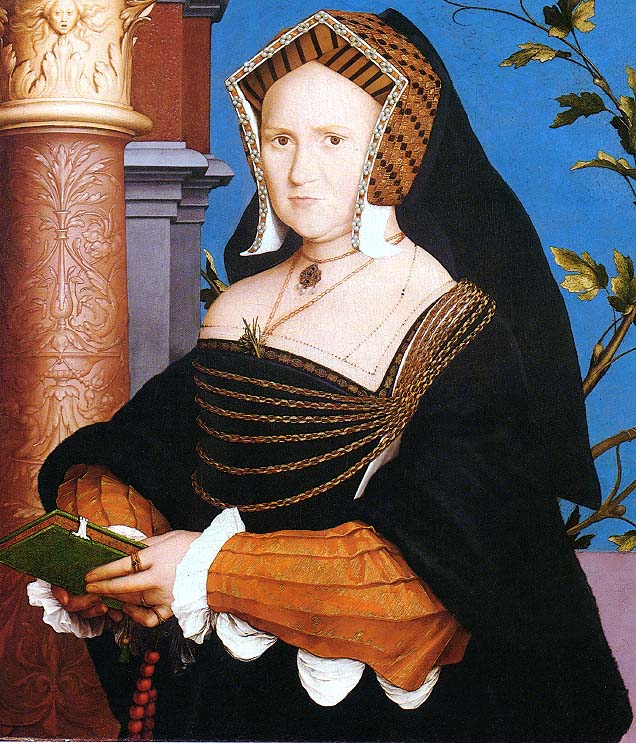
Lady Guildford, 1527, http://www.uvm.edu/~hag/sca/tudor/guildford.jpg
Mary Zouch, 1530's, http://au.geocities.com/e_walpole/maryzouch.jpeg
Margaret Pole, 1535,
http://www.tudorplace.com.ar/images/Pole,Margaret(CSalisbury)02.jpg
Elizabeth Widmerpole, 1536,
http://au.geocities.com/e_walpole/1536_Widmerpole.jpg
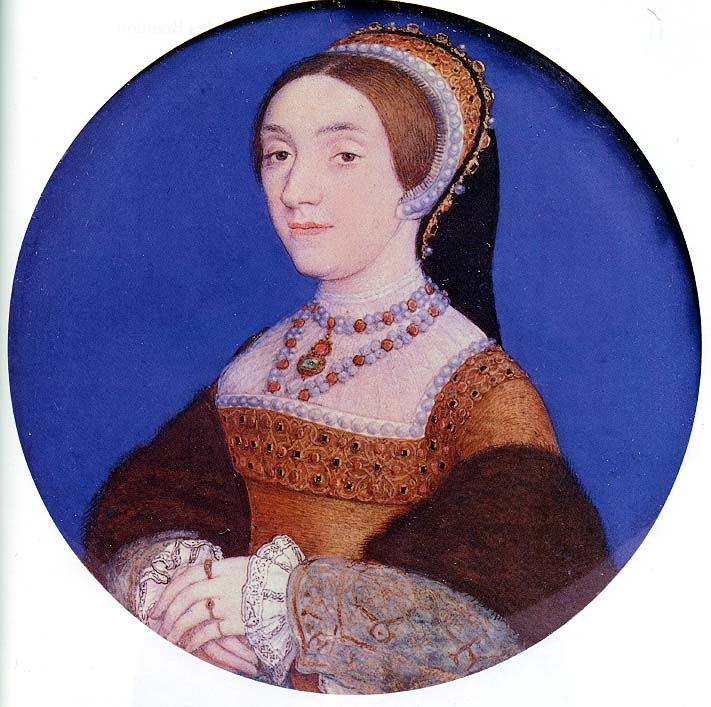
Miniature of an Unknown Lady (Catherine Howard), 1541,
http://www.uvm.edu/~hag/sca/tudor/choward.jpg
What's going on here (all open-fronts)?
Diane de Poitires (by Jean Clouet),
http://www.photo.rmn.fr/LowRes2/TR1/QM0KEZ/02-008694.jpg
Madeleine d'Astarac (by Jean Clouet),
http://www.photo.rmn.fr/LowRes2/TR1/W6NWFJ/02-008827.jpg
Marie de Guise (by Lyon), ?,
http://tudorhistory.org/people/guise/maryguise.jpg
Other artists I plan to investigate active during the Tudor time: Jean
Perreal (France), Levina Teerlinc, Hilliard
--
Elinor Salter
Barony of the Steppes, Ansteorra

_______________________________________________
h-costume mailing list
[email protected]
http://mail.indra.com/mailman/listinfo/h-costume