[
https://issues.apache.org/jira/browse/SPARK-62299?page=com.atlassian.jira.plugin.system.issuetabpanels:all-tabpanel
 ]
ASF GitHub Bot updated SPARK-62299:
-----------------------------------
    Labels: pull-request-available  (was: )

> Add Hash2Vec model as an alternative to Word2Vec
> ------------------------------------------------
>
>                 Key: SPARK-62299
>                 URL: https://issues.apache.org/jira/browse/SPARK-62299
>             Project: Spark
>          Issue Type: Task
>          Components: Graph, ML
>    Affects Versions: 4.5.0
>            Reporter: Sem Sinchenko
>            Priority: Major
>              Labels: pull-request-available
>
> Right now the main sequence-to-vector (seq2vec) model in Spark ML is
> Word2Vec. At the same time it has a natural limitations on vocab size:
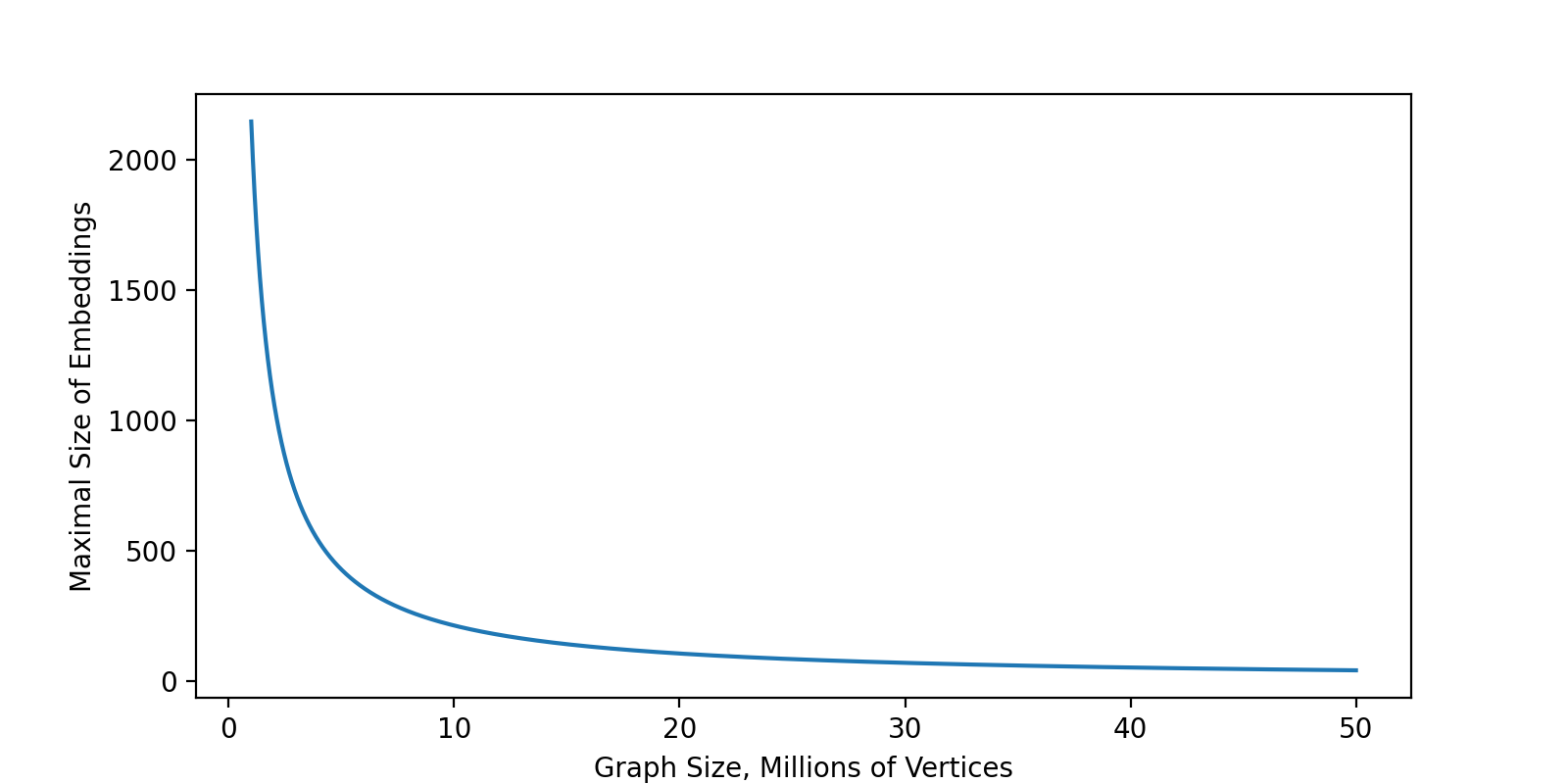
> !https://semyonsinchenko.github.io/ssinchenko/images/embeddings/w2v_scalability.png#center|width=570,height=285!
> In Word2Vec the product of embedding dim on vocabulary size should be less
> than `Integer.MaxValue`. This works perfectly for NLP problems but failing on
> extreme embedding problems like user-item or graph (see the plot above). For
> example, with a default embedding dim = 100, the maximal vocabulary is ~20M
> of words, while graph problems and user-item problems can easily reach
> hundreds of millions "words" or even billions.
>
> Hash2Vec ([https://arxiv.org/pdf/1608.08940)] is less performant but much
> more scalable alternative from the same class of seq2vec models and it
> perfectly fits on the Spark BSP model.


--
This message was sent by Atlassian Jira
(v10.3.26#10030026)

---------------------------------------------------------------------
To unsubscribe, e-mail: [email protected]
For additional commands, e-mail: [email protected]