[
https://issues.apache.org/jira/browse/ZOOKEEPER-4198?page=com.atlassian.jira.plugin.system.issuetabpanels:all-tabpanel
 ]
Md. Mubassir Ahsan updated ZOOKEEPER-4198:
------------------------------------------
Attachment: 1.png
> Install Zookeeper on IBM Cloud
> ------------------------------
>
> Key: ZOOKEEPER-4198
> URL: https://issues.apache.org/jira/browse/ZOOKEEPER-4198
> Project: ZooKeeper
> Issue Type: Improvement
> Components: documentation
> Reporter: Md. Mubassir Ahsan
> Priority: Major
> Labels: cloud_usage, ibm
> Attachments: 1.png
>
>
> This documentation will describe how to Install ZooKeeper on IBM Cloud.
> h1. Requirements/Prerequisites
> You will need an IBM Cloud Pay-As-You-Go or Subscription Account type which
> can be found
> [here.|https://cloud.ibm.com/docs/account?topic=account-accounts].]
> h2. Introduction
> This docs will describe how to install ZooKeeper on IBM Cloud. These four
> steps will be needed as follows:
> - Step 1: Provision Kubernetes Cluster
> - Step 2: Deploy IBM Cloud Block Storage plug-in
> - Step 3: Deploy ZooKeeper
> - Step 4: Verify Installation
> So let's get started.
> h3. Step 1: Provision Kubernetes Cluster
>
> * Search for *Kubernetes* and select *Kubernetes Service* from the list.
> > You will be redirected to the [Kubernetes cluster
> > creation]([https://cloud.ibm.com/kubernetes/catalog/create]) page.
> #
> ##
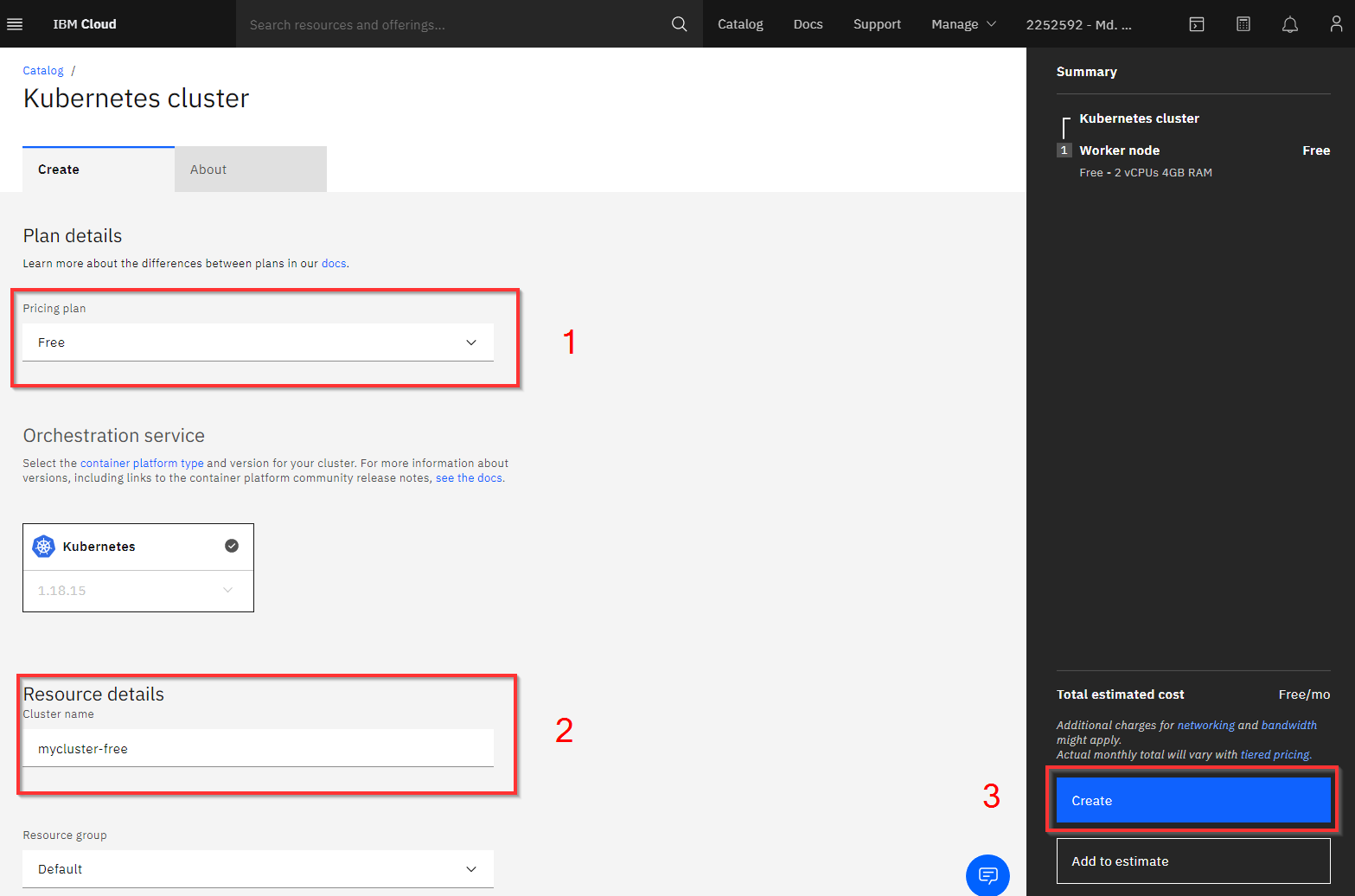
> ### Option A: Create free Kubernetes Engine:
> * Price Plan: Free
> 
> > Enter the cluster name of your choice then click **Create** to provision
> > the free Kubernetes Cluster.
> > Please wait for few moments to provision the cluster.
> #
> ##
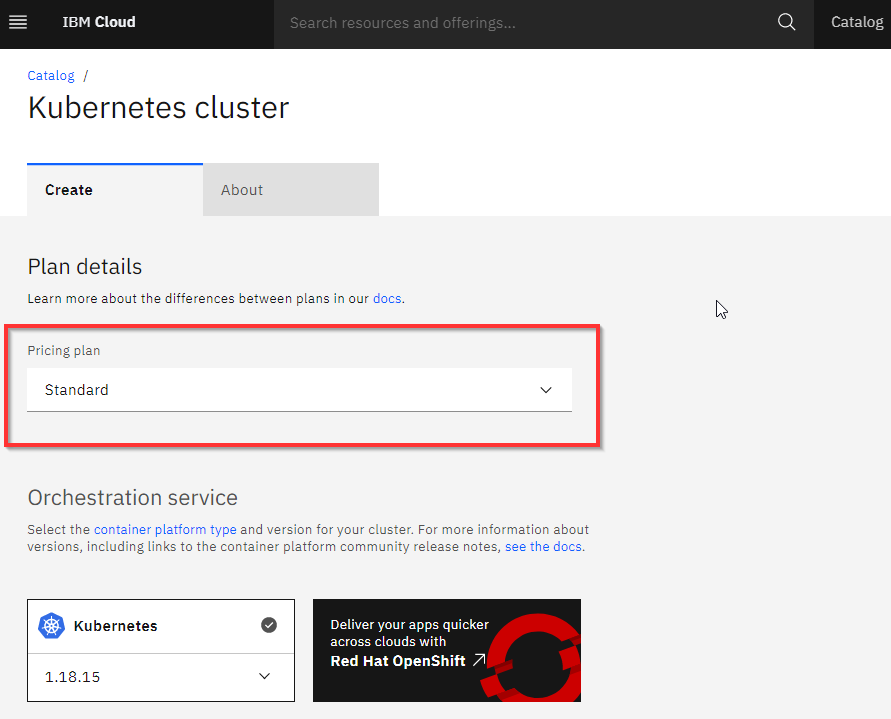
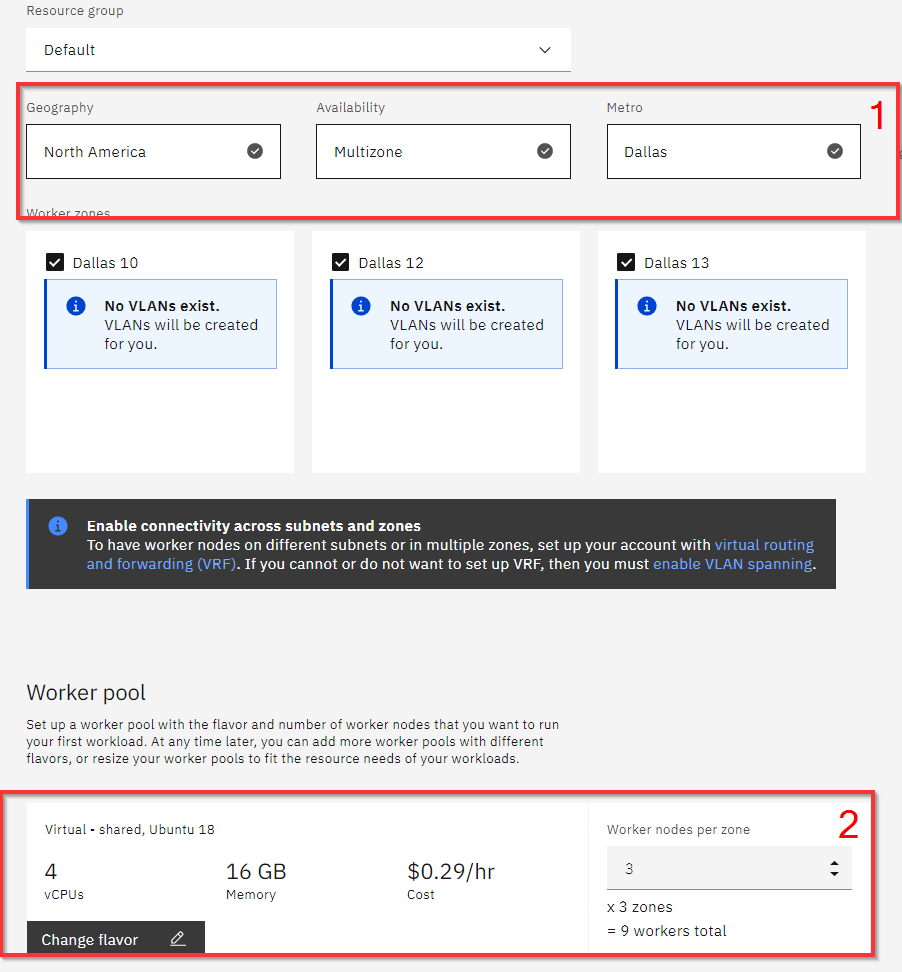
> ### Option B: Create Standard Kubernetes Engine with the following
> attributes:
> * Price Plan: Standard
> 
> * Infrastructure: Classic
> * Availability: Multi Zone
> * Metro: Dallas
> * 4 VCPU
> * 16 GB RAM
> * Worker nodes per zone: 3
> 
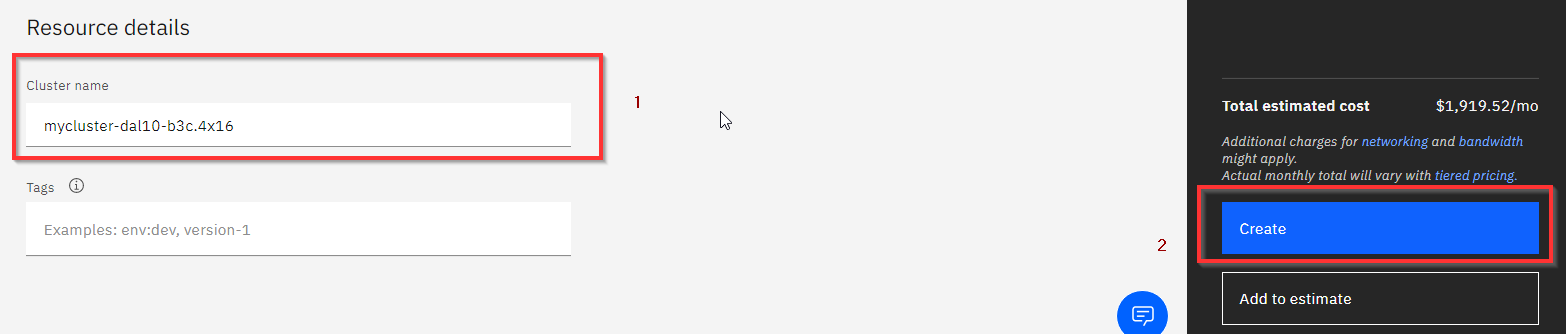
> > Enter the cluster name of your choice then click **Create** to provision.
> 
> > Please wait for a few moments to provision the cluster.
> #
> ## Step 2: Deploy IBM Cloud Block Storage plug-in
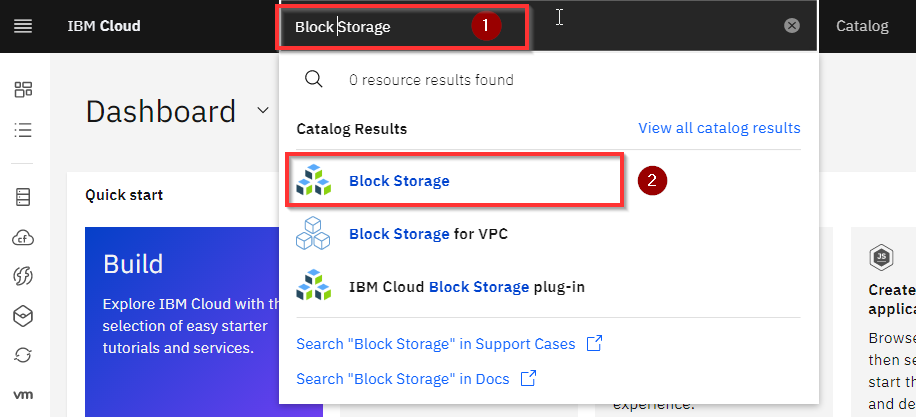
> * Just like in step 1, search for "Block Storage" and Click on it.
> 
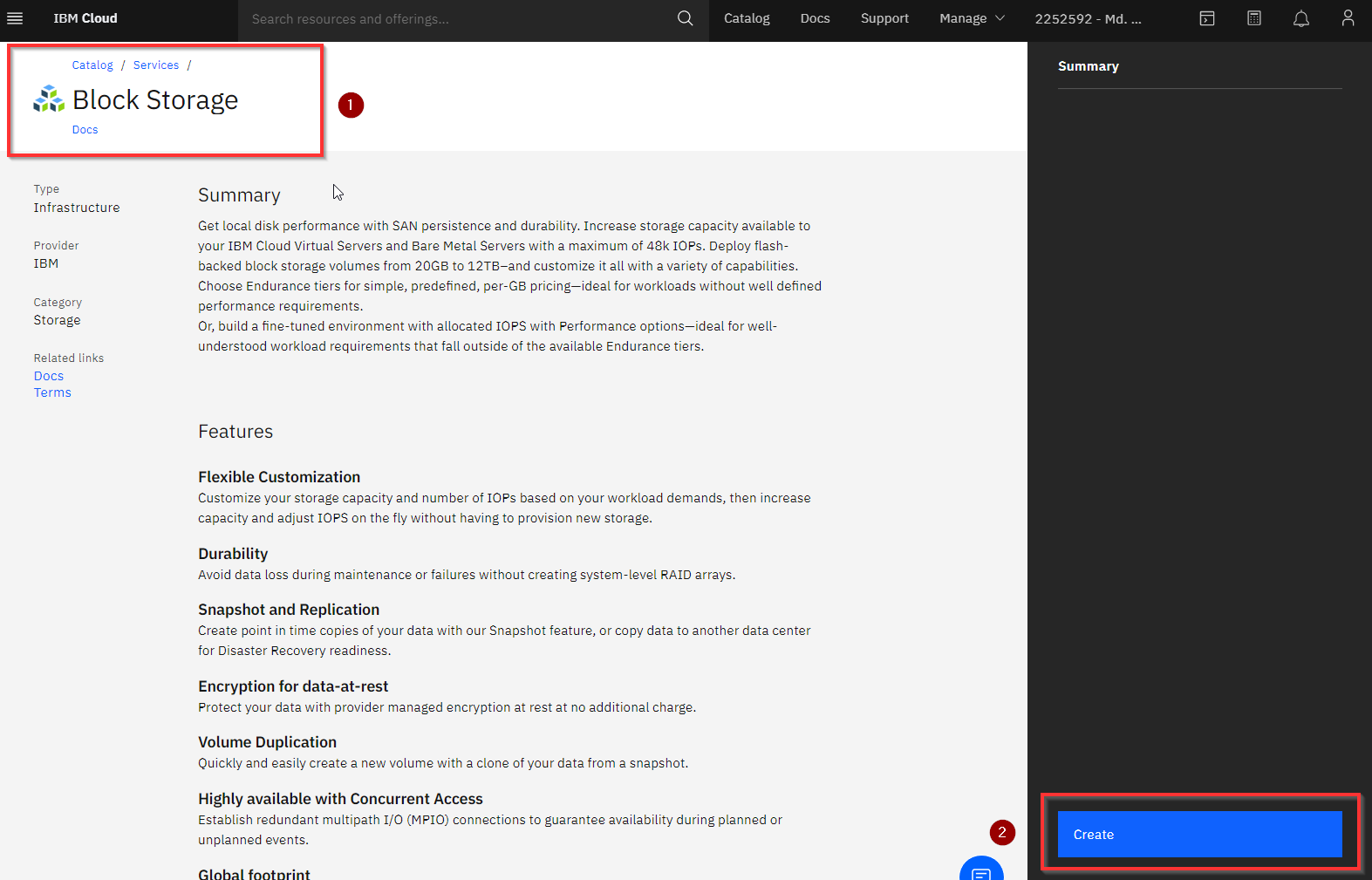
> * On the Block Storage page click on **Create**
> 
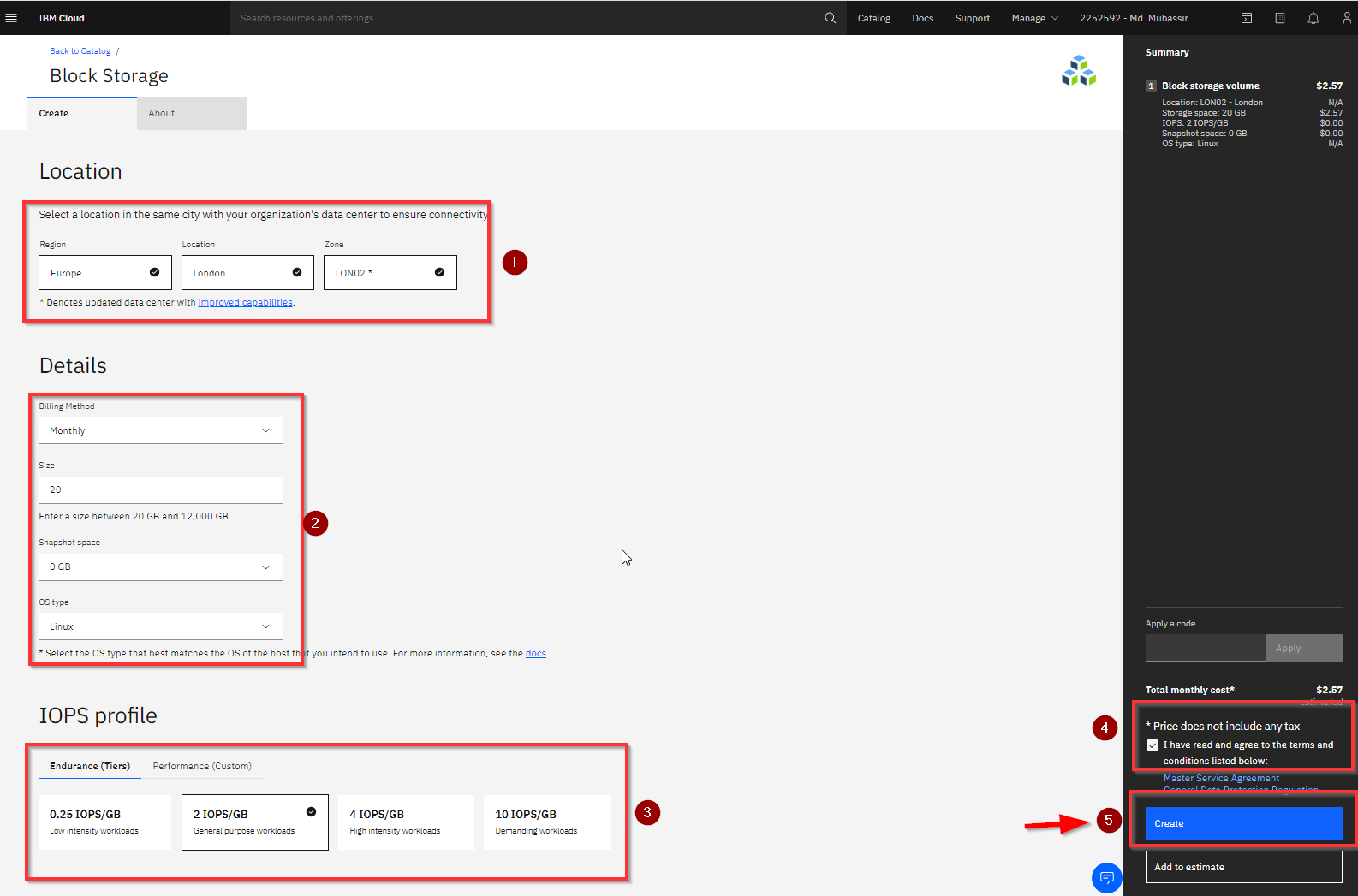
> * Now input the storage details
> > N.B. Select location as the cluster location.
> * Location > Europe > London > LON02
> * Billing Method > Monthly > 20 GB
> * OS type > Linux
> * IOPS > 2 IOPS/GB
>
> 
> * Click on “I have agreed to the terms and conditions listed below”.
> > Now a storage plugin will be available in the dashboard.
> #
> ## Step 3: Deploy ZooKeeper
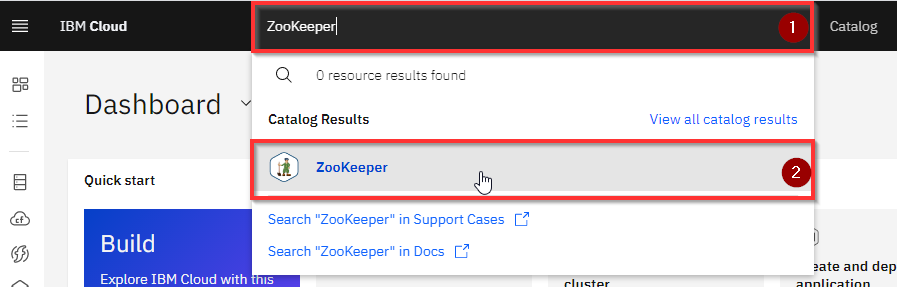
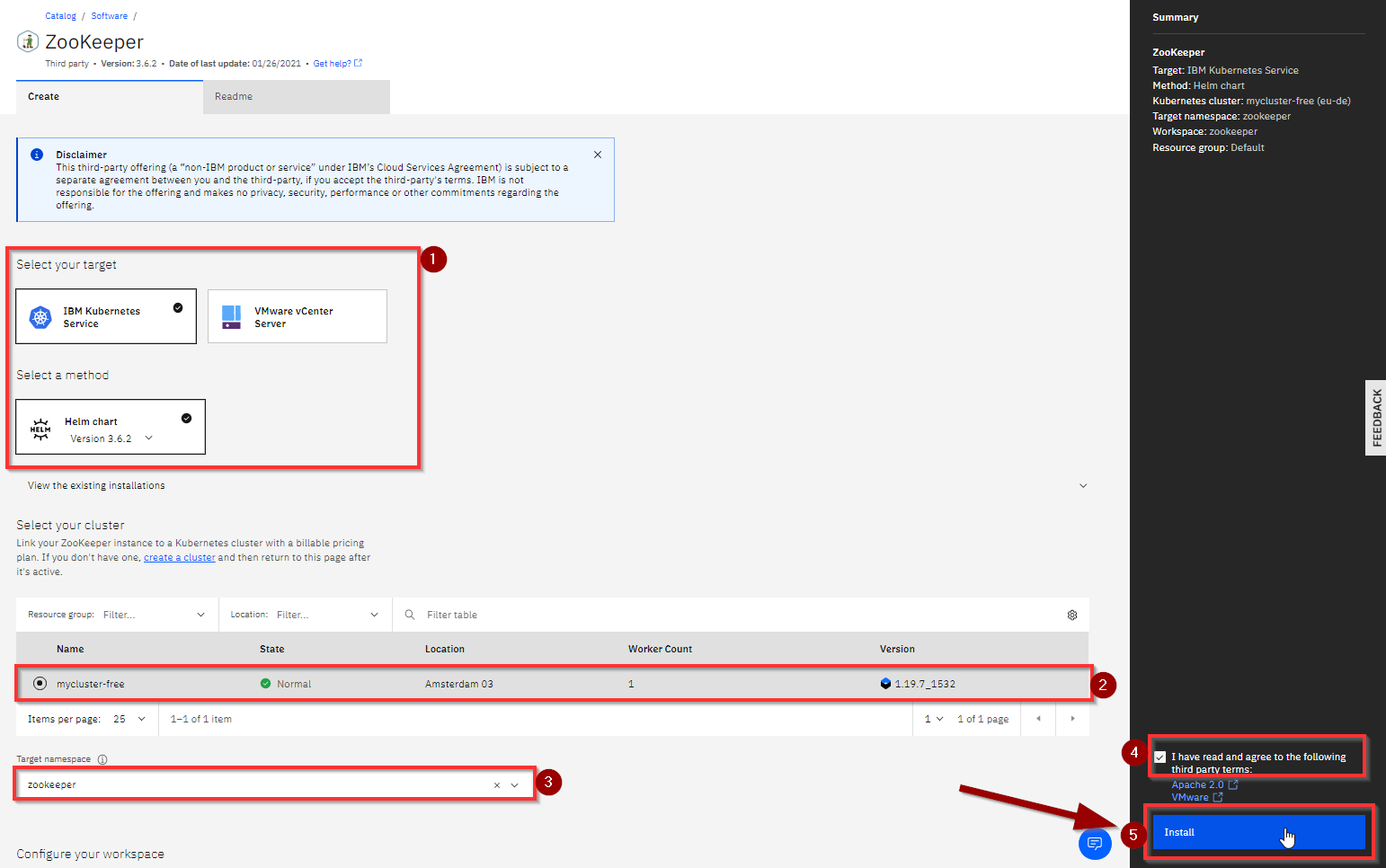
> * Again Search for **ZooKeeper** and Click on it.
> 
> > You will be taken to the **ZooKeeper** deployment page.
> In the ZooKeeper creation page add the details below:
> * Target: IBM Kubernetes Service
> * Method: Helm chart
> * Kubernetes cluster: mycluster-free
> * Target namespace: zookeeper
> * Workspace: zookeeper
> * Resource group: Default
> 
> * Check on “I have agreed to the terms and conditions listed below”.
> > Click **Install** to deploy ZooKeeper.
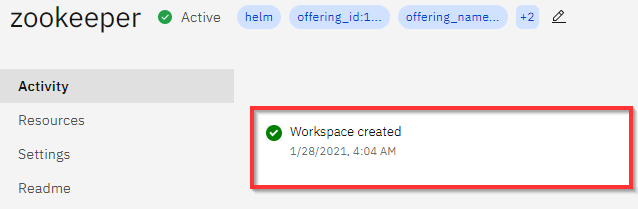
> > Please wait for all the process to complete.
> 
> #
> ## Step 4: Verify Installation
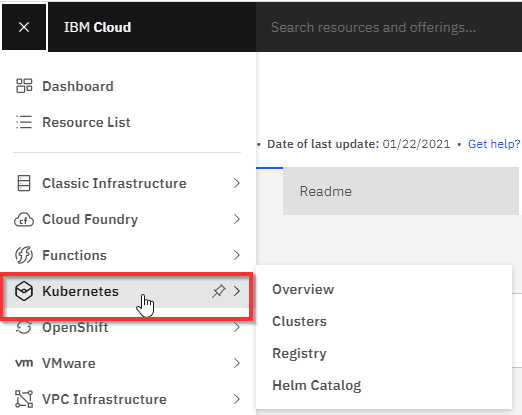
> * Go to Left Navigation Menu.
> * Click on Kubernetes
> 
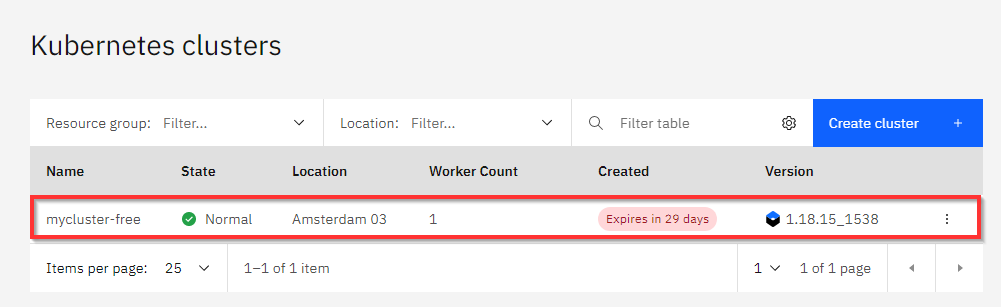
> * Click on your Cluster "mycluster-free".
> 
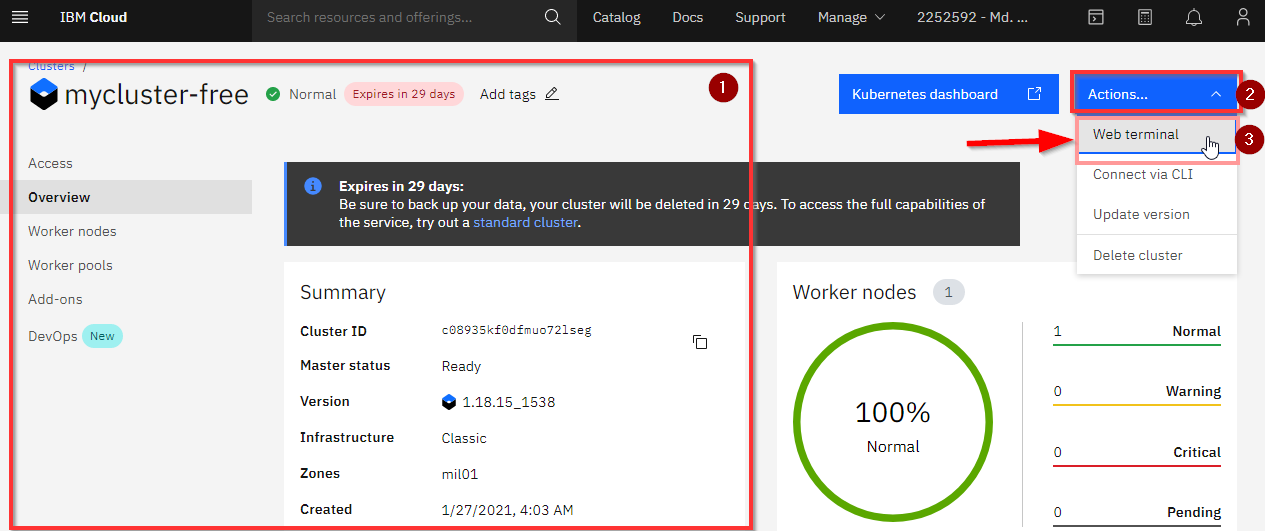
> > You will be taken to your clusters overview page where you will see the
> > details of your cluster as well.
> * To verify the installation find the Actions..
> * Click on it and select `Web terminal` from the dropdown menu.
> 
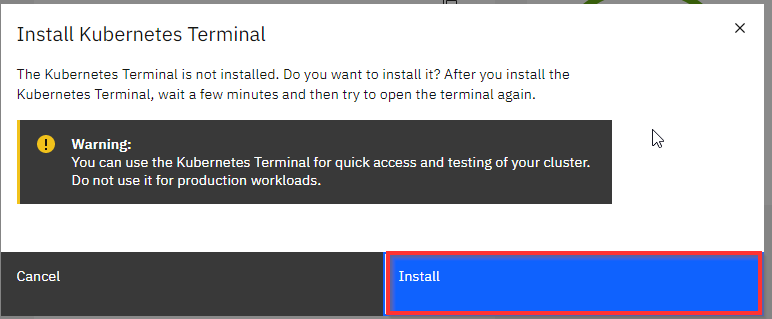
> > Click install, then wait for a couple of minutes to finish the process.
> 
> * After completing the installation click on Actions > Web terminal again.
> > A command line terminal will appear. Type the command below:
> #
> ##
> ###
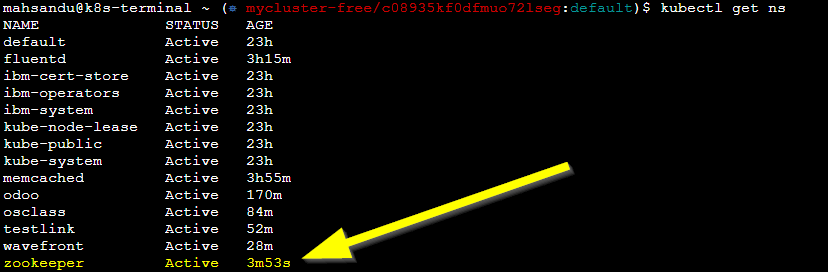
> #### Get the list of pods:
> `kubectl get ns`
> 
> #
> ##
> ###
> #### See if it is running:
> ` kubectl get pod -n zookeeper -o wide `
> 
> The Installation is now done! Enjoy !
--
This message was sent by Atlassian Jira
(v8.3.4#803005)