http://www.marxist.com/masses-return-to-streets-in-egypt.htm
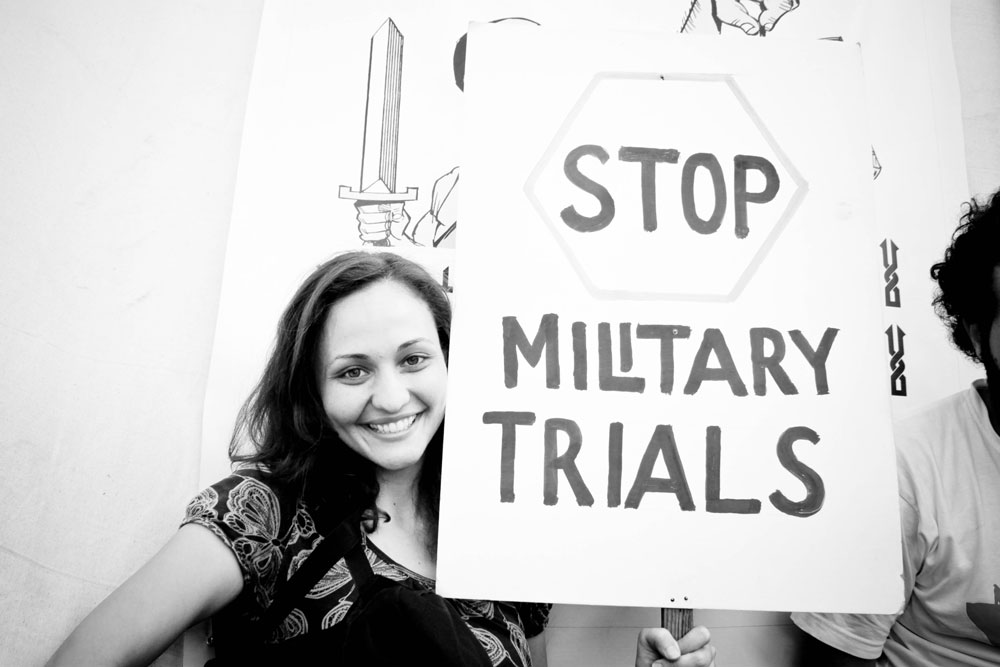
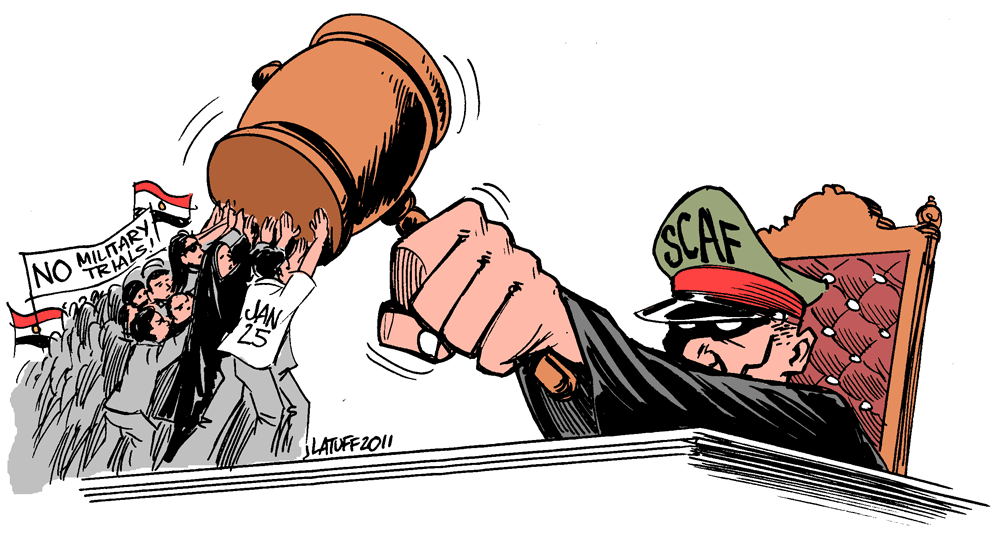
The Masses Return to the Streets in Egypt: Revolution Until Victory!<http://www.marxist.com/masses-return-to-streets-in-egypt.htm> Written by Brian Adams and Viktoria Ytterström Monday, 11 July 2011 [image: Print]<http://www.marxist.com/masses-return-to-streets-in-egypt/print.htm#> *Friday 8th July saw the largest protests since the departure of Hosni Mubarak as tens of thousands took to the streets of Cairo, and thousands more came out to protest in other cities across Egypt, such as Alexandria and Suez. Material conditions have not improved for the workers and youth of Egypt, and Tahrir Square has once again become a visible epicentre of the revolution.* [image: July 8, Tahrir Square. Photo: Zeinab Mohamed] <http://www.marxist.com/images/stories/egypt/Jul_8_crowd-Zeinab_Mohamed.jpg> *The authors of this article visited Egypt last month to see the state of the country after the fall of Mubarak and to get a first hand view of the revolution. What they saw was a society still fraught with contradictions that were barely concealed. All these contradictions have now burst to the surface once more.* The Era of Revolution We arrived in Cairo on Friday 10th June and headed straight to Tahrir Square to see it for our own eyes, having seen the revolution play out in real time on the television since the beginning of the movement on the 25th January. Tahrir Square has gained a symbolic importance for the youth, workers, and other oppressed layers of Egyptian society, who still gather in their hundreds by the now famous roundabout every Friday to air their grievances with the regime that has done nothing to improve their material conditions. The youth that we spoke to were eager to talk to us and tell us about their protests and experiences of the revolution, and were even more delighted when we said that we are firm supporters of the Arab revolution and that the movements in Egypt and Tunisia have been an inspiration to young people in our own countries. Internationalism is a natural feeling for these young people who want the whole world to know of their struggles; who yearn for solidarity with their cause and want their revolution to spread all over the world. These youth are a living demonstration of what is meant by revolution: a turning point in history when the mass of people, who are normally passive and inactive, assert themselves as a political force in society. The young protestors we spoke to were not politically active before the 25th January movement began. They were facing (and still are facing) the most intolerable of conditions: the youth unemployment rate was at 25%; inflation was biting into living standards; the future was bleak. The 25th January movement, however, pushed aside these feelings of despair and passivity. For the first time in their lives, the youth of Egypt said enough is enough and millions poured onto the streets of Cairo to literally fight for their future. The young people we met on our first evening in Egypt even showed us their wounds, obtained in fights to defend those in Tahrir Square from the policemen and lumpen thugs that Mubarak had released upon the protestors. For these people, who have tasted the potential power of the masses to change society, there can be no talk of giving up and going home. For these young people, who have their whole lives ahead of them, the revolution is still going and will not be over until conditions have improved for them and the other layers of society who they fought alongside. Their determination to see the revolution through to its end was inspirational. One student summed up this iron will when he said, I am prepared to fight; I am prepared to kill; I am prepared to die; but I am not prepared to give up. The workers and youth who we met spoke about the revolution, not in the past tense as an event that is over, but in the present tense as a process that is still taking place. We talked to one student called Omar, who studies in America but who was visiting family in Egypt, who told us how people now talk about the era of revolution, an era that will not be over until material conditions have improved and the mass of people have access to jobs, healthcare, educations. Omar described to us the change of consciousness that has taken place in Egyptian society since the 25thJanuary: Before the revolution, the streets were filthy; people didnt care about their neighbourhoods. They felt alienated from their own surroundings. But now the streets are clean; people are starting to feel like this is their country again. There is a sense of pride and a sense of ownership that wasnt there before. The Veneer of Change The situation that was described to us was clear: there has not been any real change in the situation in Egypt; even simple democratic rights have not been won; economic conditions are just as bad (if not worse) than before. In a recent report on the Egyptian economy since the beginning of the revolution, *The Economist* stated that: After the uprising, GDP crashed, falling by 4% in the year to the first quarter. Manufacturing declined by 12%. Revenues from tourism collapsed, putting pressure on the balance of payments and starting a slide in foreign reserves... The government has estimated that it faces an external-financing gap of about $11 billion in the second half of this year and the first half of next. (*The Economist*, 25th June 2011). These economic conditions were visible and plain for all to see. Young people wander through the streets of Cairo throughout the day with nothing to do and nowhere to go; the main tourist sites, upon which the economy is reliant, are empty. What is clear both as a visitor to the country and to the mass of workers and youth in Egypt themselves is that life has not improved despite the overthrow of Mubarak. Nobody we spoke to was under any illusions about the military government or the idea that the revolution was merely strictly about democratic demands, and all the young people and activists we spoke to were yearning for real change to improve their material conditions. <http://mediacdn.purephoto.com/a1297_21955_H3btCg_250.jpg><http://elhamalawy.purephoto.com/#/image/2408/21955>The main force in the25th January movement was that of the organised working class. The imposition of the working class on the movement, through a wave of strikes across the country, was the turning point in the revolution that (as in Tunisia) brought down the dictatorial leader. In fact, these strike waves can be traced back to 2005 or even earlier, and have been occurring on a regular basis in many workplaces, such as the textile factories of Mahalla (Unprecedented strike wave of Egyptian workers<http://www.marxist.com/strike-wave-egyptian-workers-solidarity230407.htm>). For the workers in these factories, the revolution in Egypt did not begin in 2011, but many years ago with these initial mass strikes. Despite a military clampdown, many of these strikes are still taking place, mainly over strictly economic issues such as wages, conditions, and hours. The workers of Egypt did not join the 25th January movement merely to fight for democracy; for them, the revolution had a clear social, economic content, and the veneer of change that has been achieved by removing Mubarak is not enough. These strikes are helped in part by the formation of many new independent trade unions and syndicates. We met with Talal Shukr, head of the new Federation of Independent Trade Unions, who outlined the situation for us: Before the revolution, there were only four trade unions that were independent from the government the tax collectors, the teachers, the health workers, and the pension and benefit providers. During the beginning of the revolution, these four unions met and created a Federation of Independent Trade Unions. On the 8th February, this new Federation released a statement appealing to workers to go to the revolution as a class, as an organised force. Soon after, the railway workers went on strike across Egypt, and then workers started going on strike everywhere else. This is what made it a speedy retirement for Mubarak. After only three days of these mass strikes across Egypt, Mubarak was gone. New independent trade unions and syndicates have started up in other factories and industries, and are joining the Federation. The existing, official trade union leaders are not happy about this, nor are the owners of the factories and businesses. The independent trade unions have been a major part of the struggles on the streets for an improved minimum wage, and thanks to this pressure, the government has now introduced a new minimum wage of 700 Egyptian pounds [approximately £73 or $118] and is possibly also going to introduce a new minimum pension. Were still not happy with the size of the minimum wage or the proposed pensions, but its a positive step. This is all the result of the active participation of the trade unions and the working class in the revolution. The continuing strikes have exposed the facade that is the current military council in Egypt, who have made it clear that further strike action will not be tolerated. From this, it is clear to workers that the revolution so far has yet to even guarantee basic democratic rights, such as the right to organise and strike. The military council is part of the old regime and despite paying lip service to the revolution, it does not differ in the slightest in terms of economic policies from those of Mubarak, who embraced privatisation and looted from the people in the process. For the members of the military council to grant democratic demands to the working class in Egypt would be for the council to put its own privileged position at risk. They stood by and helped Mubarak pocket the wealth of the nation in the past whilst lining their own pockets of course! For the liberal bourgeoisie, democracy is an empty phrase with no meaning other than the right for a small minority to exploit the vast majority. For the revolutionary workers and youth of Egypt, however, democracy means something concrete; it means the right to jobs, housing, pensions, education, and healthcare none of which can be granted by the military council, or indeed granted under capitalism. This proves, once more, that the struggle for democracy cannot be separated from the class struggle in general, and that democratic demands can only be achieved if given a revolutionary content. Splits in the Revolution Whilst the workers, youth, and poor masses of Egypt yearn for genuine change, there are layers of the 25th January movement who are happy to maintain the status quo. The more privileged layers insist that the revolution is over and refer to the continuation of protests and strikes as a hassle and a nuisance. Meanwhile, as mentioned previously, for workers and youth the revolution is a process that is still taking place. These wealthier elements the fair weather friends of the revolution are forced to pay lip service to the revolution, but in reality they only seek to make gains for themselves. For these cynical people, the revolution is a brand from which they can make money. Television stations constantly show images from the revolution; T-shirts are sold in Tahrir Square emblazoned with the 25th January logo; pop stars and advertisers use footage of the revolution in their videos. Apparently a high budget film is even being made about the revolution. One can place a firm bet on what kind of a political position such a film will take. Whilst the rich and wealthy look to make money from the revolution, the rest of society simply looks to make a living. We were told by various activists about popular assemblies that had been started in the early stages of the revolution, and that were still meeting in various neighbourhoods. In addition, as mentioned above, the strikes for improved conditions and wages are continuing in the factories and workplaces. However, there seems to be little co-ordination of the struggles between the different workplaces at this stage, nor between the popular assemblies and the factories. What is needed now is for all the individual struggles to be linked up, generalised, and given a political character. [image: July 8, Tarhrir Square. Photo: Maggie Osama] <http://www.marxist.com/images/stories/egypt/Jul_8_stop_military_trials-Maggie_Osama.jpg>Different political tendencies, representing the different class interests, are also emerging in preparation for the elections that have been proposed for September. The Muslim Brotherhood is once again playing a pernicious role and is clinging to the tailcoats of the liberal bourgeoisie. In turn, certain so-called Marxists cling to the tailcoats of the Muslim Brotherhood. The only existing mass workers party Tagammu is torn with internal conflicts of its own, reflecting the conflicting currents within the revolution in general between those who do not want to challenge the status quo and those who desire a genuine transformation of society. The youth, who have been at the forefront of the revolution since its beginning, have been turned off by the existing political groups and have a distrust of political organisations in general. This apolitical stance has been seen in the movements of the youth in Spain, Greece, and Britain, and in many ways is a healthy reaction against the bureaucracy and corruption that has existed in politics worldwide. Such an apolitical mood, however, can also be a tremendous brake on the movement. The struggle for jobs, wages, and improved living standards is, after all, a deeply political struggle about how society is run and in whose benefit. Given this distrust of the existing political organisations, a number of young activists have taken the initiative to form a new youth coalition called the Union of Egyptian Socialist Youth (UESY). We spoke to Ahmed Belal and Haisam Hasan, two young activists who have played a leading role in the creation of the UESY, who explained that the UESY is a cross-party coalition formed since the revolution and is intended to be a way of capturing and channelling the energy of the youth from the revolution. According to Ahmed Belal: There are a number of socialist organisations in Egypt, and the youth are tired of all the old leaders. The UESY is intended to unite the youth from all these organisations and those outside of any organisation. We now have groups in ten provinces, and weve been trying to make links with the workers movement, for example, by organising solidarity demonstrations when there are strikes. I am from Mahalla where there are many textile factories, and we are setting up a UESY group there. We have been fighting with the workers against the government, who keep trying to say to the people that these strikes are anti-revolutionary. We are also trying to create links with groups in the rest of the world, because we believe all our struggles are one; revolution is international. Haisam Hasan added that, We have already been working with the labour movement to fight for the new minimum wage and other issues facing workers. The creation of the UESY has been a very positive step. Unlike the Coalition of the Revolutionary Youth another youth group formed out of the 25th January movement that, according to *The Economist*, has a market-orientated economic policy, the UESY has been helping to organise the youth into a political force with a revolutionary programme, which in turn has placed the latest mass protests on a higher level. Revolution Until Victory! The latest mass protests, which started on Friday 8th July, indicate clearly all the contradictions that still exist within Egyptian society. Hundreds of thousands have taken to the streets once more in Cairo, with tens of thousands more in Alexandria, Suez, and other cities across Egypt. Material conditions have not improved for the masses, and having shed blood, sweat, and tears earlier this year, the revolutionary workers and youth will not stand for such superficial change as to see Mubarak pushed aside and simply replaced by a military council consisting entirely of members of the old regime. According to reports by *Al Jazeera*: Many Egyptians feel that little has changed since the regime was forced out, and the nationwide protests are the latest calls for the country's interim military rulers to provide a roadmap towards democracy, jobs and infrastructure improvements. We want to change everything. The old regime has corrupted everything. We want to change the government and those in charge, the field marshal as well, Ehab Mohamed Mahmoud, a demonstrator, said. (*Al Jazeera* website, 8 th July 2011) According to most mainstream media sources, these latest protests are like the 25th January movement in general only about democracy and justice. For example, the BBC writes that, [The protestors] particularly want to see Mr Mubarak and his officials put on trial more quickly. They also accuse the military government of failing to adequately try those accused of killing and injuring protesters during the January and February uprising, and want an end to military trials of civilian protesters. (BBC website, 9th July 2011) But how can the military council, composed entirely of members from the old regime, be expected to put Mubarak a man whom many of the members of the council supported for decades on trial in any meaningful sense? To put Mubarak on trial with any real seriousness would in turn place the spotlight on the current military council and expose all their links to the old Mubarak regime. Such a trial would strip away the veneer of change altogether and show the masses in broad daylight what they already know that despite everything that has happened, nothing has fundamentally changed at all. In turn, how can the military council who stood by Mubarak as he unleashed criminals and thugs upon the protestors in January and February, and only finally gave him a shove at the last minute be expected to provide justice for the killing of 846 people during the revolution? Again, to have a serious investigation into the matter would simply show up the role that many members of the military council had to play in suppressing the 25thJanuary movement. Essam Sharaf, the current Prime Minister of Egypt, announced on Saturday (9 th July) that officers accused of killing protestors during the revolution would be suspended and that court cases against ministers who have been accused of corruption under the old regime would be sped up. Such superficial announcements are nothing but a distraction. The violence from police officers and the corruption within the old regime are not just restricted to a few bad eggs; the whole system both political and economic is rotten and must be swept aside and replaced by a government of the masses, by the masses, and for the masses. Protestors can see right through these shallow promises by the Prime Minister and are not impressed. According to the *Ahram Online*, an English language Egyptian news website, Prime Minister Essam Sharafs speech given Saturday night failed to satisfy protestors, even stirring greater anger. Sharafs speech did not say anything new and shows that no demands will be met, said Heba, an independent sit-in participant. (*Ahram Online*, 9thJuly 2011). Sherif, a young engineer, said that, His speech sounded like one of these tricks of the old government. He did not even give a timeline for his promise of suspending police officers accused [of killing protesters]. It is unacceptable that police officers accused of murder are still left on duty... If this government is unable to take serious steps it should resign. [image: Stop Military trials. Illustration: Latuff] <http://www.marxist.com/images/stories/egypt/Stop_Military_trials-Latuff.gif>Far from satisfying the protestors urge for justice, these announcements have resulted in the escalation of the movement. In the morning on Sunday (10thJuly), protestors in Tahrir Square shut down Mogamma, the largest government building in Egypt, which houses the offices of the majority of civil servants. In Suez, protestors have blockaded the main road into the city and thousands have threatened to march on the Suez Canal and shut down this important trade route, leading to clashes with the army. According to *Ahram Online*, Although the working week has started, the numbers participating in the Tahrir Square sit-in are increasing. Those spending the night have at least doubled, and despite the heat more continued coming in the morning. It is estimated that some 20,000 people spent Saturday night on the square. The bourgeois commentators, as ever, are only able to see the surface of things. They are unable to see the true processes at play, which progress due to the contradictions that exist within society. For such commentators, the 25th January movement was simply a movement for bourgeois democracy and the latest protests are simply recognition by the masses of the slow progress towards these goals of justice and democracy. The masses are, of course, acutely aware of the lack of change since the departure of Mubarak. They fully recognise the lack of justice and democracy. But they are also aware of their own deteriorating living conditions; of doubling food prices and rising unemployment; of the continued repression against their attempts to struggle for these basic necessities. Events in Cairo confirm the true nature of the revolution, where the Federation of Independent Trade Unions have released a statement with a new set of demands, which go significantly beyond simply calling for justice and democracy. According to *Ahram Online:* The statement was read on Tahrir Squares central stage by union activist Kamal Abu Eitta who confirmed that after six months the revolutions demands have not been met and that consequently people decided to retake the streets. The demands as listed by the statement include: 1. Ending the military trial of civilians and referring all those tried by military tribunals to civil courts. 2. Revoking the anti-strike law, the new party law and the new parliamentary law as going against the revolutions demands. 3. Dedicating special courts to the trial of those responsible for the killing of the martyrs of the revolution, and for cases of economic and political corruption and for the trial of the Mubarak family and its regime. 4. Giving martyrs families and the injured their full rights. 5. Recovering all the nations stolen money inside and outside the country. 6. Appointing a civil minister of interior. 7. Restructuring the Ministry of Interior, firing and trying police officers involved in torture, and establishing full judicial supervision over the ministry. 8. Dismantling Egypts General Workers Union for being a tool of the former ruling National Democratic Party (NDP). 9. Setting a new state budget that includes a LE1200 minimum wage, a maximum wage that does not exceed 15 times the minimum wage, and linking wages with prices. 10. Cleansing the Council of Ministers and all state institutions, including its media and banks, of corrupt former regime figures. 11. Banning former NDP members from running for election for two consecutive parliamentary rounds. These demands reflect the fact that workers and youth in Egypt have no faith in the military council or its ability to bring justice to the Egyptian people. The Federation of Independent Trade Unions, in the statement above, is calling for special courts and full judicial supervision over the Ministry of the Interior, and the end of all anti-strike laws. Most importantly, it can be seen that the demands are also social and economic in their content, such as the demand for setting a new state budget that includes a LE1200 minimum wage [£126 or $202], a maximum wage that does not exceed 15 times the minimum wage, and linking wages with prices. In addition, there are also the important demands that, all the nations stolen money *inside and outside the country* be recovered, and that all state institutions, *including its media and banks*, [be cleansed] of corrupt former regime figures (our emphasis). The important task for revolutionaries in Egypt now is to give these demands a transitional character; that is to say, to explain that in order for these demands to be met, the masses must take power and expropriate the wealth of the rich elite that rules over Egypt at the moment. For example, in order to recover the nations stolen money, the banks must open up their books so that the Egyptian people can see how their money has been stolen and set about recovering it. This, in turn, requires for the banks to be nationalised and put under the control of the working class, the trade unions, and elected representatives of the people. The comparison has been made previously (Egypt: through what stage is the revolution passing<http://www.marxist.com/egypt-through-what-stage-is-the-revolution-passing.htm>) between the current stage of the Egyptian revolution, and that of Russia after the overthrow of the Tsar in February 1917: the dictator is gone, but the old regime is still in power; basic demands for democracy and improved living conditions have not been met (and cannot be met) by superficial changes at the top; the revolution has split along class lines representing the different interests in society. The revolution in Egypt is entering a new stage. The initial euphoria that followed the toppling of Mubarak has gone. There is widespread realisation that the revolution has not gone far enough; that material conditions have not improved; that the interim government is incapable of meeting even the most basic of demands. As the crowd in Tahrir Square have been chanting in regards to the interim government: farce, farce, farce; the gang is still ruling! In 1917, the Bolsheviks put forward the slogan of bread, peace and land, and patiently explained how none of these simple demands could be achieved without the working class taking power. The task of socialists in Egypt now, such as those in the UESY, is to create this same revolutionary leadership that the Bolsheviks provided in Russia in 1917: to connect with the workers in the factories, the students in the universities, and the youth in the streets; to link the struggles in each workplace and in every neighbourhood to the need to transform society; to patiently explain how their demands can only be met through a revolutionary transformation of society, by expropriating the assets of the rich elites and placing them under the democratic control of the masses. The UESY were present at the latest protests. The slogan of these revolutionary youth was the correct one, and must be shouted loud and clear for all to hear: Thawra hatta'l nasr! Revolution until victory! [Non-text portions of this message have been removed] ------------------------------------ --------------------------------------------------------------------------- LAAMN: Los Angeles Alternative Media Network --------------------------------------------------------------------------- Unsubscribe: <mailto:[email protected]> --------------------------------------------------------------------------- Subscribe: <mailto:[email protected]> --------------------------------------------------------------------------- Digest: <mailto:[email protected]> --------------------------------------------------------------------------- Help: <mailto:[email protected]?subject=laamn> --------------------------------------------------------------------------- Post: <mailto:[email protected]> --------------------------------------------------------------------------- Archive1: <http://www.egroups.com/messages/laamn> --------------------------------------------------------------------------- Archive2: <http://www.mail-archive.com/[email protected]> --------------------------------------------------------------------------- Yahoo! Groups Links <*> To visit your group on the web, go to: http://groups.yahoo.com/group/laamn/ <*> Your email settings: Individual Email | Traditional <*> To change settings online go to: http://groups.yahoo.com/group/laamn/join (Yahoo! ID required) <*> To change settings via email: [email protected] [email protected] <*> To unsubscribe from this group, send an email to: [email protected] <*> Your use of Yahoo! Groups is subject to: http://docs.yahoo.com/info/terms/