http://www.marxist.com/gaddafi-dead-revolution-and-counter-revolution-in-libya.htm
 After the death of Gaddafi: Revolution and counterrevolution in
Libya<http://www.marxist.com/gaddafi-dead-revolution-and-counter-revolution-in-libya.htm>
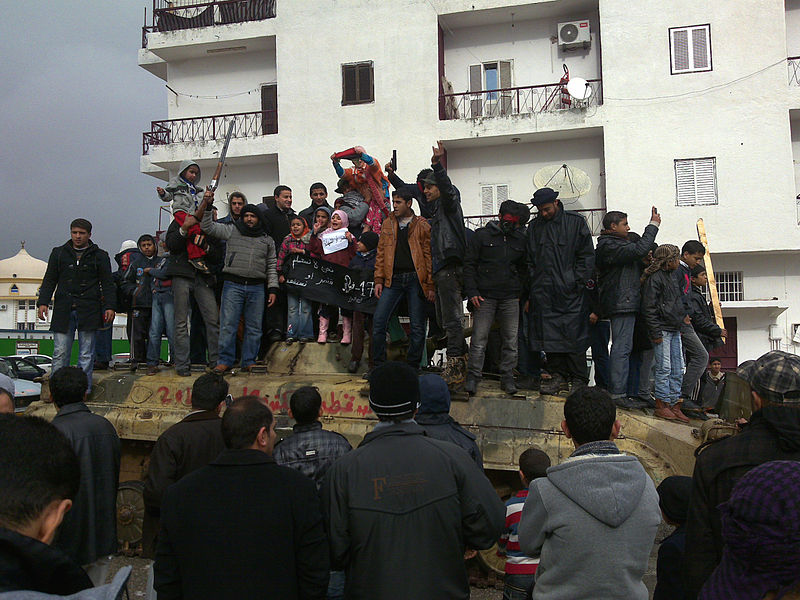
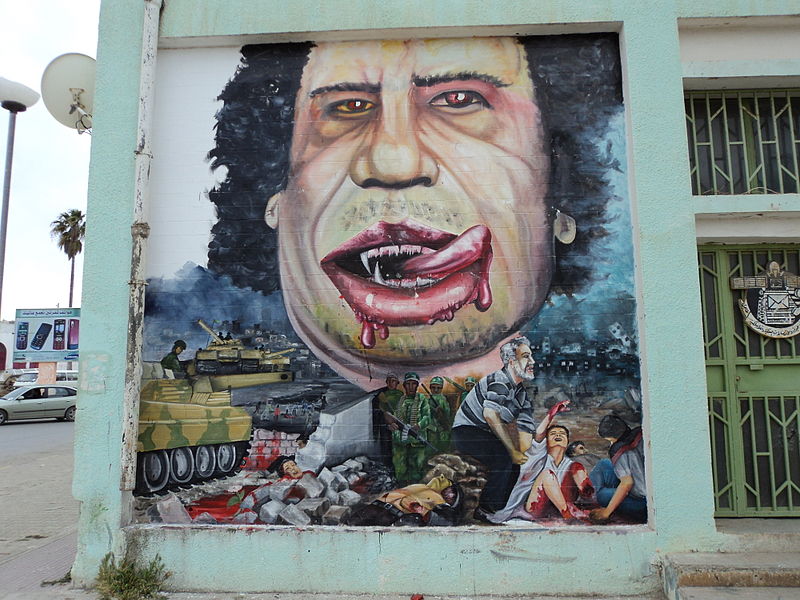
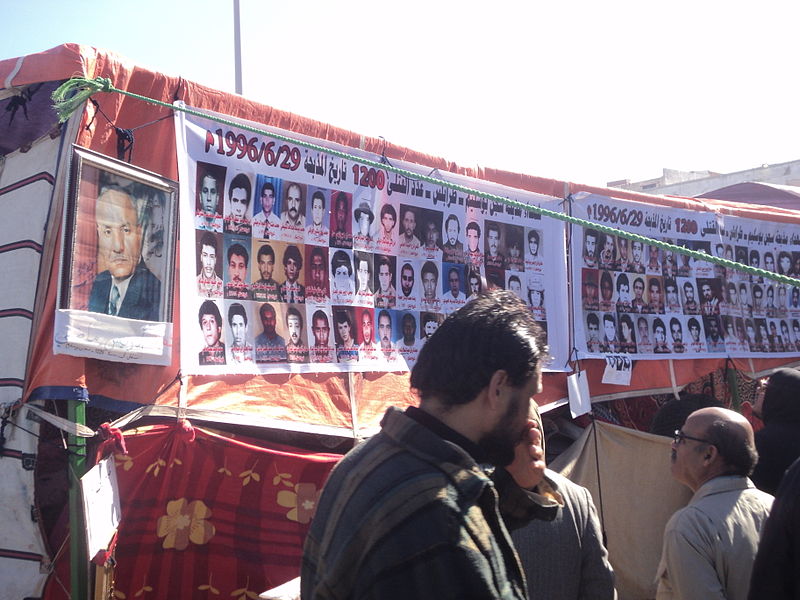
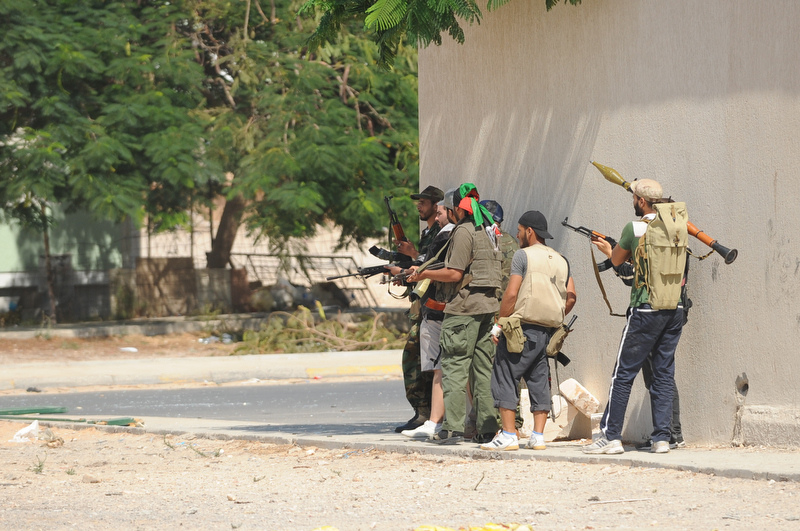
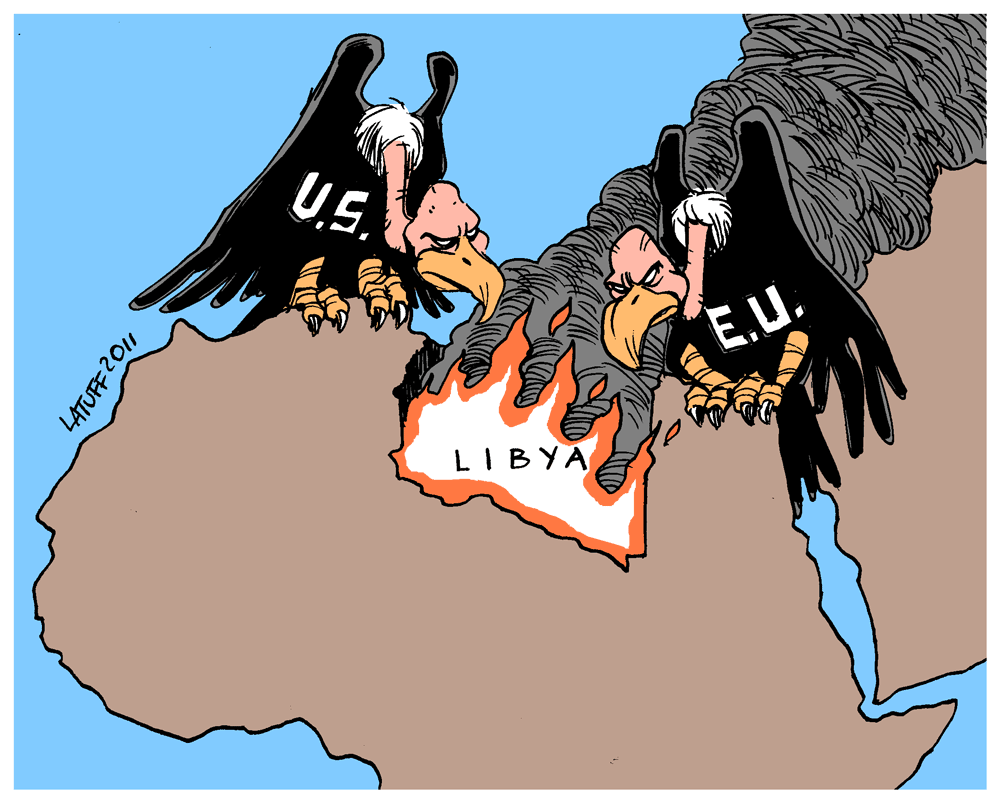
Written by Alan Woods Friday, 21 October 2011 14:54 <http://www.marxist.com/gaddafi-dead-revolution-and-counter-revolution-in-libya/print.htm><http://www.marxist.com/component/option,com_mailto/link,aHR0cDovL3d3dy5tYXJ4aXN0LmNvbS9nYWRkYWZpLWRlYWQtcmV2b2x1dGlvbi1hbmQtY291bnRlci1yZXZvbHV0aW9uLWluLWxpYnlhLmh0bQ%3D%3D/tmpl,component/> [image: After the death of Gaddafi: Revolution and counterrevolution in Libya]*The capture and killing of Colonel Gaddafi has been described in detail by the mass media in all its gory details. With the death of Gaddafi and the taking of Sirte the National Transitional Council is talking about forming a transitional government. The NTC is recognized by the imperialist powers whose interests it represents. However, many ordinary Libyans look with justified mistrust at the NTC and their imperialist backers.* *Although Gaddafi was captured alive he was summarily shot. But it is not difficult to see why he was not arrested and put on trial. Had he faced a trial he would have exposed all his past dealings with the likes of Blair, Sarkozy and Berlusconi. That explains why they have revelled so much in his death. Their hypocrisy stinks to high heaven, as they had made many lucrative deals with Gaddafi in the past, even handing over people to his regime who were subsequently tortured.* *The death of Gaddafi and the final collapse of his regime closes one chapter. However, this merely marks one turning point in the situation. Now that the old regime is finally gone, a struggle will open up over the future of Libya. In this struggle we will see the forces of both revolution and counter-revolution trying to get the upper hand. Here we publish an analysis of the situation by Alan Woods.* --- Confusion of the Left [image: Libyan rebels celebrating]<http://www.marxist.com/images/stories/libya/Celebrating_the_rebels_Al_Bayda_Libia_2011-02-25.jpg>Libyan rebels celebrating*The Left has displayed enormous confusion over the events in Libya. On the one hand, some people have capitulated to imperialism to the extent of supporting the military intervention of NATO. This was both naive and reactionary. To allow ones judgement to be clouded by the hypocritical chorus of the hired media and to swallow the lies about a so-called humanitarian intervention to protect civilians was stupid in the extreme.* The intervention of NATO was not at all intended for humanitarian purposes or to protect civilians. It was dictated by cold and cynical calculations. The same people who had established a cosy relationship with Gaddafi, who supplied him with arms and sent political prisoners to Libya to be tortured by his secret police can hardly lay claim to humanitarian principles. They have not shown the same tender concern for the suffering people of Bahrain. The emancipation of the Libyan people is the concern of the Libyan people alone. It cannot be entrusted to the imperialists, who have supported every blood soaked dictatorial regime in North Africa and the Middle East for decades. Our first demand is for an end to all foreign interference in Libya. Let the Libyan people settle their own problems in their own way! *However, the other tendency on the Left was no better. They went to the other extreme and backed Gaddafi, who they painted in rosy colours as a progressive, anti-imperialist and even a socialist. None of this was true. It is true that the Libyan regime (and also the Syrian regime) had a different character to the regimes of Tunisia and Egypt. But that did not fundamentally change its oppressive nature, or qualify it as genuinely anti-imperialist.* In order to shed light on the real processes at work it is not sufficient to place a plus or minus sign against these two equally incorrect positions. We must see the whole picture and not just present a one-sided view. We must not paint the situation in rose-tinted colours. But by far the most serious mistake from a Marxist point of view is to deny or minimise the revolutionary or potentially revolutionary elements in the equation. What is necessary is an all-sided and balanced approach that takes all the elements into consideration and shows how the contradictions may be resolved. The main problem as in Egypt is the lack of revolutionary leadership. History is full of examples of revolutions which were defeated, aborted or hijacked by alien class forces. Libya is no exception to this rule. The fact that a popular revolution has taken place by no means signifies that its ultimate success is guaranteed. But this general observation is just as true for Tunisia and Egypt as it is for Libya. For example, although the conditions are very different, in the sense that in Spain in the 1930s there were powerful workers organisations, the objective conditions for the victory of the socialist revolution were all present there in 1931-37. Trotsky explained that the Spanish working class was capable of making not one but ten revolutions. Yet the Spanish Revolution was first taken over by bourgeois elements and then defeated, and the people of Spain had to suffer four decades of fascism as a result. Let us remember that without the presence of Lenin and Trotsky, and the Bolshevik Party, the Russian Revolution would have also ended in defeat. Peculiarities of the Gaddafi regime [image: Gadafi caricature in Al Bayda]<http://www.marxist.com/images/stories/libya/Gadafi_Al_Bayda_caricature.JPG>Gadafi caricature in Al BaydaThe Gaddafi regime had a very peculiar character. Initially, Gaddafi had a mass base as a result of his anti-imperialist rhetoric. The regime, which posed as socialist, nationalised the majority of the economy, and with vast reserves of oil and a small population, he was able to provide a relatively high standard of living, health and education for the majority of the people. This gave his regime considerable stability for a long time. It also explains why, after the initial uprising against him, Gaddafi, in spite of everything, was still able to muster enough support to resist for several months and was not immediately overthrown. However, it was a system that concentrated all power in the hands of one individual, effectively preventing the development of anything resembling political or even state institutions. There was no ruling party (political parties were banned), a very small bureaucracy and a weak, divided army. Gaddafi maintained himself in power through a complicated system of patronage, alliances with tribal leaders and a network of informal contacts. Over the last 20 years and in particular the last decade the Gaddafi regime had begun to loosen the states control over the economy and was attempting to reach a deal with imperialism, opening up its markets and adopting free market economics and neo-liberal policies. It introduced some market-oriented reforms, including applying for membership of the World Trade Organization, reducing subsidies and announcing plans for privatization. Since 2003 more than 100 state owned companies have been privatized in industries including oil refining, tourism and real estate, of which 29 are 100% foreign owned. This move towards market economics led to a fall in living standards for many Libyans and the enrichment of a minority, mainly the Gaddafi family. This was one of the main reasons for the popular discontent that led to the uprising. In the last period of Gaddafis rule the life of the ordinary people grew increasingly difficult. Poverty levels were growing as a result of the adoption of neoliberal policies. After 1999 they turned sharply towards market economics and neoliberal policies. But this only benefited a narrow elite composed mainly of the Gaddafi family, certain tribes and the members of the security apparatus. This partly explains the splits in the ruling stratum, with a whole series of ex-generals, ministers and prominent businessmen turning against the Brother Leader and jumping the sinking ship, seeking at the same time to hijack the genuine revolutionary movement that had erupted from below. Was there a revolution in Libya? The movement in Libya was part of the general revolutionary ferment that swept through the Arab world after the uprisings in Tunisia and Egypt. It began with a popular uprising in Benghazi. This was a spontaneous rising with no leadership and no clearly defined aims other than the overthrow of the hated regime. This movement had an undeniably progressive and potentially revolutionary character. The main motor force of the uprising was the revolutionary people: the mass of urban poor, workers and the lower ranks of the petty bourgeoisie. A large number of middle class people (doctors, lawyers etc.) also rose against Gaddafi. The main weakness is that the working class is not organised far less than in Egypt and Tunisia. It is concentrated in the oil sector, which itself is heavily reliant on foreign labour. The proletariat was therefore unable to set its stamp on the movement. As in the case of Tunisia and Egypt, the revolutionary movement of the masses had no coherent leadership. Moreover, the situation in Libya was complicated by all kinds of national, regional and tribal elements and because of the lesser role played by the working class, these came more to the fore. Historically the area of Libya was composed of three provinces (or states), Tripolitania in the northwest, Barka (or Cyrenaica) in the east, and Fezzan in the southwest. These territories were united under the jackboot of Italian imperialism, which in 1934 divided Libya into four provinces and one territory: Tripoli, Misrata, Benghazi, Bayda and the Libyan Sahara. In order to consolidate his rule, Gaddafi tried to pit Arab against Berber, east against west, tribe against tribe. Local rivalries and tribal alliances have made the situation more complicated and contributed to the rapid descent into civil war. Nature abhors a vacuum. In the absence of a leadership, the bourgeois elements came to the fore. They organized the so-called National Transitional Council. These elements were self appointed, unelected and responsible to nobody. They forced their way to the fore, elbowing to one side the revolutionary masses, mainly the youth, who did all the fighting. The Benghazi uprising [image: Pictures of victims of Abu Salim massacre]<http://www.marxist.com/images/stories/libya/Victims_of_Abu_Sleem_massacre_of_1996.JPG>Pictures of victims of Abu Salim massacreAs in Egypt, the first protests in Benghazi were organized on Facebook. February 17th was set as the starting date for the demonstrations. In an attempt to prevent the February 17th protests, the Gaddafi regime arrested the dissident attorney Fathi Terbil on February 15th. Terbil was the coordinator of the families of the victims of the Abu Saleem prison where 1200 innocent prisoners were massacred in 1996 on Gaddafis orders. The arrest of Terbil had the opposite effect, since the families of those murdered in that prison came out onto the streets to protest against his arrest on February 15th, shouting *Wake up Benghazi, the day that you have been waiting for has come!* The people came out onto the streets to protest. A large part of eastern Libya joined in the protests; Al-Marj, Al-Bida, Derna, Shahat, Tobruk as well as Ajdabiya. Gaddafi responded by sending troops against the people, including mercenaries, as well as militias commanded by his sons. Heavy weapons were used against unarmed people. Many were killed and this continued until they took command of his military barrack in Benghazi. This immediately pushed the situation in the direction of a civil war. The heroic uprising of the masses in Benghazi can be compared to the 1936 uprising of the workers of Barcelona who attacked the fascist military almost with their bare hands. The unarmed protesters were forced to defend themselves with sticks, stones, and bottles filled with petrol which they threw at the military barracks. One of the protesters loaded his car with kitchen gas cylinders and drove it into the barracks, destroying two walls. It took days for the insurgents to take the Benghazi barracks. Under the pressure of the revolutionary people, the army began to crack. The Benghazi battalion under the General Abdul Fatah Younis joined the uprising, which led to the fall of the barracks. When the people of Benghazi entered the building, they found the bodies of many soldiers who had been shot for refusing to follow the orders to shoot their own people. Eventually, what had started as an exclusively eastern revolution spread to the western cities. Demonstrations erupted in Al-Zawia, Misrata, as well as some areas in the capital. Gaddafis reaction was immediate and brutal in the extreme. He used mercenaries to crush any movements and sent jet fighters and battleship s in order to attack the East. Several pilots defected and sought political asylum in Malta and Egypt. Heavy repression was used to suffocate a movement in Tripoli, where protests occurred at the beginning of the uprising. Many people were murdered, kidnapped and tortured. Any gatherings of people were prohibited and the streets of the capital were patrolled by mercenaries. Phone calls were monitored. The oppressive regime succeeded in silencing the movement in Tripoli for a time, until it burst out again in August. The regime was preparing a counteroffensive to crush all resistance in the East. A river of blood separated the regime from the people. Gaddafi indicated that he would stop at nothing to crush the revolution and drown Benghazi in blood. The bitterness generated by the conduct of the regime rapidly transformed a popular uprising into a bloody civil war. The role of NATO The NTC in Benghazi called upon NATO to intervene. Throughout all the revolutionary upheavals in the Middle East and North Africa the imperialists were unable to intervene. But now they understood that they had a chance to play a role in the situation. The Americans, French and British entered into contact with the NTC, which is an alliance of bourgeois elements and some former ministers in the Gaddafi regime. This action shows the completely reactionary nature of this body. But it would be incorrect to exaggerate the role of the NTC, or to believe that it was in complete control. On the contrary, the NTC had no firm grip on the insurgents, who initially regarded them with suspicion and hostility. This was shown by the incident back in March when British secret forces were captured by rebel troops while trying to enter Benghazi to contact the NTC leaders. This was extremely embarrassing to the London government, which was unable to explain the presence of these forces inside Libya. What changed the rebels attitude was the imminent threat of an all-out offensive of Gaddafi on Benghazi. Saif al-Islam Gaddafi said at the start of the conflict: "Libya is not Tunisia, it's not Egypt...It will become civil war. There will be bloodshed on the streets." Gaddafi himself threatened to track the rebels down like rats: house by house, alley by alley. Fear of a massacre, fed by Gaddafis speeches, created a climate where the demands of the NTC for armed foreign intervention could get an echo even among the masses and those who had originally opposed it in the first place. The loud chorus in favour of a humanitarian intervention presented the imperialists with a good excuse for intervention. The politicians in Paris and London were particularly eager to intervene. This was partly determined by short-term considerations: the falling popularity of both Sarkozy and the Lib-Con Coalition in Britain. Once again the so-called United Nations has revealed itself as a front for the imperialists, giving cynical backing to an alleged humanitarian intervention. But the main reasons were of an economic and strategic nature. Needless to say, the desire to save the lives of Libyans played no role whatsoever. France in particular has its own agenda and interests. Sarkozy was particularly keen to re-establish his credentials in the Arab world, after having backed the fallen dictator Ben Ali in Tunisia. It has always regarded Africa (especially North Africa) and the Middle East as being within its sphere of influence. It is no accident that French troops were behind the coup détat in the Ivory Coast (Cote dIvoire) that replaced Gbagbo by a western (French) stooge, Ouattara. Previously Tony Blair established a cosy relationship with Gaddafi. Now Cameron ordered the RAF to bomb him. However, there was no real change in the policy of British imperialism. The British all along have had their eyes on the oil wealth of Libya, with or without Gaddafi. War, as Clausewitz explained, is only the continuation of politics by other means. NATO and the civil war The Americans, in contrast to the French and British, were cautious. Having burnt their fingers badly in Iraq and Afghanistan, they were in no hurry to get embroiled in an air war in Libya that could easily end in another war on the ground. They only agreed to participate under pressure from London and Paris and on condition that the mission was led by NATO, not America. A number of American generals expressed grave doubts about this mission. They knew that it is impossible to win a war by air power alone. In Afghanistan they relied on the forces of the Northern Alliance, and in Kosovo on the KLA to do the fighting on the ground. In Libya, although the NATO air attacks clearly played a role in destroying Gaddafis military capability, the war had to be fought and won on the ground. This turned out not to be as easy as the imperialists supposed. In a civil war, politics play an even more decisive role than in a normal war. The lack of a real revolutionary policy rendered it difficult to win over people on the other side. Another factor was the divisions among the rebel leaders, and the role of some ex-Gaddafi officers who were suspected (probably correctly) of wanting to do a deal with the Brother Leader. If the war was to be fought on normal military lines, Gaddafis forces had the advantage of a professional army with superior weaponry and trained soldiers. For all these reasons, the civil war assumed a protracted and bloody character. The rebel forces were untrained and badly armed civilians. NATO generals expressed open contempt for the rebel army. The Economist quoted one of them as saying: They are not really on a war footing and dont seem to really want to fight. Its just posturing. Although air power can play a key role in destroying weapons on the ground, it is a well-known military axiom that wars are not won by air power alone. The recent experience of Libya once again proves this. NATO air strikes were used to halt Gaddafis advance on Benghazi and this allowed the rebels to begin a counter-offensive. But in and of themselves they were not sufficient to guarantee a decisive military victory. In fact, after months of intensive aerial bombardment the war on the ground appeared to be reaching stalemate. Worried voices were raised in London and Paris expressing concern that the conflict in Libya might last, not for months but years. The Libyan campaign was costing a lot of money: by early October the British government had spent at least £1.75 billion, while the USA had spent at least $1.1bn. This was hard to justify at a time of austerity, budget deficits and falling living standards. The British foreign minister William Hague made pessimistic statements to prepare public opinion for a long-drawn out war in Libya. The French were even more worried. French fighter planes were responsible for about one third of all NATO air strikes. Le Monde complained in a front page headline: France no longer has the military means to match its political ambitions. On 11 May the French Chief of Defence, Admiral Edouard Guillard made an astonishing admission: The [French] armed forces today are fragile and weakened. One should not deny or disguise it. We are in a difficult situation. Turkey, a member of NATO, was also put in a very difficult position. Having developed close links with the Gaddafi regime and having gotten lucrative contracts for Turkish companies in exchange, Turkey attempted to resist Britains and Frances eagerness to intervene. Once it realised that the tide was turning against Gaddafi, Erdogan was also quick to change his position attempting to carve out a role for Turkey in Libya after the inevitable fall of the regime. However, even the limited bombing campaign soon revealed severe strains in the military capabilities of NATO. Splits were opening up in its ranks. The Germans would have nothing to do with the Libyan affair, while others, like Italy, made a negligible contribution to the fighting. The British and French complained bitterly that their NATO allies were not doing enough, pointing an accusing finger at Germany and Italy for example. The fall of Tripoli Finally, the matter was settled by the fall of Tripoli in August. Was the fall of Tripoli achieved by NATO bombing? The fact that the fall of Tripoli took NATO completely by surprise is an indication of the fact that this was not the case. Up to that moment the leaders were striving to prepare public opinion for a lengthy military campaign. All the talk was of stalemate. When Tripoli finally fell it caused general surprise. The imperialists and the NTC were completely unprepared for it. Even the rebel commanders were surprised, as Patrick Cockburn, in Counterpunch reports: Local militia commanders were also surprised by this. Even in an area like Abu Salim, supposedly full of Gaddafi supporters, there was little fighting. Khalid, an accountant in a local bank carrying an assault rifle, said: We thought they were strong, but the fighting only went on for a couple of hours. A lot of people switched sides at the last moment. (Counterpunch, September 5, 2011) The same report continues: Almost everybody in Tripoli now claims to have been working openly or secretly on the rebel side. Such unlikely claims have probably been made in every captured city down the ages. But all the evidence is that by the time the rebels broke through at Zawiyah in August and, to their surprise, found the road to the capital open and undefended, the morale of the pro-Gaddafi forces had collapsed. One former soldier described how he had abandoned his tank at Zawiyah when ordered to retreat in the face of a rebel assault from the Nafusa mountains, an uprising in Zawiyah itself, and NATO planes relentlessly smashing pro-Gaddafi defensive positions. He simply decided that the game was up and there was no point in waiting to be incinerated inside his tank. He took off his uniform and ran. Inside Tripoli, regime supporters similarly concluded that there was no reason to die for a doomed cause. Issam, an Islamist truck owner in charge of a district in Souq al-Jumaa, said his men had few weapons at first, but obtained them by going house to house asking pro-Gaddafi people to hand over their arms and stay at home. Nobody refused. Khalid in Abu Salim said he thought the turning point in the war had come when Gaddafi failed to capture Misrata in early summer and Nato intensified the bombing. After that, Gaddafis men were on the retreat and it was easy to pick the ultimate winner. In the end the regime collapsed like a house of cards. The defence of Tripoli collapsed because Gaddafis soldiers saw no reason to fight and die in a lost cause. What forces were involved? [image: Militia fightin Ghadaffi loyalists in Tripli - Photo:Ammar Abd Rabbo]<http://www.marxist.com/images/stories/libya/Defence_unit_defending_Abu_Salim_entrance.jpg>Militia fightin Ghadaffi loyalists in Tripli - Photo:Ammar Abd RabboThe armed uprising in Tripoli played a fundamental role in the collapse of the resistance of the pro-Gaddafi forces in the city. This is confirmed from a number of sources, including an article by Nicholas Pelham entitled:* Libya: How They Did It<http://www.nybooks.com/articles/archives/2011/sep/29/libya-how-they-did-it/> .* In it we have an interesting description of the situation in Tripoli after the entry of the rebels: Only when I reached Suq al-Juma, Tripolis sprawling eastern suburb of 400,000, three days after the rebels entered the city on August 21, did I feel I was somewhere free of Muammar Qaddafis yoke. In contrast to the deserted, shuttered streets elsewhere in the capital, the alleyways behind its manned barricades were a hive of activity. Children played outside until after midnight. Women drove cars. The mosques broadcast *takbir*, the celebratory chants reserved for Eid, the end of Ramadan, that God is Great, greater even than the colonel. (...) Suq al-Juma was the first neighbourhood in Tripolis to rally to Qaddafis revolution in 1969, and the first to turn against it thirty-nine years ago. (...) Several suburbs responded to the alarm the mosques sounded as the faithful broke their fast after sundown on August 20, but the organization and scale of Suq al-Jumas uprising was unmatched. Within minutes, the entire district had cobbled together barricades out of old fridges, burned-out cars, and other war detritus, and stationed armed men at its gates. Trucks drove through the streets distributing homemade Molotov cocktails and grenades called gelatine, and, later that night, guns they had bought over the previous six months at 3,000 dinars apiece. Based on a precompiled blacklist, vigilantes broke into the homes of a thousand regime henchmen, or *farment*, Tripolis bastardized vernacular for informant, and disarmed them and hauled them away. The same report says: Showered with legitimacy abroad, the National Transitional Council (NTC) seemed in its first days to be having a harder time asserting itself in its proclaimed capital. Still, in contrast to Iraqs forced regime change, Libyas has much going for it. Its new rulers are Libyans, not foreigners, *and though NATO supported the rebels from the skies, on the ground they liberated themselves*. (My emphasis, AW) On September 20, 2011 the US *Socialist Worker* published an interesting letter describing the fall of Tripoli and the different forces involved in the rebel camp. The title of the letter was significant: *A thoroughgoing popular revolution.* This letter, written by somebody on the ground in Tripoli, was a reply to an editorial in SocialistWorker.org editorial ("Who really won in Libya")<http://www.www.socialistworker.org/2011/08/23/who-really-won-in-libya>, which suggested that it was NATO that won the revolution in Libya, not the Libyan people. The author replies as follows: From here in Tripoli, it seems that that judgment is rushed. There are a number of points that should be understood about the situation on the ground: 1. This has been a thoroughgoing popular revolution. Tripoli was not liberated by outside rebels. Rather, a popular uprising started from within, on August 20, in a number of neighbourhoods across the city. By midday on the 21st, the state security apparatus had been defeated completely in a number of neighbourhoods, and was crumbling in others. By the evening of the 21st, the first brigades of rebels reached the city, and fought through the remaining strongholds. The driving force of the revolution in every crucial juncture has been mass participation, whether in the initial uprisings in Benghazi and the western city of Zintan, or in and around Tripoli. Today, the streets of Tripoli are ruled by ordinary people. Every neighbourhood has a popular committee, consisting of armed locals. They control the entry and exit points to their neighbourhood, check vehicles, and, in the absence of police forces (who have only just begun to return) act as the de facto authority on the street level. As one Libyan friend told me, Everything is upside down now. Locals have laid bare most of the old centres of ruling class power, from security offices to Qaddafi's palaces. You can spend afternoons strolling through Qaddafi's villas and sifting through papers in intelligence headquarters. Locals have taken over some of Qaddafi's houses and prisons and turned them into museums of sorts. The massive swimming pool in the house of Aisha Qaddafi, built with money that rightfully belongs to ordinary Libyans, has been turned into a public pool. In some neighbourhoods, residents have taken over hotels and restaurants, kicking out the pro-Qaddafi owners and running it themselves. The same sense of empowerment, of imagining the impossible, that pervaded Egypt after its revolution exists here. This description, written by an eyewitness in Tripoli, is interesting. It underlines one element in the equation: the fact that the main motor force for the uprising against Gaddafi was the movement of the masses. From a Marxist point of view this is a most important consideration. But, of course, *it by no means exhausts the question of the precise class nature of the uprising, or the way in which events will proceed from now.* The writer lists the elements among the insurgents in Tripoli as follows: 1) Revolutionary leaders in Tripoli who have been directing the movement there since day one, in February, often with little direct contact with NATO; 2) Revolutionaries from Tripoli who have been based outside, in Benghazi, Tunisia or further abroad, and who are returning; 3) Islamist currents, led by prominent clerics; 4) The Benghazi-based, U.S.-backed National Transitional Council (NTC), and particularly the cabinet-like Executive Committee; 5) The Tripoli military forces, themselves split into two factions, one under the command of ex-Islamist Abdel Hakim Belhaj and the other under the control of ex-Qaddafi figures. Belhaj, who was imprisoned and tortured due to the collusion of the U.S. and Qaddafi, has some popular support in eastern Libya, and is believed to be backed by Qatar 6) About 40 rebel *kataibas*, or brigades, from around the country. >From this fairly detailed report we can see the enormous complexity of the situation, which contains many contradictory elements. It is very clear (also from other reports) that the NTC does not control the situation. There are many local committees and militias who are armed and control the situation on the ground. The vultures are circling [image: US and EU vultures - Photo: Carlos Latuff]<http://www.marxist.com/images/stories/libya/US_and_EU_vultures-Latuff.gif>US and EU vultures - Photo: Carlos LatuffAs we write these lines, the last remaining bastions of Gaddafis regime have been crumbling. Colonel Gaddafi himself has been captured and killed. Gaddafis threats of fighting a long war were empty, although some of his supporters could resort to terrorism and guerrilla tactics with the aim of destabilising the new regime. Even before his death the imperialists were moving in. The United States formally reopened its embassy in Libya recently and the returning ambassador is already trying to help American companies exploit business opportunities in the country. Clinton has already visited the country, no doubt looking for lucrative contracts for US companies. The new rulers of Libya are even more eager to throw themselves into the embraces of the imperialists. In a news conference last week, Mustafa Abdel-Jalil, chairman of Libyas Transitional National Council the self-proclaimed civilian leadership of the former rebels said the new government would even give its Western backers some priority in access to Libyan business. There had been no promises to its Western supporters, he said, But as a faithful Muslim people we will appreciate these efforts and they will have priority within a framework of transparency. While the provisional government had respected all legitimate contracts from the Qaddafi period, it was undertaking a systematic review for whatever financial corruption may have tainted them. The stench of corruption affected everything that the Qaddafi regime did with respect to commercial entities, he said. The bureaucracy was rife with it because that was the way it was done, and the family was at the top. Every deal involved a payoff to the Qaddafi family or a crony. In saying all this he conveniently glosses over the fact that many of the NTC leaders come from the Gaddafi regime and were involved in all this themselves. Jalil was in fact a member of Libya's General People's Committee, but was quick to see which way the wind was blowing and jumped ship early in the revolution, positioning himself thus to emerge as one of its leaders. He continued further in his statement, affirming that Libyas new leaders appeared willing to accede to international standards of transparency and accountability, and I think that is a good thing. Sarkozy, who had a very friendly relation with Gaddafi, recently spoke at a mass rally in Benghazi, expressing Frances solidarity with the new Libyan regime. At his side stood the British Conservative prime minister, David Cameron, who said the same kind of things. Britains help in overthrowing Muammar Gaddafi will never be forgotten and British companies can expect to play an instrumental role in rebuilding Libya, a senior diplomat told British executives on Tuesday. I can assure you that British businesses have a role to play and hope you will work with us to build the future Libya, Nacua, charge daffaires at the countrys embassy in London told the meeting, attended by about 100 executives. The meeting was closed to media other than Reuters. Naturally, these gentlemen do not wish the world to see how trade follows the democratic flag. Western leaders have expressed their concern at the potential for militant or at least anti-Western Islamists to take control. But the Islamists are falling over themselves to emphasize moderation, democracy and pluralism. They are all prepared to sell Libya to the highest bidder. Ambassador Gene A. Cretz participated in a State Department conference call with about 150 American companies hoping to do business with Libya: We know that oil is the jewel in the crown of Libyan natural resources, but even in Qaddafis time they were starting from A to Z in terms of building infrastructure and other things after the country had begun opening up to the West six years ago, he said. If we can get American companies here on a fairly big scale, which we will try to do everything we can to do that, then this will redound to improve the situation in the United States with respect to our own jobs. Mr. Cretz insisted that oil was never the predominant reason for the American intervention. But but his comments revealed the American eagerness for a cut of any potential profits. His remarks are a striking admission of the economic stakes of the United States and other Western countries in Libya. They are interested not only in Libyas oil resources but also in the goods and services those resources enable it to purchase from them. In the middle of a crisis, with scarce markets, it is too good an opportunity to miss. The interference of the imperialists will provoke new contradictions. The rebel leaders have been fighting like cats in a sack. Abdel Fattah Younis, Gadhafi's former military chief who went over to the rebels was murdered in suspicious circumstances last July. Many pointed the finger at the Islamists, but the affair has never been clarified. After the fall of Gadhafi's Baba az' Azia stronghold at the end of August, the Islamist Abdul Hakim Belhaj (also known by his nom de guerre, Abu Abdullah Assadaq) attempted a coup, seizing control as the military commander of Tripoli. This caused a clash with several rival commanders like Abdullah Naker, who told CNN: "Who is Abdulhakim Belhaj and who appointed him? We don't know him. We are the leaders, we are the revolutionists, we know everything." Who appointed Belhaj is a very good question. But the same question could be asked of Abdullah Naker or of the entire NTC. National Transitional Council (NTC) chairman Abdul Jalil tried to reconcile the growing differences. After a contentious group meeting with all the commanders, the atmosphere became so heated that he was forced to meet the next day with individual factions separately. Belhaj has been accused of being a stooge of the Qataris who have sent him money to buy weapons. Qatar has been intervening in Libya as part of the NATO alliance, and like the British, French, Americans and Italians, is actively pursuing its own interests with the aid of local agents and stooges. This foreign interference will aggravate the splits in the rebel camp and could even threaten the unity of Libya. But despite the demonstrations of friendship in Benghazi, the mass of Libyans hate and distrust the imperialists. They know that the Libyan revolution gathered Western support because the land is so rich in oil, and that the British, French and Americans only wish to plunder the countrys natural resources. The situation is very similar to that which prevailed in Baghdad in 2003, but with one very important difference: in Libya there are no US troops on the ground. Libyans know that for decades the gentlemen in London and Paris had a cosy relationship with Gaddafi. They know that Nicolas Sarkozy embraced Gaddafi in 2007 and bombed him less than four years later without batting an eyelid. They know that Tony Blair went to Tripoli to grovel before Gaddafi in order to obtain lucrative oil contracts. They also know that the so-called democrats sent Libyan political prisoners to Tripoli to be interrogated in the torture chambers of his secret police. The people of Tripoli will soon get their hands on the files of Gaddafi's oil and foreign ministries and find out the secrets of the business deals of Blair, Sarkozy and Berlusconi with Gaddafi - unless British and French Intelligence get their hands on them first. Who will prevail? In analysing any phenomenon we must distinguish carefully between the different tendencies, separating what is progressive from what is reactionary. In the case of Libya, this is not always easy. The movement in Libya clearly contains many different elements, both reactionary and potentially revolutionary. There are a number of forces vying for leadership of the revolution. This struggle is not yet decided and it can go in a number of different directions, as I pointed out in my article in August. It is a confused and contradictory situation, the outcome of which is as yet unclear. On the one hand, the mass movement, including the working class, is pushing for its own demands. On the other hand, the bourgeois elements are manoeuvring with the imperialists to take control of the situation. The main motor force of the Revolution is the young rebel fighters who are honest and courageous but also confused and disoriented and can be manipulated by the fundamentalists and other demagogues. Lastly, the working class is beginning to move and express its independent class demands, but is numerically weak and lacks adequate leadership. It is not yet clear which of these forces will win out. The U.S.-backed NTC is quite weak and has limited popular support. Demonstrations against it have already erupted in a number of cities, including Benghazi. As of mid-September, the NTC was still competing with a wide array of rebel groups and political factions for control of the country. There is no guarantee that the NTC can set up a workable regime. The weakness of the NTC is shown by the fact that even after the fall of Tripoli, they remained in Benghazi, obviously afraid to enter the capital that has been taken over by armed militias. Nicolas Pelham writes in The New York Review of Books: All made a show of unity when the first senior NTC representative, Finance Minister Ali Tarhouni, arrived in Tripoli from the rebel base in Benghazi. But no sooner had they joined him on stage for a press conference than fresh fractures emerged. Beneath the chandeliers of a hotel ballroom, Tarhouni forgot to include the Tripolitans in his long list of gratitude for those at home and abroad who had chased Qaddafi from the city. He didnt appreciate the role played by the intifada, said an irate member of the new Tripoli council, who retired to the back of the ballroom where Tarhouni was speaking. Giving vent to suspicions that eastern Libya might yet seek to upstage the west, the council member added, *If he thinks he can tell the people who liberated their city to lay down their arms, hell be sent packing*. Patrick Cockburn writes:The Transitional National Council members have been slow to get to Tripoli and slower still to take charge when they do arrive. Abdel-Rahman el-Keib, a member of the TNC, told me that he thought the rebel politicians, for all their previous vocal confidence in victory, were disorganized because they did not think that Gaddafis collapse would be so quick. His forces were not so strong as we thought. Divisions have appeared over who will have control of Libyas unfrozen billions of dollars. Local Godfathers have appeared. The problem is that many Libyans are loyal to family, tribe, village and town before nation. Patrick Cockburn continues: Politically, the TNC [NTC] looks fragile, disunited and unready to take over government. By way of contrast, the local committees that secure the streets of Tripoli appear highly capable. Though there are shortages of water, food, fuel and almost everything else in the shops, the committees say they have built up enough stocks over the past six months to fend off a humanitarian crisis. But the political leadership looks weak, and it is unlikely that militias will tamely dissolve themselves. The new Libyan state may not be able to withstand a lot of pressure, but, on the other hand, unlike Iraq and Afghanistan, it may not have to. In the absence of a real revolutionary leadership, it is possible that they will succeed. But the bourgeois are faced with serious problems. In the first place, they are faced with an aroused people with arms in their hands. The first task will therefore be to disarm the people. But this is easier said than done. US ambassador Cretz cited several factors for concern, including the disarming the newly armed populace and many autonomous militias. Ismail Sallabi, head of the Benghazi military council, called on the NTC to resign, castigating its members as "remnants of the Gaddafi era" and "as a bunch of liberals with no following in Libyan society". Many fighters, such as Sallabi, are insisting that they played the key role in toppling Gaddafi. Some go further, saying that their swift capture of Tripoli had taken the NTC by surprise and that they had defeated what they claim was Nato's real plan for the country: its partition into east and west. Nato's strategy, they maintain, was to freeze the conflict in the west, effectively turning Brega into the dividing line between the liberated east and Gaddafi's west. Soumaya Ghannoushi has written some interesting comments on this, although we do have to take into account the fact that she is the daughter of Gannoushi, the leader of the En Najda islamists in Tunisia. What she writes is very interesting in that it reveals the splits between the ranks of the rebels and the TNC. She writes: This conflict is played out in various ways throughout the region. In each case the internal dynamics of the various revolutions are threatened by foreign powers' logic of containment and control. What is at stake is whether the Arab spring leads to a calculated, limited, and monitored change, where new players replace old ones while the rules of the game remain intact, and where proxy wars are manned via allied local elites in order to recycle the old regime into the new order. This is what various foreign powers would like to see. *Gaddafi has gone, but Libya is now set to be a scene of multiple battles: not only conflicts between Nato's men and the fighters on the ground, but also between the foreign forces that have invested in the war the French, who are determined to have the upper hand politically and economically; the Italians, who regard Libya as their backyard; the British, who want to safeguard their contracts; the Turks, who are keen to revive their influence in the old Ottoman hemisphere; and of course the losing players in the emerging order, the Chinese and the Russians. (** http://www.guardian.co.uk/commentisfree/2011/sep/06/libya-national-transitional-council *<http://www.guardian.co.uk/commentisfree/2011/sep/06/libya-national-transitional-council> *)* Role of the working class The Libyan Revolution is an unfinished drama in which the fall of Gaddafi was just the first act. The future will be determined by the struggle of living forces and the final outcome is not yet decided. Different outcomes are possible both revolutionary and counterrevolutionary. Future developments will be determined by events both inside Libya and on an international scale. It is necessary to pose the question concretely: Was the overthrow of Gaddafi a victory for the Revolution or the Counterrevolution? By removing a colossal obstacle in the path of the working class, the Revolution presents new possibilities. It also poses new dangers. The lack of a strong working class was what turned the struggle into a bloody civil war. The rebellious youth joined revolutionary groups. These were often based on tribal or local loyalties. They were armed and financed by businessmen who provided guns and vehicles. And due to fact that no independent workers organisation exists, let alone that of a genuinely revolutionary Marxist party, the political perspectives of the rebels are limited to looking for an alternative within the confines of capitalism, i.e. within the limits of some form of bourgeois democracy. All these factors place a big question mark on the future evolution of the movement. Will the imperialists succeed in imposing their rule and subordinating the Libyan Revolution to their interests? This question cannot be decided with absolute certainty in advance. There are powerful forces pulling in that direction. But every action has an equal and opposite reaction. The fact that some people are waving French and British (and Egyptian, Algerian and Qatari) flags does not necessarily mean that people of Libya will be prepared to see their country and its oil wealth sold off to the highest bidder. It is one thing to express gratitude to these countries for dropping bombs on Gaddafis tanks. It is another thing to accept the return of colonial rule in Libya. It was significant that, despite its servile attitude to the West, the NTC leadership was recently forced to come out against a UN security force on the ground, reflecting the popular pressures that exist. This indicates that the revolutionary masses are suspicious of the NTC and opposed to the imperialist forces being allowed into Libya. The eyewitness in Tripoli who we cited earlier writes: The U.S. and its allies continue to try to subordinate the revolution to their interests. They have backed a section of the rebels that seems to lack a national base, in an effort the control the course of the Arab revolutions. They aren't interested in a genuine democracy, but in a limited, managed democracy that is subservient to their needs. And he concludes: Despite the popular nature of the revolution, the weakness of political structures in Libya means the prospects of a left wing emerging from it are exceedingly dim. However, they were even dimmer under Qaddafi, and the revolution gives Libyan society the space for such things to develop. It may not come soon--it would require a restructuring of the economy, a growth of the working class and so on--but for the first time in its history, Libya has a chance. For that reason alone, the revolution should be supported. Moreover, the victory has breathed new life into the uprisings throughout the Arab world, particularly in Syria and Yemen. It's far too early to say who will be the ultimate winner of Libya's revolution, but we do know who will attempt to determine the outcome. This is a fairly balanced conclusion. It is true that the Libyan working class is far weaker than, say, the Egyptian proletariat. It has so far been unable to set its stamp on the Revolution. The Left is very weak in general, and the pressure of the bourgeois elements and imperialism can pull Libya in a different direction. Despite this, the overthrow of Gaddafi creates more favourable conditions for the development of the class struggle inside Libya. The experience of how the Libyan revolution developed, with a bourgeois leadership hijacking the movement, with leaders who were part of the old regime dressing themselves up as democrats, is also a precious lesson for the ongoing movements in Syria and Yemen. That lesson is the following. If a regime is overthrown with the help of imperialist powers, then the masses will have to pay the price. Instead of genuine change they will end up with much of the old regime recycled as new and none of the real burning social issues will be addressed. Thus the masses will have to prepare for a second, thoroughgoing revolution to complete the task they had originally posed themselves. The material conditions in Libya are decisive in the long run. The condition of the masses is desperate. Supplies of electricity and water have been disrupted. There is also desperate shortage of petrol. The workers cannot live forever on a diet of speeches and democratic rhetoric. They have immediate needs that must be attended to. Now that Gaddafi is dead, the end of the fighting will lead to a polarisation within the rebel camp along class lines. The workers are already critical of the NTC and protesting against the retention of the old managers in the oil industry. More than a hundred employees of Libyas National Oil Company (NOC) protested on Tuesday 27 September outside its offices in Tripoli against the failure by managers to make a clean break with the past: This is a new era, a new revolution. We paid a lot of blood. We are looking for a huge change, said Haifa Mohammed, who said she worked in the companys sustainable development department. We expected this change to happen. But what we are seeing is the old people are still there, the bad people, the managers. This is not an isolated case. The Economist on 9th April reported a protest of the oil workers in Benghazi outside the offices of the Arabian Gulf Oil Corporation (AGOCO) the biggest oil company in Libya to demand changes in management. The company was forced to retain the head of the committee who had been elected by the workers. The workers achieved this victory in the teeth of opposition from the NTC. The report quoted the words of a trade unionist: Local godfathers are trying to carve up the country as fast as foreign players. Here we have the authentic voice of the Libyan Revolution: the voice of the working class that has shaken off one dictatorship and does not want it to be replaced by a new kind of dictatorship: the dictatorship of Capital and imperialist rule. This indicates that the working class is beginning to move. We must do everything in our power to support and encourage every step in the direction of an independent movement of the working class in Libya. *The situation is very complicated and there are tendencies pulling in different directions. It should go without saying that the Marxists must always base themselves on the working class and the most revolutionary elements of the youth, even when these are in a small minority. We base ourselves on what is progressive and fight against what is reactionary.* *Above all, the fall of Gaddafi is one more link in a chain reaction that is spreading through the Arab world. Ben Ali and Mubarak have gone, and Saleh is hanging by a thread. Now Gaddafi has been overthrown. This places Assad in Syria in greater danger. Abdullah of Jordan is still facing opposition. The people of Bahrain languish resentfully under the heel of the minority Sunni monarchy, propped up by Saudi bayonets. But how long can these regimes last? The Saudi masses, sitting atop so much wealth, will not tolerate forever the rule of a corrupt, decadent and effete monarchy. The Libyan events are part of a great Arab Revolution, which is far from over.* London 21 October, 2011 Home <http://www.marxist.com/> » Africa <http://www.marxist.com/africa/> » Libya <http://www.marxist.com/libya/> [Non-text portions of this message have been removed] ------------------------------------ --------------------------------------------------------------------------- LAAMN: Los Angeles Alternative Media Network --------------------------------------------------------------------------- Unsubscribe: <mailto:[email protected]> --------------------------------------------------------------------------- Subscribe: <mailto:[email protected]> --------------------------------------------------------------------------- Digest: <mailto:[email protected]> --------------------------------------------------------------------------- Help: <mailto:[email protected]?subject=laamn> --------------------------------------------------------------------------- Post: <mailto:[email protected]> --------------------------------------------------------------------------- Archive1: <http://www.egroups.com/messages/laamn> --------------------------------------------------------------------------- Archive2: <http://www.mail-archive.com/[email protected]> --------------------------------------------------------------------------- Yahoo! Groups Links <*> To visit your group on the web, go to: http://groups.yahoo.com/group/laamn/ <*> Your email settings: Individual Email | Traditional <*> To change settings online go to: http://groups.yahoo.com/group/laamn/join (Yahoo! ID required) <*> To change settings via email: [email protected] [email protected] <*> To unsubscribe from this group, send an email to: [email protected] <*> Your use of Yahoo! Groups is subject to: http://docs.yahoo.com/info/terms/