Europe’s harshest Israel critics aren’t driven by Islamism or antisemitism,
report suggests
Study to be released before International Holocaust Remembrance Day finds
diplomatic failures, national narratives and virtue signaling in countries
leading charge against Israel
By Zev Stub<https://www.timesofisrael.com/writers/zev-stub/>
Follow
8 January 2026, 6:25 pm
Share
https://www.timesofisrael.com/europes-harshest-israel-critics-arent-driven-by-islamism-or-antisemitism-report-suggests/?utm_source=The+Weekend+Edition&utm_campaign=weekend-edition-2026-01-11&utm_medium=email

<https://www.timesofisrael.com/europes-harshest-israel-critics-arent-driven-by-islamism-or-antisemitism-report-suggests/#openwebComments>
26<https://www.timesofisrael.com/europes-harshest-israel-critics-arent-driven-by-islamism-or-antisemitism-report-suggests/#openwebComments>
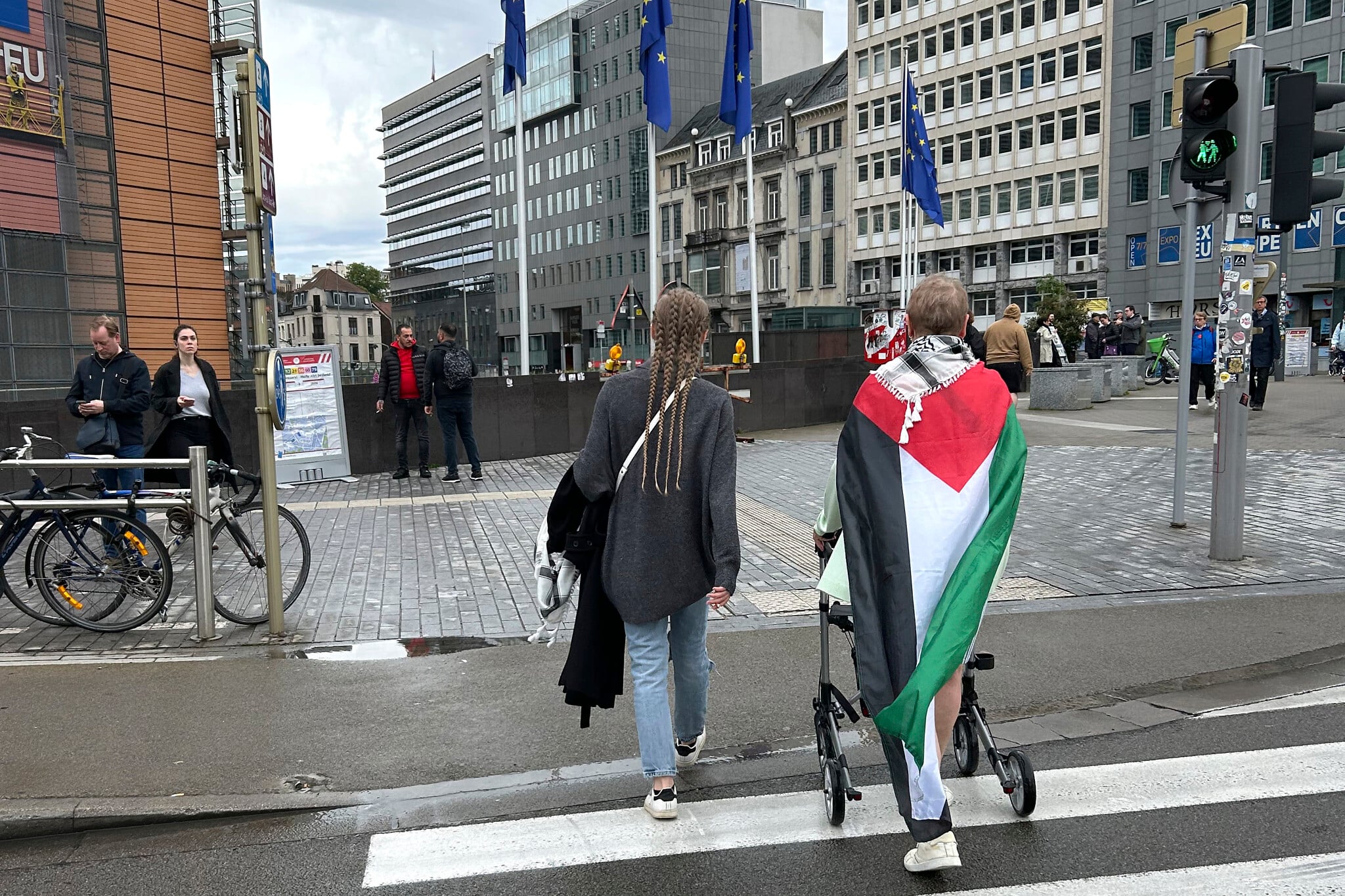
[A woman wearing a Palestinian flag pushes a stroller on a crosswalk outside EU
headquarters in Brussels, May 26, 2024. (AP/Virginia
Mayo)]<https://static-cdn.toi-media.com/www/uploads/2026/01/AP24147435346101-1.jpg>
A woman wearing a Palestinian flag pushes a stroller on a crosswalk outside EU
headquarters in Brussels, May 26, 2024. (AP/Virginia Mayo)
Several European countries that are most critical of Israel may not be driven
by classical antisemitism or a large Muslim population, as is commonly
believed, but a surprising mix of factors not often considered, according to an
upcoming report from Tel Aviv University.
The Muslim vote is relatively insignificant in the eight European countries
considered most critical of Israel — Ireland, Iceland, Belgium, Luxembourg,
Malta, Norway, Slovenia, and Spain.
But most of them have national narratives that are unencumbered by guilt over
the Holocaust, making critiques of the Jewish state less fraught, and their
relatively modest foreign policy footprint also means they both receive scant
diplomatic attention from Jerusalem and are not putting much on the line by
raising their voices against Israel, according to Prof. Uriya Shavit, who
authored the study.
The findings are set to be included in an annual report to be published by
TAU’s Center for the Study of Contemporary European Jewry ahead of
International Holocaust Remembrance Day on January 27, analyzing the year’s
significant developments in the fight against antisemitism and racism.
This year’s report, entitled “For a Righteous Cause,” relies on dozens of
in-depth interviews with diplomats, professors, and journalists, as well as
analysis of public opinion surveys, government statements and media reports.
“Some of the most important insights came from these discussions,” Shavit, who
heads the center, told The Times of Israel ahead of the report’s publication.
“I would never have imagined, for example, how closely national narratives in
Luxembourg and Slovenia support pro-Palestinian sentiments in those countries.”
The governments in question, which the report refers to collectively as the
P-8, are those that have emerged as the most consistent and vocal critics of
Israel’s military and settlement policies since the Hamas-led attack of October
7, 2023. Many have taken concrete actions, such as formally recognizing
Palestinian statehood, calling for European Union-wide sanctions, or suspending
arms trade with Israel.
[https://static-cdn.toi-media.com/www/uploads/2024/09/AP22187379605864-640x400.jpg]European
 lawmakers gather to vote at the European Parliament, in Strasbourg, eastern
France, July 6, 2022. (Jean-Francois Badias/AP)
Belgium is unique among the countries on the list for having policies that have
actually shifted in Israel’s favor as the war progressed, due to changing
domestic political dynamics, Shavit noted.
The report  “changes the way we conveniently think about the reasons for the
anti-Israeli wave in Europe” and calls for Israel to strengthen its presence in
the smaller European countries it has largely ignored, he said.
“There are small and large countries in Europe,” Shavit said. “But there are no
unimportant ones.”
The Muslim misconception
Many in Israel, including the country’s leaders, have attributed European
criticism of Israel to both ingrained hatred of Jews and political pandering to
a growing Muslim population, but according to Shavit, the conception is largely
misguided.
[https://static-cdn.toi-media.com/www/uploads/2026/01/WhatsApp-Image-2026-01-06-at-11.49.47-AM-300x480.jpeg]Prof.
 Uriya Shavit, head of the Center for the Study of Contemporary European Jewry
at Tel Aviv University (Courtesy/Center for the Study of Contemporary European
Jewry)
“If Europe is being ‘taken over’ by Muslims, as some people claim, you would
expect to see a correlation in these countries, but we actually see the
opposite,” Shavit said. “That narrative may make life easier for some Israelis,
but it oversimplifies things.”
If approximately six percent of Europe’s population is Muslim, as suggested by
various surveys, then six of the P-8 countries fall below the European average,
according to the report. Iceland is just 1% Muslim, the figure in Ireland is
2%, and Slovenia, Malta, and Luxembourg are 3-4% Muslim. In Spain, slightly
less than 5% of the population is Muslim, but no more than half of the Muslims
have citizenship, and very few have made an impression in the political sphere.
Norway and Belgium have higher proportions of Muslims, but their political
influence likely is not a significant factor in those countries’ positions,
Shavit said.
[https://static-cdn.toi-media.com/www/uploads/2025/10/AFP__20251011__78FK2KN__v1__HighRes__BritainIsraelPalestiniansConflictDemo-e1760190167283-640x400.jpg]
Pro-Palestinian, anti-Israel protesters hold placards and wave flags in central
London, on October 11, 2025. (HENRY NICHOLLS / AFP)
“I’m not saying that there is no impact on political discourse in countries
like France and Great Britain, where there are large Muslim communities,”
Shavit noted. “But it may indicate that their influence isn’t as significant as
commonly believed.”
The problem with not showing up
More significant than the presence of Muslims in these countries is the absence
of Israelis, Shavit said. Israel has no embassy or resident ambassador in five
of the P-8 countries, leaving the diplomatic arena wide open for
pro-Palestinian actors.
In the three countries that do have embassies — Norway, Belgium, and Spain —
the Jewish communities are relatively small, and pro-Zionist voices carry
limited weight.
“You can’t underestimate the importance of having diplomats who are seasoned
professionals on the ground, which is the responsibility of Israel’s Foreign
Ministry,” Shavit said. “Even in a world of global media and social networks,
people still primarily consume content within national contexts. There is no
substitute for sustained personal engagement with opinion leaders. Malta has a
resident Palestinian ambassador but no Israeli one.”
He derided attempts at public diplomacy as consisting of “domestic-facing
gimmicks that have little to no impact abroad.”
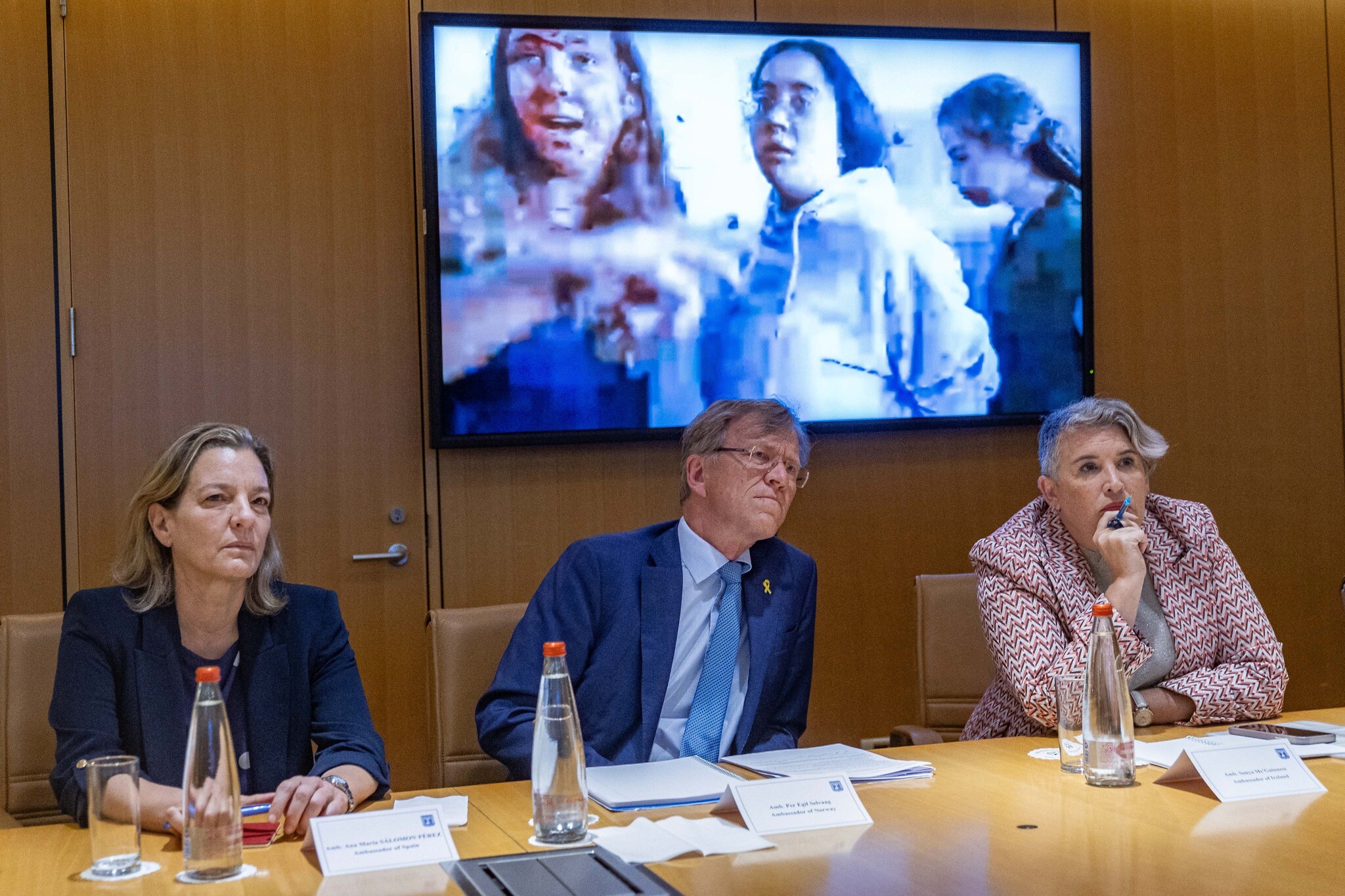
[https://static-cdn.toi-media.com/www/uploads/2024/05/F240523YS108-640x400.jpg]<https://static-cdn.toi-media.com/www/uploads/2024/05/F240523YS108.jpg>Spanish
 ambassador Ana Sálomon Pérez, Norwegian ambassador Per Egil Selvaag and Irish
ambassador Sonya McGuinness watch footage of female soldiers being abducted
from the Nahal Oz base on October 7 at the Foreign Ministry in Jerusalem, May
23, 2024. (Yonatan Sindel/Flash90)
The Foreign Ministry declined to comment to The Times of Israel on the report.
Shavit cited the case of Salman Tamimi, a Palestinian who moved to Iceland in
1971, when there were just a handful of Muslims in the country. Tamimi later
founded the Iceland-Palestine Association and became an outspoken campaigner
for Palestinian causes, eventually helping facilitate the country’s recognition
of a Palestinian state in 2011.
“His success wasn’t because he was so effective at what he did; it was because
there was no one around to counter him,” Shavit said. “Whenever he was on TV,
there wasn’t even anyone from the Israeli side who could come to the studio.”
Israel must ensure that it has embassies in all European states, no matter
their size, Shavit said.
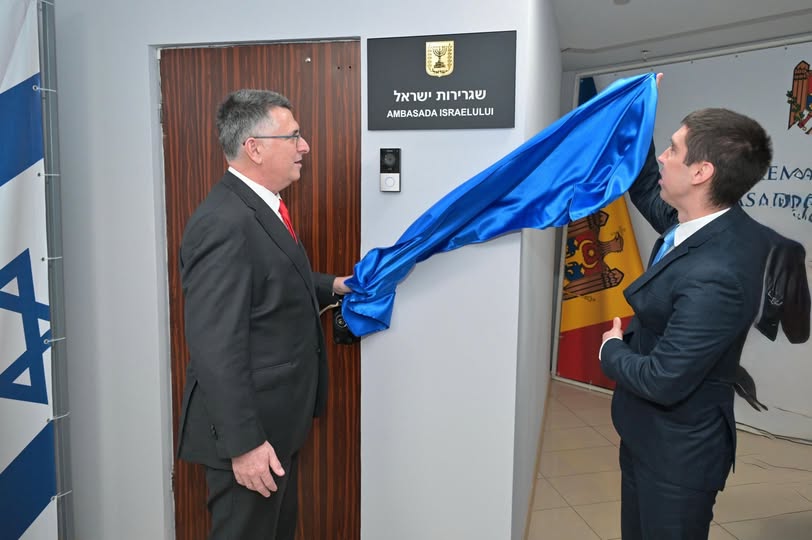
[https://static-cdn.toi-media.com/www/uploads/2025/02/fm-saar-inaugurated-the-israeli-embassy-in-moldova-1-640x400.jpg]<https://static-cdn.toi-media.com/www/uploads/2025/02/fm-saar-inaugurated-the-israeli-embassy-in-moldova-1.jpg>Foreign
 Minister Gideon Sa’ar, left, with Moldova Deputy Prime Minister and Foreign
Minister Mihai Popsoi, inaugurates Israel’s first ever embassy in Moldova,
February 4, 2025. (Shlomi Amsalem/GPO)
“Politicians who claim that Europe is lost and that losing it would not be a
major disaster are wrong on both counts,” Shavit concludes. “Europe is not lost
— but if Israel loses it, the consequences will be severe.”
Liberal democracies and narratives
A few other major trends are driving anti-Israel sentiments in the P-8, and
while none are unique to those countries, Shavit said, the combinations reveal
some telling insights.
The first, perhaps unsurprisingly, is that all of these countries are governed
by coalitions led by left or center parties or coalitions in which such parties
play a significant role. These governments “speak a very different language
than Israel in terms of mainstream European democracy and liberal thought,”
Shavit said.
Leftist, left-center, or broad coalitions led by leftist politicians have been
in power since the beginning of the war in Spain, Ireland, Iceland, Malta,
Norway, and Slovenia, the report said. Belgium and Luxembourg are “exceptions
that do not disprove the rule,” with coalitions that lean to the right but
still require support from liberal parties.
[https://static-cdn.toi-media.com/www/uploads/2025/10/AP25277381356118-e1759577909237-640x400.jpg]Pro-Palestinian,
 anti-Israel demonstrators rally during a protest in Barcelona, Spain, October
4, 2025. (AP/Emilio Morenatti)
“That’s also the general trend in Europe and the United States, so Israel can’t
afford to have this antagonistic relationship with the Western world that gets
increasingly intense,” Shavit said. “A pro-Israel stance that sees annexation
of the West Bank or transfer of Palestinians is an idea that simply has no
buyers in Europe, and that continues to drive a wedge between these different
worldviews.”
Many of these countries already had strong anti-Israel sentiments even before
the October 7 invasion, and public opinion surveys have shown that the
Hamas-led terror onslaught failed to change public perceptions of Israel as the
“villain,” even in its immediate aftermath, the survey noted.
A lack of Holocaust guilt
Perhaps less obvious to most observers is the role of a national narrative
about the country’s historical role in the Holocaust. Many of the P-8 countries
were neutral during World War II, or their conduct toward Jews during the
Holocaust never became central to contemporary public discourse. As a result,
they lack a strong sense of historical responsibility toward the Jewish people,
making it politically easier to adopt anti-Israel positions, Shavit suggested.
“When you speak with German or Austrian officials, there’s always so much
apologetics before they can say anything critical about Israel,” he said. “In
countries like Britain or Denmark, there’s a sense that they were the ‘good
guys’ in the war. Meanwhile, in places like Ireland, Spain, Iceland and Malta,
there doesn’t don’t seem to be any sense of historical debt or guilt.”
Thus, for example, while criticism of Israel or of Jews is an exceptionally
sensitive issue in German politics and culture, these sensitivities “are
completely absent from Spanish public discourse,” the report noted.
[https://static-cdn.toi-media.com/www/uploads/2025/06/AP25156352883522-640x400.jpg]German
 Foreign Minister Johann Wadephul, left, and Israel’s Foreign Minister Gideon
Sa’ar attend a wreath laying ceremony at the Holocaust Memorial in Berlin,
Germany, June 5, 2025. (AP Photo/Markus Schreiber)
These differences play out in public opinion, not just on the diplomatic level,
Shavit noted. A Pew Research Center
poll<https://www.pewresearch.org/short-reads/2025/06/03/most-people-across-24-surveyed-countries-have-negative-views-of-israel-and-netanyahu/>
 conducted in the spring of 2025 found that European countries surveyed all
held unfavorable views of Israel. But Germany, Poland and Hungary had among the
lowest levels of people with “very unfavorable” view of Israel.
That shows that people in these countries have learned to be more
self-restrained with regard to how they speak about Israel, Shavit said.
Virtue signaling
P-8 countries are also free of another burden, Shavit said — a sense of power
that they can actually influence Middle Eastern politics.
Unlike larger countries like Germany, France, or the United Kingdom, “none of
these countries have the kind of bilateral relations with Israel where this
could actually impact anything,” Shavit said. “So they make statements instead.
Some might call this virtue signaling.”
These countries are not reliant on the United States, nor at the forefront of
fighting Russian expansionism, so the stakes are lower, Shavit said. This puts
them “in an awkward win-win situation [where] their hostile views regarding
Israel have little direct impact, yet involve few risks,” according to the
report.
[https://static-cdn.toi-media.com/www/uploads/2026/01/AFP__20241005__36JD4HF__v3__HighRes__TopshotSpainIsraelPalestinianLebanonWar-640x400.jpg]Demonstrators
 hold a balloon reading ‘Stop the weapons trade with Israel’ during an
anti-Israel rally in solidarity with Palestinian and Lebanese people ahead of
the one-year anniversary of the war between Israel and Hamas, in central Madrid
on October 5, 2024 (Thomas COEX / AFP)
Spain and Slovenia have both taken recent steps that go beyond mere statements,
with defense trade embargoes on Israel and boycotts of Israeli products
imported from the West Bank, Golan Heights and East Jerusalem.
While Slovenia’s boycotts are expected to have only a symbolic
impac<https://www.timesofisrael.com/in-symbolic-move-slovenia-bans-west-bank-settlement-imports-over-war-in-gaza/>t,
 Spain’s are somewhat more
significant<https://www.timesofisrael.com/with-new-trade-restrictions-spain-looks-to-trigger-eu-cascade-against-israel/>,
 and may
draw<https://www.timesofisrael.com/with-new-trade-restrictions-spain-looks-to-trigger-eu-cascade-against-israel/>
 other countries like Ireland to follow.
“Even if these countries are relatively small, there are dynamics that can
influence others if they can reach a critical mass,” Shavit said.
The underdog myth
Shavit also found that six of the P-8 countries have national narratives of
independence acquired through struggle from a more powerful country, a factor
that strengthens perceptions of the Palestinians as a David fighting against an
Israeli Goliath.
“There is little need to explain why, in the Republic of Ireland, which gained
independence after centuries of brutally imposed British rule, such sentiments
are strong,” the report said. But Malta, Slovenia, Iceland and Norway all
fought for independence at various points, and Luxembourg, Belgium and Spain
have complicated national memories of struggles for self-determination.
These narratives might have aligned them more with Zionism in 1948 or 1967,
Shavit said, but today they are more popularly linked with the Palestinian
cause.
“In 2026, anyone who sees themself as a David fighting Goliath automatically
identifies with the Palestinians,” he said.
[https://static-cdn.toi-media.com/www/uploads/2023/11/F231007YM31-640x400.jpg]A
Palestinian stands on an Israeli tank at the border fence near the city of Khan
Younis in the southern Gaza Strip after some 3,000 Hamas terrorists burst
through the border and entered Israel, slaughtering some 1,200 people, October
7, 2023. (Yousef Mohammed/Flash90)
Israel can still rebuild its relationships with European countries, Shavit
said. It must open fully functioning embassies in every European country,
employ trained communications professionals to interact with media, and
encourage more bloggers and influencers to visit the country and experience it
for themselves.
Officials must reach out to moderate elements within European social
democracies, engage in open dialogue, and avoid labeling all criticism and
hostile diplomatic initiatives as antisemitism.
“Europe is not lost, but the gap between us is growing,” Shavit said. “We have
to act.”


Jewish  Socialist  Bund

https://Jewish-Socialist-Bund.net
https://Jewish-Socialist-Bund.net/JPLO

[email protected]


-=-=-=-=-=-=-=-=-=-=-=-
Groups.io Links: You receive all messages sent to this group.
View/Reply Online (#40130): https://groups.io/g/marxmail/message/40130
Mute This Topic: https://groups.io/mt/117214970/21656
-=-=-
POSTING RULES & NOTES
#1 YOU MUST clip all extraneous text when replying to a message.
#2 This mail-list, like most, is publicly & permanently archived.
#3 Subscribe and post under an alias if #2 is a concern.
#4 Do not exceed five posts a day.
-=-=-
Group Owner: [email protected]
Unsubscribe: https://groups.io/g/marxmail/leave/13617172/21656/1316126222/xyzzy
[[email protected]]
-=-=-=-=-=-=-=-=-=-=-=-

![https://static-cdn.toi-media.com/www/uploads/2024/09/AP22187379605864-640x400.jpg]European](https://static-cdn.toi-media.com/www/uploads/2024/09/AP22187379605864-640x400.jpg]European)
![https://static-cdn.toi-media.com/www/uploads/2026/01/WhatsApp-Image-2026-01-06-at-11.49.47-AM-300x480.jpeg]Prof](https://static-cdn.toi-media.com/www/uploads/2026/01/WhatsApp-Image-2026-01-06-at-11.49.47-AM-300x480.jpeg]Prof)


![https://static-cdn.toi-media.com/www/uploads/2025/10/AP25277381356118-e1759577909237-640x400.jpg]Pro-Palestinian](https://static-cdn.toi-media.com/www/uploads/2025/10/AP25277381356118-e1759577909237-640x400.jpg]Pro-Palestinian)
![https://static-cdn.toi-media.com/www/uploads/2025/06/AP25156352883522-640x400.jpg]German](https://static-cdn.toi-media.com/www/uploads/2025/06/AP25156352883522-640x400.jpg]German)
![https://static-cdn.toi-media.com/www/uploads/2026/01/AFP__20241005__36JD4HF__v3__HighRes__TopshotSpainIsraelPalestinianLebanonWar-640x400.jpg]Demonstrators](https://static-cdn.toi-media.com/www/uploads/2026/01/AFP__20241005__36JD4HF__v3__HighRes__TopshotSpainIsraelPalestinianLebanonWar-640x400.jpg]Demonstrators)
![https://static-cdn.toi-media.com/www/uploads/2023/11/F231007YM31-640x400.jpg]A](https://static-cdn.toi-media.com/www/uploads/2023/11/F231007YM31-640x400.jpg]A)