<properties> should be supported in the next coming release.
Please check the trunk.
P.S. if you can, try to refactorize your DB.

On Fri, Feb 18, 2011 at 7:41 PM, Stuart Carnie <[email protected]>wrote:

> After a lot of research I believe I have answered my own question, however
> I wanted to post here for further clarification and perhaps save others
> similar pain.  My question is
>
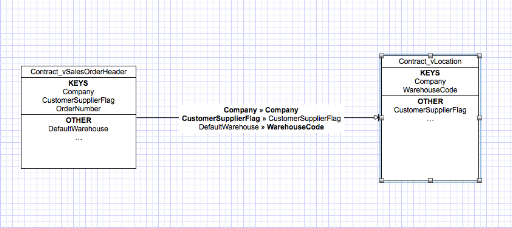
> *Q: *Does NHibernate support relationships using an arbitrary list
> of compound / composite key columns?
>
>
> The following illustration should clarify the scenario.  The relationship
> line shows which columns represent the relationship, with those in
> *bold*being a subset of the composite key.  Notice that arbitrary columns are
> used
> (those which are not bold).
>
>
> <https://lh3.googleusercontent.com/_WTgxY9AxbJk/TV7yP19xD8I/AAAAAAAAAmA/jclNdZzbPyU/relationship-example.png>
> The closest I found was using a <properties> group in the <class>
> definition, though this is not implemented in NHibernate and the feature is
> not flexible enough, as the same columns may be used in other relationships.
>
> Thoughts?
>
> Cheers,
>
> Stuart
>
> --
> You received this message because you are subscribed to the Google Groups
> "nhusers" group.
> To post to this group, send email to [email protected].
> To unsubscribe from this group, send email to
> [email protected].
> For more options, visit this group at
> http://groups.google.com/group/nhusers?hl=en.
>


--
Fabio Maulo

--
You received this message because you are subscribed to the Google Groups
"nhusers" group.
To post to this group, send email to [email protected].
To unsubscribe from this group, send email to
[email protected].
For more options, visit this group at
http://groups.google.com/group/nhusers?hl=en.