Just because something is immoral does not make it illegal and just because
something is illegal it does not make it immoral.
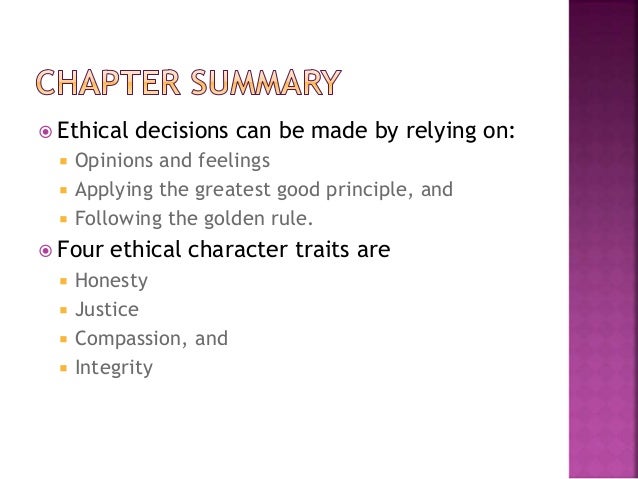
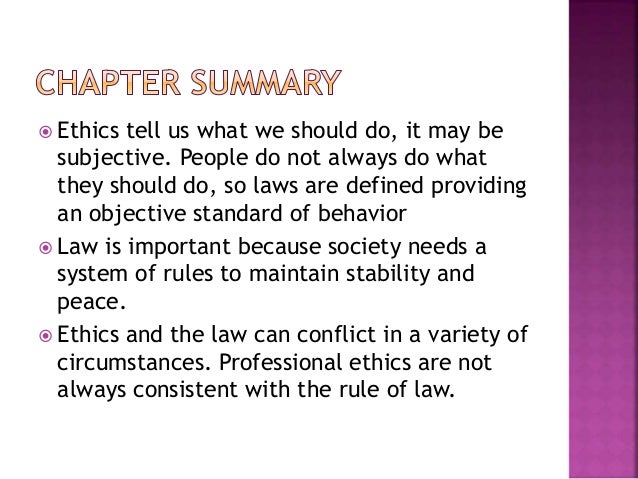
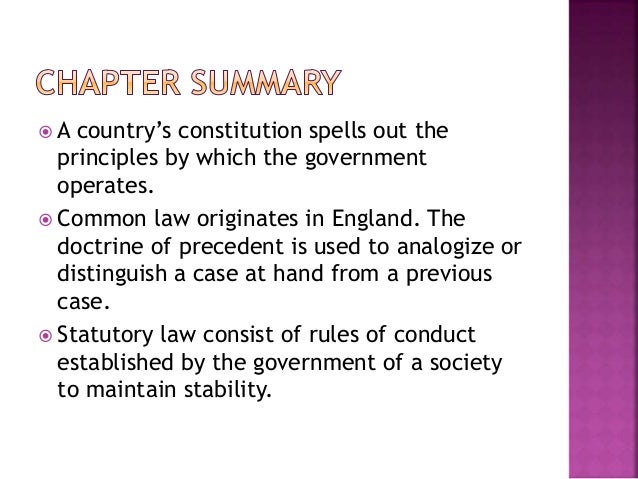
*Things that are illegal but are thought to be moral (for many)!* Drinking under age. Driving over the speed limit. Smoking marijuana. Cheating on a tax return. Splitting a cable signal to send it to more than one television. People do not think of themselves or of others as being immoral for breaking these laws. *Things that are immoral (for many) but are not illegal.* Cheating on your spouse. Breaking a promise to a friend. Using abortion as a birth control measure. People can not be arrested or punished with imprisonment or fines for doing these things. What is the relation of morality to law? Well, when enough people think that something is immoral they will work to have a law that will forbid it and punish those that do it. When enough people think that something is moral, they will work to have a law that forbids it and punishes those that do it repealed or, in other words, if there is a law that says doing X is wrong and illegal and enough people no longer agree with that then those people will work to change that law. *Moral Philosophy* to understand and to justify moral principles *Ethics* to establish principles of the GOOD and those of right behavior Ethics deals with the basic principles that serve as the basis for moral rules. Different principles will produce different rules. *Meta Ethics*- discussion of ethical theories and language So, ethics and morality are not the same things! A person is moral if that person follows the moral rules. A person is immoral if that person breaks the moral rules. A person is amoral if that person does not know about or care about the moral rules. A person is ethical if that person is aware of the basic principles governing moral conduct and acts in a manner consistent with those principles. If the person does not do so they are unethical. *Here is a good general definition and an overview of ETHICS. * *READ: http://en.wikipedia.org/wiki/Ethics <http://en.wikipedia.org/wiki/Ethics>* Here is a glossary of general terms in ethics. *http://ethics.sandiego.edu/LMH/E2/Glossary.asp <http://ethics.sandiego.edu/LMH/E2/Glossary.asp>* Ethics and morality,Ethics and law,Ethos 1. 1. Morality and ethics are terms often used as if they have the same meaning. At other times, they are used as if they have no relationship to one another. I think most people realize ethics and morality have something to do with the concepts of good and bad. However, English is not like French, which has the Acadàmie Fran�aises acting as its linguistic jury - establishing what is proper French. English changes at the whim of the populous. One can bomb (especially in stand-up comedy), and that's bad, but if one is the bomb (e.g., "Gee, you're swell!"), that's good. 2. 2. <http://image.slidesharecdn.com/ethicsandmorality-150223104358-conversion-gate01/95/ethics-and-moralityethics-and-lawethos-2-638.jpg?cb=1424688381>The word "morality" has been co-opted by groups, such as the Moral Majority, making us think morality only deals with acts these religious groups think aren't proper, or are therefore immoral. If you ask people to define "immoral," generally they will give an answer that has to do with sex. 3. 3. <http://image.slidesharecdn.com/ethicsandmorality-150223104358-conversion-gate01/95/ethics-and-moralityethics-and-lawethos-3-638.jpg?cb=1424688381>The meanings of the terms "ethics" and "morality" can be differentiated based on their origins in ancient Greek and Latin, respectively. We know that the foundations of Western philosophy came from the ancient Greeks. Thus, if one were to use a single term to describe the Greeks, it would be "philosophers.“ On the other hand, the ancient Romans developed many of the techniques used in architecture, so much of their work still stands. Hence, one might describe the Romans as builders. As a result, words that come into the English language from the Greeks often have meanings that are primarily philosophical study, while the Latin- derived words imply "doing the thing." 4. 4. <http://image.slidesharecdn.com/ethicsandmorality-150223104358-conversion-gate01/95/ethics-and-moralityethics-and-lawethos-4-638.jpg?cb=1424688381>Ethics comes from the Greek word ethos - moral character or custom. Morality comes from the Latin word moralis - custom or manner. The words both deal with the customs or the manner in which people do things. Their modern meanings relate to the way people act - either good or bad. Morality, strictly speaking, is used to refer to what we would call moral conduct or standards. Morality is looking at how good or bad our conduct is, and our standards about conduct. Ethics is used to refer to the formal study of those standards or conduct. Sometimes, one refers to the study of conduct as moral philosophy, but that is less common than just saying "ethics." Hence, in most chiropractic colleges, there is an ethics class, rather than one named "morality." One might say that morality is ethics in action, but in the end, the two terms can be used interchangeably. The study of ethics or moral philosophy can be divided into three broad areas: descriptive, normative and analytical (or metaethics). 5. 5. <http://image.slidesharecdn.com/ethicsandmorality-150223104358-conversion-gate01/95/ethics-and-moralityethics-and-lawethos-5-638.jpg?cb=1424688381>Descriptive ethics is simply describing how people behave. For example, people might say that they think that stealing is bad, but descriptive ethics might tell us, from observing these people, that they may have "downloaded" hundreds of media (in such forms as .mp3 audio or .bmp image) files from file-sharing programs on the Internet. Descriptive ethics let us see if we "walk the walk," and if we are just rationalizing our way past our own moral beliefs. 6. 6. <http://image.slidesharecdn.com/ethicsandmorality-150223104358-conversion-gate01/95/ethics-and-moralityethics-and-lawethos-6-638.jpg?cb=1424688381>Normative ethics tries to establish norms or typical appropriate behaviors people should perform. In ethics class, I call these the "shoulda,' gotta,' needa,' hafta' do" things. One should be honest; in the language of ethics, this is called "veracity." We know that as health care providers, we should strive to help our patients; this is called beneficence. "Above all, do no harm" (or, as Hippocrates wrote: "primum non nocere") is called "nonmaleficence" in ethics (not "nonmalfeasance"). Fairness, or justice, is another norm. Gratitude and reparations are often mentioned. 7. 7. <http://image.slidesharecdn.com/ethicsandmorality-150223104358-conversion-gate01/95/ethics-and-moralityethics-and-lawethos-7-638.jpg?cb=1424688381>Metaethics often looks at how people determine for themselves what norms to follow. I think all parents would agree with me that they have a significant impact on what their children grow up to believe are right and wrong actions. There are many other sources of people's personal ethical beliefs. Generally, we learn good behaviors from our teachers and our religions. In fact, despite all the strife due to religions, the commonality is that they teach norms. The Ten Commandments, for example, is basically a list of norms. For better, or often, for worse, our ethics are also influenced by our peers, and our culture, as seen through the media. Lastly, we have the ability to make changes though moral self-reflection. 8. 8. <http://image.slidesharecdn.com/ethicsandmorality-150223104358-conversion-gate01/95/ethics-and-moralityethics-and-lawethos-8-638.jpg?cb=1424688381>If everyone made the same ethical decisions with the same results, there would be no need for law. In the real world, however, some people engage in conduct that most people agree is wrong. 9. 9. <http://image.slidesharecdn.com/ethicsandmorality-150223104358-conversion-gate01/95/ethics-and-moralityethics-and-lawethos-9-638.jpg?cb=1424688381> Law is the system of rules of conduct established by the government of a society to maintain stability and justice. Law defines the legal rights and duties of the people and provides the means of enforcing these rights and duties. 10. 10. <http://image.slidesharecdn.com/ethicsandmorality-150223104358-conversion-gate01/95/ethics-and-moralityethics-and-lawethos-10-638.jpg?cb=1424688381> Because law is made by people, it is imperfect. Legislators and judges bring their own personal opinions on ethics to the lawmaking process. As a result, ethics and law will sometimes conflict. 11. 11. <http://image.slidesharecdn.com/ethicsandmorality-150223104358-conversion-gate01/95/ethics-and-moralityethics-and-lawethos-11-638.jpg?cb=1424688381>Section 1.2 12. 12. <http://image.slidesharecdn.com/ethicsandmorality-150223104358-conversion-gate01/95/ethics-and-moralityethics-and-lawethos-12-638.jpg?cb=1424688381> Constitutional Law Common Law Statutory Law Court Decisions Administrative Regulations 13. 13. <http://image.slidesharecdn.com/ethicsandmorality-150223104358-conversion-gate01/95/ethics-and-moralityethics-and-lawethos-13-638.jpg?cb=1424688381> Constitution spells out the principles by which the government operates. Our country’s fundamental law is the US Constitution. Set forth the rights of citizens Define limits the federal/state government may pass laws Describes the functions of the branches of government There are 7 articles and 27 amendments 14. 14. <http://image.slidesharecdn.com/ethicsandmorality-150223104358-conversion-gate01/95/ethics-and-moralityethics-and-lawethos-14-638.jpg?cb=1424688381> Laws were not written, judges made decisions based on Tradition Decisions of other judges Made every effort to share the same law “in common” This practice led to the doctrine of precedent A judge is required to follow earlier decisions. 15. 15. <http://image.slidesharecdn.com/ethicsandmorality-150223104358-conversion-gate01/95/ethics-and-moralityethics-and-lawethos-15-638.jpg?cb=1424688381> Statutes are laws specifically passed by a governing body that has been created for the purpose of making laws. Legislature – body of lawmakers that has the job of creating statutory law. The Supreme Court may declare any statute the goes against the Constitution unconstitutional or invalid. 16. 16. <http://image.slidesharecdn.com/ethicsandmorality-150223104358-conversion-gate01/95/ethics-and-moralityethics-and-lawethos-16-638.jpg?cb=1424688381> Court made laws are called Case law Court decisions Judge-made law Decisions made by the highest court of any state becomes the law of that state. Judicial decisions involves interpreting statutes. 17. 17. <http://image.slidesharecdn.com/ethicsandmorality-150223104358-conversion-gate01/95/ethics-and-moralityethics-and-lawethos-17-638.jpg?cb=1424688381> Legislature often give power to regulate a particular king of activity to an administrative agency Examples FCC – Federal Communication FAA – Federal Aeronautics Administration These agencies make their own rules, enforce, investigate, and judge. Administrative law consist of those rules and procedures established by regulatory agencies 18. 18. <http://image.slidesharecdn.com/ethicsandmorality-150223104358-conversion-gate01/95/ethics-and-moralityethics-and-lawethos-18-638.jpg?cb=1424688381> Ethical decisions can be made by relying on: Opinions and feelings Applying the greatest good principle, and Following the golden rule. Four ethical character traits are Honesty Justice Compassion, and Integrity 19. 19. <http://image.slidesharecdn.com/ethicsandmorality-150223104358-conversion-gate01/95/ethics-and-moralityethics-and-lawethos-19-638.jpg?cb=1424688381> Ethics tell us what we should do, it may be subjective. People do not always do what they should do, so laws are defined providing an objective standard of behavior Law is important because society needs a system of rules to maintain stability and peace. Ethics and the law can conflict in a variety of circumstances. Professional ethics are not always consistent with the rule of law. 20. 20. <http://image.slidesharecdn.com/ethicsandmorality-150223104358-conversion-gate01/95/ethics-and-moralityethics-and-lawethos-20-638.jpg?cb=1424688381> A country’s constitution spells out the principles by which the government operates. Common law originates in England. The doctrine of precedent is used to analogize or distinguish a case at hand from a previous case. Statutory law consist of rules of conduct established by the government of a society to maintain stability. 21. 21. <http://image.slidesharecdn.com/ethicsandmorality-150223104358-conversion-gate01/95/ethics-and-moralityethics-and-lawethos-21-638.jpg?cb=1424688381> Courts make laws through the common law tradition, by interpreting statutes, and by deciding issues of constitutionality. Decisions made by the highest court of any state becomes the law of that state. Legislatures from regulatory agencies, which have wide-ranging powers to create, enforce, and adjudicate rules and procedures The body that formed the agency has the power to terminate that agency. On Thursday, April 7, 2016 at 1:53:36 PM UTC-5, Bruce Majors wrote: > > > > --------- > > > Don't miss Tyler Cowen's conversation with Jonathan Haidt, available as a > podcast and transcript. > [image: Mercatus Center | Conversations with Tyler] > <http://echo4.bluehornet.com/ct/83555066:Tb59O_CNd:m:1:2322187382:4A8304670FBD54760CF916E87258AA04:r> > Conversations with Tyler: *Jonathan Haidt* > > Social psychologist Jonathan Haidt joins Tyler Cowen for a conversation on > morality, politics, disgust, free speech and intellectual diversity on > campus, the enriching effects of LSD, antiparsimonialism, and why > economists set all the interesting variables to zero. > > *This is the first digital-only edition of Conversations with Tyler > available as a podcast and transcript. Click below to learn more. > <http://echo4.bluehornet.com/ct/83555066:Tb59O_CNd:m:1:2322187382:4A8304670FBD54760CF916E87258AA04:r>* > [image: Video: The Conversation Between Nate Silver and Tyler Cowen] > <http://echo4.bluehornet.com/ct/83555066:Tb59O_CNd:m:1:2322187382:4A8304670FBD54760CF916E87258AA04:r> > > More » > <http://echo4.bluehornet.com/ct/83555066:Tb59O_CNd:m:1:2322187382:4A8304670FBD54760CF916E87258AA04:r> > ------------------------------ > Want more *Conversations with Tyler*? > Don't miss Tyler's next conversation with Camille Paglia on April 12. *Learn > more and save your seat today. > <http://echo4.bluehornet.com/ct/83555067:Tb59O_CNd:m:1:2322187382:4A8304670FBD54760CF916E87258AA04:r>* > > Check *conversationswithtyler.org > <http://echo4.bluehornet.com/ct/83555068:Tb59O_CNd:m:1:2322187382:4A8304670FBD54760CF916E87258AA04:r>* > > to see footage from other conversations or subscribe to the *Conversations > with Tyler* podcast on *iTunes > <http://echo4.bluehornet.com/ct/83555069:Tb59O_CNd:m:1:2322187382:4A8304670FBD54760CF916E87258AA04:r>*, > > *Stitcher > <http://echo4.bluehornet.com/ct/83555070:Tb59O_CNd:m:1:2322187382:4A8304670FBD54760CF916E87258AA04:r>*, > > *Soundcloud > <http://echo4.bluehornet.com/ct/83555071:Tb59O_CNd:m:1:2322187382:4A8304670FBD54760CF916E87258AA04:r>*, > > or your favorite podcast app. > Did someone forward you this email? > Don't miss the next *Conversations with Tyler* update. *Subscribe Now > <http://echo4.bluehornet.com/ct/83555072:Tb59O_CNd:m:1:2322187382:4A8304670FBD54760CF916E87258AA04:r>* > > [image: Twitter] > <http://echo4.bluehornet.com/ct/83555073:Tb59O_CNd:m:1:2322187382:4A8304670FBD54760CF916E87258AA04:r> > > > [image: Facebook] > <http://echo4.bluehornet.com/ct/83555074:Tb59O_CNd:m:1:2322187382:4A8304670FBD54760CF916E87258AA04:r> > > > -- -- Thanks for being part of "PoliticalForum" at Google Groups. For options & help see http://groups.google.com/group/PoliticalForum * Visit our other community at http://www.PoliticalForum.com/ * It's active and moderated. Register and vote in our polls. * Read the latest breaking news, and more. --- You received this message because you are subscribed to the Google Groups "PoliticalForum" group. To unsubscribe from this group and stop receiving emails from it, send an email to [email protected]. For more options, visit https://groups.google.com/d/optout.