http://www.homelandsecuritynewswire.com/disappearing-la-ni-blamed-us-disastrous-weather-january
****
** **
Disappearing La Niña blamed for U.S. disastrous weather since January****

Published 29 June 2011****

La Niña and El Niño are opposite extremes of a great Pacific oscillation;
every two to seven years, surface waters across the equatorial Pacific warm
up (El Niño) and then they cool down again (La Niña); each condition has its
own distinct effects on weather; La Niña was strong in December, but
disappeared in January, leaving nothing to constrain the jet stream; the jet
stream took advantage of the new freedom -- with disastrous results for the
weather****

[image:
http://www.homelandsecuritynewswire.com/sites/default/files/imagecache/standard/tornad0-1.jpg]
****

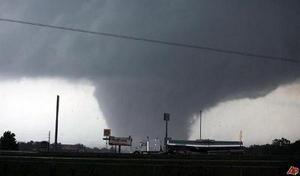
The Tuscaloosa tornado of 2011 // Source: giantbomb.com****

Record snowfall, killer tornadoes, devastating floods: Since December 2010,
the weather in the United States has been wild. The question is why?****

Some recent news reports have attributed the phenomenon to an extreme “La
Niña,” a band of cold water stretching across the Pacific Ocean with global
repercussions for climate and weather. NASA Science
reports<http://science1.nasa.gov/science-news/science-at-nasa/2011/24jun_wildweather/>that
NASA climatologist Bill Patzert names a different suspect: “La Nada.”
“La Niña was strong in December,” he says. “But back in January it pulled a
disappearing act and left us with nothing – La Nada – to constrain the jet
stream. Like an unruly teenager, the jet stream took advantage of the
newfound freedom — and the results were disastrous.”****

La Niña and El Niño are opposite extremes of a great Pacific oscillation.
Every two to seven years, surface waters across the equatorial Pacific warm
up (El Niño) and then they cool down again (La Niña). Each condition has its
own distinct effects on weather.****

NASA Science notes that the winter of 2010 began with La Niña conditions
taking hold. A “normal” La Niña would have pushed the jet stream northward,
pushing cold arctic air (one of the ingredients of severe weather) away from
the lower US. But this La Niña petered out quickly, and no El Niño rose up
to replace it. The jet stream was free to misbehave.****

“By mid-January 2011, La Niña weakened rapidly and by mid-February it was
‘adios La Niña,’ allowing the jet stream to meander wildly around the U.S.
Consequently the weather pattern became dominated by strong outbreaks of
frigid polar air, producing blizzards across the West, Upper Midwest, and
northeast U.S.”****

The situation lingered into spring — and things got ugly. Russell Schneider,
Director of the NOAA-NWS Storm Prediction Center, explains:****

“First, very strong winds out of the south carrying warm, moist air from the
Gulf of Mexico met cold jet stream winds racing in from the west. Stacking
these two air masses on top of each other created the degree of instability
that fuels intense thunderstorms.”****

Extreme contrasts in wind speeds and directions of the upper and lower
atmosphere transformed ordinary thunderstorms into long-lived rotating
supercells capable of producing violent tornadoes.****

In Patzert’s words, “The jet stream — on steroids — acted as an atmospheric
mix master, causing tornadoes to explode across Dixie and Tornado Alleys,
and even into Massachusetts.”****

All this because of a flaky La Niña? “La Niña and El Niño affect the
atmosphere’s energy balance because they determine the location of warm
water in the Pacific, and that in turn determines where huge clusters of
tropical thunderstorms form,” explains Schneider. “These storms are the main
energy source from the tropics influencing the large scale pattern of the
jet stream that flows through the U.S.”****

In agreement with Patzert, he notes that the very strong and active jet
stream across the lower United States in April “may have been related to the
weakening La Niña conditions observed over the tropical Pacific.”****

An intriguing question: “Does any research point to climate change as a
cause of this wild weather?”****

“Global warming is certainly happening,” asserts Patzert, “but we can’t
discount global warming or blame it for the 2011 tornado season. We just
don’t know … Yet.”****

**

--
Thanks for being part of "PoliticalForum" at Google Groups.
For options & help see http://groups.google.com/group/PoliticalForum

* Visit our other community at http://www.PoliticalForum.com/
* It's active and moderated. Register and vote in our polls.
* Read the latest breaking news, and more.
<<image001.jpg>>