** **

http://blogs.edf.org/energyexchange/2013/10/28/the-u-s-power-grids-cyber-war-games/
****
** **

The U.S. Power Grid’s Cyber War Games****

By John Finnigan <http://blogs.edf.org/energyexchange/author/jfinnigan/> |
Published: October 28, 2013 ****

[image:
http://blogs.edf.org/energyexchange/files/2013/10/War_Games_poster-669x1024.jpg]<http://blogs.edf.org/energyexchange/files/2013/10/War_Games_poster.jpg>In
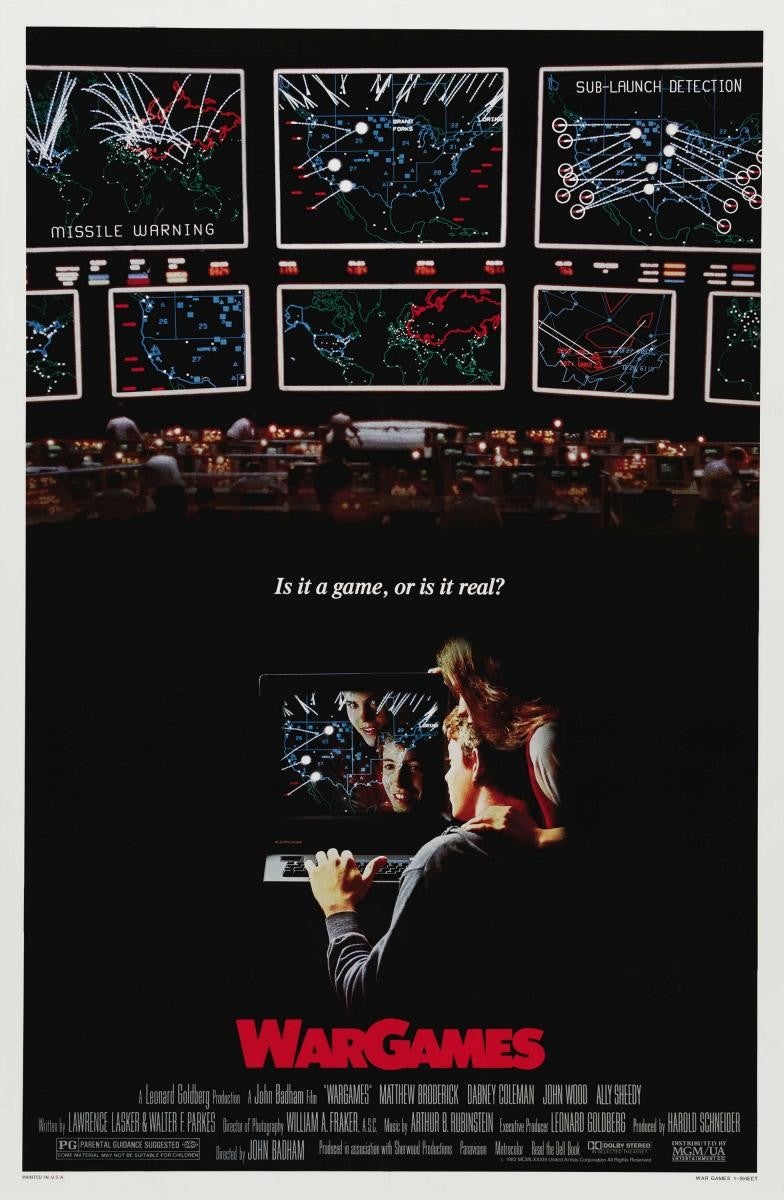
the 1983 thriller *WarGames, *Matthew Broderick plays a teen-age computer
geek who unknowingly signs onto a Pentagon computer while hacking into a
toy company’s new computer game. Thinking that he’s simply playing a game
called *Global Thermonuclear Warfare,* Broderick launches the game and
nearly starts a nuclear war.  The North American Electric Reliability
Council <http://www.nerc.com/Pages/default.aspx> (NERC) will hold its own
war game next month with a simulated attack on the U.S. power grid.****

The drill, called GridEx
II<http://www.spp.org/publications/13%20-%20CIPC%20Brief%20(Harrell%20Conway%20Mar%202013)%20V2.pdf>,
will take place on November 13-14 of this year. The participants will
include 65 utilities and eight regional transmission organizations,
representing most of the nation’s electricity customers.  The drill will
test how well the electric utility industry and the grid itself respond to
physical and cyber attacks.****

A NERC Critical Infrastructure Protection
Committee<http://www.nerc.com/comm/CIPC/Pages/default.aspx>(CIPC)
working group will begin the drill by sending participants a series
of simulated physical and cyber attacks, climaxing in a national security
emergency.  Participants will then respond and interact with each other,
just as they would in a real emergency.  The simulation will last 36 hours,
and the CIPC working group will evaluate the participants’ responses and
provide feedback on how their actions impact the ongoing scenario.  After
the drill, the working group will analyze the results and prepare a report
on lessons learned.****

The drill is timely.  Our nation’s power grid is under constant cyber
attack<http://blogs.edf.org/energyexchange/2013/08/20/u-s-electric-grid-under-cyber-attack/>,
according to a survey of electric
utilities<http://democrats.energycommerce.house.gov/sites/default/files/documents/Report-Electric-Grid-Vulnerability-2013-5-21.pdf>by
U.S. House Representatives Henry Waxman and (now Senator) Edward
Markey.
James Clapper, the Director of National Intelligence, described cyber
attacks as a soft war that is already underway and a dire global threat in
his April 2013 World Threat Assessment of the US Intelligence
Community<http://www.dni.gov/files/documents/Intelligence%20Reports/2013%20WWTA%20US%20IC%20SFR%20%20HPSCI%2011%20Apr%202013.pdf>.
The Department of Homeland Security investigated over 200 serious cyber
attacks against critical facilities during the first half of 2013, and more
than half of these targeted the grid.****

*Adequate Investment*****

The U.S. has developed a number of cyber security protections for the grid,
but we must do more.  Our country needs to make adequate investments in
cyber security.  With the huge budget deficits that the U.S. has incurred
in recent years, the proper level of government spending is often at
issue.  Given the devastating consequences of a cyber attack on the grid,
this is one area where we can’t afford to cut corners.  Our leaders must
ensure that federal budget cuts do not impair the Department of Energy’s
and the Department of Homeland Security’s means to protect our nation’s
critical energy infrastructure from cyber attacks.****

*Broader FERC Authority*****

[image: John
Finnigan]<http://blogs.edf.org/energyexchange/files/2013/07/John-Finnigan_jpg.jpg>We
also need legislation granting the Federal Energy Regulatory
Commission<https://www.ferc.gov/>(FERC) broader authority to protect
against cyber attacks.   FERC is
charged with protecting the grid against cyber attacks, but it doesn’t have
the legal authority it needs to do so.  FERC has
pleaded<http://www.ferc.gov/EventCalendar/Files/20120912103413-Testimony-McClelland.pdf>with
Congress to fix this oversight.
****

The Federal Power Act grants FERC authority over the bulk power system, but
most of the smart grid equipment that creates vulnerabilities is installed
on local distribution systems beyond its jurisdiction.  As a result,
the National
Institute of Standards and Technology <http://www.nist.gov/> (NIST) has put
together a three-volume set of smart grid cyber security standards – but
these standards are voluntary.  FERC is working with the National
Association of Regulatory Utility Commissioners <http://www.naruc.org/> to
monitor whether utilities are following these voluntary standards, but this
is not enough.  The threat of grid cyber attacks is too real, and the
potential consequences too dire.  The NIST standards should be mandatory
and FERC’s authority should extend to critical distribution infrastructure
that puts the bulk power system at risk.****

Any new legislation should empower FERC to act proactively.  FERC should
have the means to take timely actions to counter clear and present dangers
as they arise.  Unfortunately, NERC’s process for adopting cyber standards
is slow and unwieldy.  Because FERC’s present jurisdiction is passive in
nature, it can only approve standards developed by NERC.  Congress should
expand FERC’s authority to act in case of emergency.****

*Coordinated Enforcement*****

The appropriate boundary between federal and state control over electricity
service has been disputed for over a century, since Thomas Edison’s day.
And, until recently, the manner of providing electric service had not
changed much since Edison’s era.  The smart grid is beginning to modernize
our energy infrastructure by marrying the Internet to the electric grid.
Just as the Internet is a matter of interstate commerce, so are critical
smart grid facilities that could disrupt the bulk power system.  We can
ease jurisdictional tensions by following an existing model that uses a
federal-state partnership to enforce federal standards – interstate
pipeline safety.****

Interstate pipeline safety standards are established by the Pipeline and
Hazardous Materials Safety Administration
<http://www.phmsa.dot.gov/>(PHMSA), a branch of the Department of
Transportation.  Although the PHMSA
sets the standards, any state can assume responsibility for enforcing them
within their borders.  The state simply needs to follow the federal
standards at a minimum and apply the same enforcement penalties.  While not
perfect, this federal-state partnership has generally succeeded in ensuring
pipeline safety in a cost-effective manner.****

*Information Sharing*****

We also need legislation to enable better practices for sharing information
about cyber threats.  At the moment, we have two venues where the
government and utilities voluntarily share this information:****

**·         **the Department of Homeland Security National Cybersecurity
and Communications Integration Center (NCCIC); and****

**·         **the NERC Electricity Sector – Information Sharing and
Analysis Center (ES-ISAC).****

Perhaps a better approach would be to establish a new, independent
organization to act as a single clearinghouse for cyber security threats.
Today, government agencies share alerts and notifications about impending
cyber threats.  But the information often fails to provide sufficient
detail for the private sector to take action.****

Government employees should be allowed to share sensitive details as
necessary, to protect against a cyber attack.  As a matter of security, the
utility personnel who receive this information should be screened for the
appropriate level of national security clearance.  If electric utilities
are required to share confidential information, it should not be disclosed
beyond these groups.  Many of these concerns are addressed in the Cyber
Intelligence Sharing and Protection Act of
2013<http://intelligence.house.gov/sites/intelligence.house.gov/files/documents/CISPAPassedApril2013.pdf>.
The House passed this bill on April 18, 2013 by a 288-127 vote.  The Senate
should pass this bill too.****

*Electric Utility Commitment*****

Finally, utilities should commit to following cyber security best
practices, rather than doing the bare minimum.  NERC publishes voluntary
cyber security recommendations, but only
20%<http://democrats.energycommerce.house.gov/sites/default/files/documents/Report-Electric-Grid-Vulnerability-2013-5-21.pdf>of
electric utilities follow these recommendations. Utilities seek to
provide safe, adequate and reliable service in a cost-effective manner.
They should add cyber security to this credo.  To facilitate this, state
utility commissions should allow timely recovery of cyber security costs.***
*

Hopefully, NERC’s war game simulation will have a happy ending like* *the
1983 film.  If we don’t do more to strengthen our vulnerable grid’s cyber
security, we could be writing our own screenplay for a disaster movie.****

This entry was posted in *Smart
Grid*<http://blogs.edf.org/energyexchange/category/smart-grid/>,
*Utilities* <http://blogs.edf.org/energyexchange/category/utilities/> and
tagged *Cybersecurity*<http://blogs.edf.org/energyexchange/tag/cybersecurity/>,
*FERC* <http://blogs.edf.org/energyexchange/tag/ferc/>,
*NERC*<http://blogs.edf.org/energyexchange/tag/nerc/>,
*Power Grid* <http://blogs.edf.org/energyexchange/tag/power-grid/>.
Bookmark the
*permalink*<http://blogs.edf.org/energyexchange/2013/10/28/the-u-s-power-grids-cyber-war-games/>.
*Post a
comment*<http://blogs.edf.org/energyexchange/2013/10/28/the-u-s-power-grids-cyber-war-games/#respond>or
leave a trackback:
*Trackback
URL*<http://blogs.edf.org/energyexchange/2013/10/28/the-u-s-power-grids-cyber-war-games/trackback/>.
****

** **


__._,_.___


__,_._,___

--
--
Thanks for being part of "PoliticalForum" at Google Groups.
For options & help see http://groups.google.com/group/PoliticalForum

* Visit our other community at http://www.PoliticalForum.com/
* It's active and moderated. Register and vote in our polls.
* Read the latest breaking news, and more.

---
You received this message because you are subscribed to the Google Groups
"PoliticalForum" group.
To unsubscribe from this group and stop receiving emails from it, send an email
to [email protected].
For more options, visit https://groups.google.com/groups/opt_out.
<<image001.jpg>>
<<image002.jpg>>