The Six Habits, as described below, are very relevant.  When you at political
alienation vs. empathetic communication, it is very similar to the choices that
people in interpersonal conflict face.  I am a professional mediator because I
advocate for mutually-agreeable dispute resolution vs. the adversarial process
that happens in a court of law.
Chris


From: [email protected]
[mailto:[email protected]] On Behalf Of Centroids
Sent: Wednesday, September 23, 2015 11:32 PM
To: Centroids Discussions <[email protected]>
Subject: [RC] Six Habits of Highly Empathic People


On the more touchy-feely side, Empathy is one of the Big Trends in culture that
existing political parties are structurally unable to adopt, as their business
model depends on alienation...


Six Habits of Highly Empathic People
http://greatergood.berkeley.edu/article/item/six_habits_of_highly_empathic_people1
(via Instapaper <http://www.instapaper.com/> )

  _____

If you think you’re hearing the word “empathy”
<http://greatergood.berkeley.edu/topic/empathy>  everywhere, you’re right. It’s
now on the lips of scientists and business leaders, education experts and
political activists. But there is a vital question that few people ask: How can
I expand my own empathic potential? Empathy is not just a way to extend the
boundaries of your moral universe. According to new research, it’s a habit we
can cultivate
<http://greatergood.berkeley.edu/gg_live/happiness_matters_podcast/podcast/habits_1/>
  to improve the quality of our own lives.

  <http://greatergood.berkeley.edu/images/uploads/many-faces-small.jpg>

But what is empathy? It’s the ability to step into the shoes of another person,
aiming to understand their feelings and perspectives, and to use that
understanding to guide our actions. That makes it different from kindness or
pity. And don’t confuse it with the Golden Rule, “Do unto others as you would
have them do unto you.” As George Bernard Shaw pointed out, “Do not do unto
others as you would have them do unto you—they might have different tastes.”
Empathy is about discovering those tastes.

The big buzz about empathy stems from a revolutionary shift in the science of
how we understand human nature. The old view that we are essentially
self-interested creatures is being nudged firmly to one side by evidence that
we are also homo empathicus, wired for empathy, social cooperation, and mutual
aid.

Roman Krznaric Book Event
Come see Roman Krznaric speak in Berkeley
<http://greatergood.berkeley.edu/news_events/event/roman_krznaric_on_empathy_why_it_matters_and_how_to_get_it#.VEffOovF-lx>
  on November 10, 2014, about his new book, Empathy: Why It Matters and How to
Get It.

Over the last decade, neuroscientists have identified a 10-section “empathy
circuit” in our brains which, if damaged, can curtail our ability to understand
what other people are feeling. Evolutionary biologists like Frans de Waal have
shown that we are social animals
<http://greatergood.berkeley.edu/article/item/the_evolution_of_empathy>  who
have naturally evolved to care for each other, just like our primate cousins.
And psychologists have revealed that we are primed for empathy
<http://greatergood.berkeley.edu/article/research_digest/can_toddlers_see_the_world_through_your_eyes#toddlers_capable_empathy>
  by strong attachment relationships
<http://greatergood.berkeley.edu/article/item/social_security_benets>  in the
first two years of life.

But empathy doesn’t stop developing in childhood. We can nurture its growth
throughout our lives—and we can use it as a radical force for social
transformation. Research in sociology, psychology, history—and my own studies
of empathic personalities over the past 10 years—reveals how we can make
empathy an attitude and a part of our daily lives
<http://greatergood.berkeley.edu/gg_live/happiness_matters_podcast/podcast/habits_1/>
 , and thus improve the lives of everyone around us. Here are the Six Habits of
Highly Empathic People!


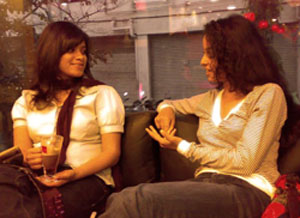
Habit 1: Cultivate curiosity about strangers


  <http://greatergood.berkeley.edu/images/uploads/smalltalkphoto-cropped.jpg>

Highly empathic people (HEPs) have an insatiable curiosity about strangers.
They will talk to the person sitting next to them on the bus, having retained
that natural inquisitiveness we all had as children, but which society is so
good at beating out of us. They find other people more interesting than
themselves but are not out to interrogate them, respecting the advice of the
oral historian Studs Terkel: “Don’t be an examiner, be the interested inquirer.”

Curiosity expands our empathy when we talk to people outside our usual social
circle, encountering lives and worldviews very different from our own.
Curiosity is good for us too: Happiness guru Martin Seligman identifies it as a
key character strength that can enhance life satisfaction. And it is a useful
cure for the chronic loneliness afflicting around one in three Americans
<http://greatergood.berkeley.edu/article/item/better_together_a_review_of_the_lonely_american/>
 .

Cultivating curiosity requires more than having a brief chat about the weather.
Crucially, it tries to understand the world inside the head of the other
person. We are confronted by strangers every day, like the heavily tattooed
woman who delivers your mail or the new employee who always eats his lunch
alone. Set yourself the challenge of having a conversation with one stranger
every week. All it requires is courage.


Habit 2: Challenge prejudices and discover commonalities


  <http://greatergood.berkeley.edu/images/application_uploads/IMG_6132.JPG>

We all have assumptions about others and use collective labels—e.g., “Muslim
fundamentalist,” “welfare mom”—that prevent us from appeciating their
individuality. HEPs challenge their own preconceptions and prejudices by
searching for what they share with people rather than what divides them. An
episode from the history of US race relations illustrates how this can happen.

Claiborne Paul Ellis
<http://college.cengage.com/english/chaffee/thinking_critically/8e/students/additional_activities/p198.pdf>
  was born into a poor white family in Durham, North Carolina, in 1927. Finding
it hard to make ends meet working in a garage and believing African Americans
were the cause of all his troubles, he followed his father’s footsteps and
joined the Ku Klux Klan, eventually rising to the top position of Exalted
Cyclops of his local KKK branch.

In 1971 he was invited—as a prominent local citizen—to a 10-day community
meeting to tackle racial tensions in schools, and was chosen to head a steering
committee with Ann Atwater, a black activist he despised. But working with her
exploded his prejudices about African Americans. He saw that she shared the
same problems of poverty as his own. “I was beginning to look at a black
person, shake hands with him, and see him as a human being,” he recalled of his
experience on the committee. “It was almost like bein’ born again.” On the
final night of the meeting, he stood in front of a thousand people and tore up
his Klan membership card.

Ellis later became a labor organiser for a union whose membership was 70
percent African American. He and Ann remained friends for the rest of their
lives. There may be no better example of the power of empathy to overcome
hatred and change our minds.


Habit 3: Try another person’s life


  <http://greatergood.berkeley.edu/images/uploads/empathygap-lowrez.jpg>

So you think ice climbing and hang-gliding are extreme sports? Then you need to
try experiential empathy, the most challenging—and potentially rewarding—of
them all. HEPs expand their empathy by gaining direct experience of other
people’s lives, putting into practice the Native American proverb, “Walk a mile
in another man’s moccasins before you criticize him.”

George Orwell is an inspiring model. After several years as a colonial police
officer in British Burma in the 1920s, Orwell returned to Britain determined to
discover what life was like for those living on the social margins. “I wanted
to submerge myself, to get right down among the oppressed,” he wrote. So he
dressed up as a tramp with shabby shoes and coat, and lived on the streets of
East London with beggars and vagabonds. The result, recorded in his book Down
and Out in Paris and London, was a radical change in his beliefs, priorities,
and relationships. He not only realized that homeless people are not “drunken
scoundrels”—Orwell developed new friendships, shifted his views on inequality
<http://greatergood.berkeley.edu/article/item/why_inequality_is_bad_for_the_one_percent>
 , and gathered some superb literary material. It was the greatest travel
experience of his life. He realised that empathy doesn’t just make you
good—it’s good for you, too.

We can each conduct our own experiments. If you are religiously observant, try
a “God Swap,” attending the services of faiths different from your own,
including a meeting of Humanists. Or if you’re an atheist, try attending
different churches! Spend your next vacation living and volunteering in a
village in a developing country. Take the path favored by philosopher John
Dewey, who said, “All genuine education comes about through experience.”


Habit 4: Listen hard—and open up


<http://greatergood.berkeley.edu/images/made/images/uploads/IMG_0590_435_290.JPG>


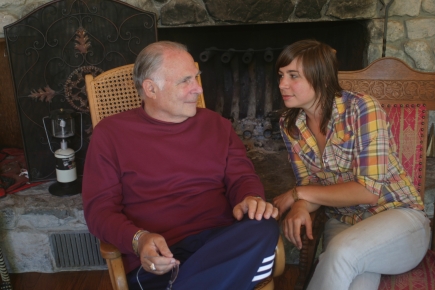
There are two traits required for being an empathic conversationalist.

One is to master the art of radical listening. “What is essential,” says
Marshall Rosenberg, psychologist and founder of Non-Violent Communication
(NVC), “is our ability to be present to what’s really going on within—to the
unique feelings and needs a person is experiencing in that very moment.” HEPs
listen hard to others and do all they can to grasp their emotional state and
needs, whether it is a friend who has just been diagnosed with cancer or a
spouse who is upset at them for working late yet again.

But listening is never enough. The second trait is to make ourselves
vulnerable. Removing our masks and revealing our feelings to someone is vital
for creating a strong empathic bond. Empathy is a two-way street that, at its
best, is built upon mutual understanding—an exchange of our most important
beliefs and experiences.

Organizations such as the Israeli-Palestinian Parents Circle
<http://www.theparentscircle.org/>  put it all into practice by bringing
together bereaved families from both sides of the conflict to meet, listen, and
talk. Sharing stories about how their loved ones died enables families to
realize that they share the same pain and the same blood, despite being on
opposite sides of a political fence, and has helped to create one of the
world’s most powerful grassroots peace-building movements.


Habit 5: Inspire mass action and social change


We typically assume empathy happens at the level of individuals, but HEPs
understand that empathy can also be a mass phenomenon that brings about
fundamental social change.

Just think of the movements against slavery in the 18th and 19th centuries on
both sides of the Atlantic. As journalist Adam Hochschild reminds us, “The
abolitionists placed their hope not in sacred texts but human empathy,” doing
all they could to get people to understand the very real suffering on the
plantations and slave ships. Equally, the international trade union movement
grew out of empathy between industrial workers united by their shared
exploitation. The overwhelming public response to the Asian tsunami of 2004
emerged from a sense of empathic concern for the victims, whose plight was
dramatically beamed into our homes on shaky video footage.

Empathy will most likely flower on a collective scale if its seeds are planted
in our children. That’s why HEPs support efforts such as Canada’s pioneering
Roots of Empathy
<http://greatergood.berkeley.edu/article/item/wisdom_of_babies> , the world’s
most effective empathy teaching program, which has benefited over half a
million school kids. Its unique curriculum centers on an infant, whose
development children observe over time in order to learn emotional
intelligence—and its results include significant declines in playground
bullying and higher levels of academic achievement.

Beyond education, the big challenge is figuring out how social networking
technology can harness the power of empathy to create mass political action.
Twitter may have gotten people onto the streets for Occupy Wall Street and the
Arab Spring, but can it convince us to care deeply about the suffering of
distant strangers, whether they are drought-stricken farmers in Africa or
future generations who will bear the brunt of our carbon-junkie lifestyles?
This will only happen if social networks learn to spread not just information,
but empathic connection.


Habit 6: Develop an ambitious imagination


A final trait of HEPs is that they do far more than empathize with the usual
suspects. We tend to believe empathy should be reserved for those living on the
social margins or who are suffering. This is necessary, but it is hardly enough.

We also need to empathize with people whose beliefs we don’t share or who may
be “enemies” in some way. If you are a campaigner on global warming
<http://greatergood.berkeley.edu/article/item/hot_spot> , for instance, it may
be worth trying to step into the shoes of oil company executives—understanding
their thinking and motivations—if you want to devise effective strategies to
shift them towards developing renewable energy. A little of this “instrumental
empathy” (sometimes known as “impact anthropology”
<http://www.guardian.co.uk/commentisfree/2011/oct/19/occupy-movement-subverting-global-finance>
 ) can go a long way.

Empathizing with adversaries is also a route to social tolerance. That was
Gandhi’s thinking during the conflicts between Muslims and Hindus leading up to
Indian independence in 1947, when he declared, “I am a Muslim! And a Hindu, and
a Christian and a Jew.”

Organizations, too, should be ambitious with their empathic thinking. Bill
Drayton, the renowned “father of social entrepreneurship,” believes that in an
era of rapid technological change, mastering empathy is the key business
survival skill because it underpins successful teamwork and leadership. His
influential Ashoka Foundation has launched the Start Empathy initiative
<http://startempathy.org/> , which is taking its ideas to business leaders,
politicians and educators worldwide.

The 20th century was the Age of Introspection, when self-help and therapy
culture encouraged us to believe that the best way to understand who we are and
how to live was to look inside ourselves. But it left us gazing at our own
navels. The 21st century should become the Age of Empathy, when we discover
ourselves not simply through self-reflection, but by becoming interested in the
lives of others. We need empathy to create a new kind of revolution. Not an
old-fashioned revolution built on new laws, institutions, or policies, but a
radical revolution in human relationships.

  _____


Sent from my iPhone

--
--
Centroids: The Center of the Radical Centrist Community
<[email protected] <mailto:[email protected]> >
Google Group: http://groups.google.com/group/RadicalCentrism
Radical Centrism website and blog: http://RadicalCentrism.org

---
You received this message because you are subscribed to the Google Groups
"Centroids: The Center of the Radical Centrist Community" group.
To unsubscribe from this group and stop receiving emails from it, send an email
to [email protected]
<mailto:[email protected]> .
For more options, visit https://groups.google.com/d/optout.

--
--
Centroids: The Center of the Radical Centrist Community
<[email protected]>
Google Group: http://groups.google.com/group/RadicalCentrism
Radical Centrism website and blog: http://RadicalCentrism.org

---
You received this message because you are subscribed to the Google Groups
"Centroids: The Center of the Radical Centrist Community" group.
To unsubscribe from this group and stop receiving emails from it, send an email
to [email protected].
For more options, visit https://groups.google.com/d/optout.