Hi,

I just added one myself as I think it will be useful elsewhere
(http://article.gmane.org/gmane.science.nmr.relax.scm/22538).  This is
the verbose version I described at
http://thread.gmane.org/gmane.science.nmr.relax.scm/22522/focus=6534.
I know this formatting is already somewhere else in relax, but I can't
find it.  Having a collection of different formatting functions would
be good for consistency.
Cheers,

Edward


On 29 July 2014 09:55, Troels Emtekær Linnet <[email protected]> wrote:
> Hi Edward.
>
> I have already implemented this, and have it in my git branch.
>
> I will soon submit it.
>
> I am currently not adding strings "Molecule", "residue", "spin", as I
> think this is superfluous.
>
> Best
> Troels
>
> 2014-07-29 9:39 GMT+02:00 Edward d'Auvergne <[email protected]>:
>> Hi Troels,
>>
>> For this, I was thinking of adding a simple function to the
>> pipe_control.mol_res_spin module in the trunk called format_info().
>> This would have the arguments:
>>
>> def format_info(mol_name=None, res_num=None, res_name=None,
>> spin_num=None, spin_name=None):
>>
>> Let's say that:
>>
>>   mol_name = 'Ubi'
>>   res_name = 'Ala'
>>   res_num = '10'
>>   spin_num = None
>>   spin_name = 'N'
>>
>> Then the returned string could be:
>>
>>   string = "Molecule Ubi, residue Ala 10, spin N"
>>
>> Each part is only added if it is not None.  This string could then be
>> used in the title of your grace plots here:
>>
>>   "Relaxation dispersion plot for:    %s" % string
>>
>> To end up with:
>>
>>   "Relaxation dispersion plot for:    Molecule Ubi, residue Ala 10, spin N"
>>
>> This will then work for all systems and you won't be restricting these
>> plot titles to only protein and only backbone data.  Do you have ideas
>> for this?
>>
>> Cheers,
>>
>> Edward
>>
>>
>>
>> On 28 July 2014 12:44, Edward d'Auvergne <[email protected]> wrote:
>>> Another way to think of this is to consider an imaginary system consisting
>>> of:
>>>
>>> - A DNA molecule of 10 bases, where 15N and 13C data has been
>>> collected for all bases, and 13C data collected for the ribose.
>>> - A promoter protein, which is a dimer, attached to the DNA.  Here you
>>> have collected backbone 15N data and sidechain methyl 13C data.
>>> - A drug binding between the two proteins.  Here you have collected
>>> natural abundance 13C dispersion data.
>>>
>>> In relax you can currently analyse this all together.  You can cluster
>>> spins in the drug with spins in the protein (and also the DNA if you
>>> wish).  The infrastructure already exists for this in the dispersion
>>> analysis.  If you keep such 'exotic' systems in mind while designing,
>>> as well as keeping in mind that all parts will be independent of R1rho
>>> vs. CPMG, then the resultant code will be just as flexible as the rest
>>> of the dispersion analysis.
>>>
>>> Cheers,
>>>
>>> Edward
>>>
>>> On 28 July 2014 12:17, Edward d'Auvergne <[email protected]> wrote:
>>>> Hi Troels,
>>>>
>>>> I have a problem with this title as it is far too protein-centric.  I
>>>> know you are using the residue name here because the spin ID does not
>>>> contain that information.  But you need to consider that this analysis
>>>> will be applied to different systems, for example things that might
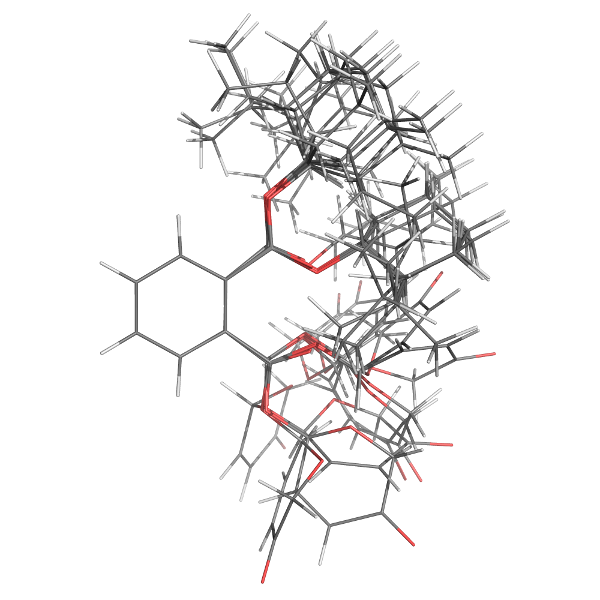
>>>> look like this ensemble:
>>>> http://www.nmr-relax.com/manual/phthalic_acid_ens_600x600.png.  In
>>>> these cases the residue name will be None.  In other cases the residue
>>>> number will be None but a residue name will exist and will be in the
>>>> spin ID string.
>>>>
>>>> Therefore I would suggest creating a special function in
>>>> pipe_control.mol_res_spin that will create a nicely formatted string
>>>> of the molecule name, residue name and number, and spin name and
>>>> number.  This would need to be flexible in that any of these 5
>>>> elements can be None and hence should not be included.  You pass in
>>>> the mol_name, res_name, res_num, spin.name, and spin.num values and it
>>>> returns a formatted string.  One needs to always keep in mind that all
>>>> analyses in relax can be applied to proteins, RNA/DNA,
>>>> polysaccharides, and small organic molecules.  Flexibility is one of
>>>> relax's strong points.
>>>>
>>>> Cheers,
>>>>
>>>> Edward
>>>>
>>>>
>>>>
>>>>
>>>>
>>>> On 26 July 2014 13:34,  <[email protected]> wrote:
>>>>> Author: tlinnet
>>>>> Date: Sat Jul 26 13:34:09 2014
>>>>> New Revision: 24772
>>>>>
>>>>> URL: http://svn.gna.org/viewcvs/relax?rev=24772&view=rev
>>>>> Log:
>>>>> Added the spin specific residue name and spin_id to the title of the
>>>>> dispersion plots.
>>>>>
>>>>> This is handy, since it is often of interest to have this information at
>>>>> hand, when looking through many graphs.
>>>>>
>>>>> sr #3124(https://gna.org/support/?3124): Grace graphs production for
>>>>> R1rho analysis with R2_eff as function of Omega_eff.
>>>>> sr #3138(https://gna.org/support/?3138): Interpolating theta through
>>>>> spin-lock offset [Omega], rather than spin-lock field strength [w1].
>>>>>
>>>>> Modified:
>>>>>     branches/r1rho_plotting/specific_analyses/relax_disp/data.py
>>>>>
>>>>> Modified: branches/r1rho_plotting/specific_analyses/relax_disp/data.py
>>>>> URL:
>>>>> http://svn.gna.org/viewcvs/relax/branches/r1rho_plotting/specific_analyses/relax_disp/data.py?rev=24772&r1=24771&r2=24772&view=diff
>>>>> ==============================================================================
>>>>> --- branches/r1rho_plotting/specific_analyses/relax_disp/data.py
>>>>> (original)
>>>>> +++ branches/r1rho_plotting/specific_analyses/relax_disp/data.py
>>>>> Sat Jul 26 13:34:09 2014
>>>>> @@ -1607,7 +1607,7 @@
>>>>>
>>>>>      # Loop over each spin. Initialise spin counter.
>>>>>      si = 0
>>>>> -    for spin, spin_id in spin_loop(return_id=True, skip_desel=True):
>>>>> +    for spin, mol_name, res_num, res_name, spin_id in
>>>>> spin_loop(full_info=True, return_id=True, skip_desel=True):
>>>>>          # Skip protons for MMQ data.
>>>>>          if spin.model in MODEL_LIST_MMQ and spin.isotope == '1H':
>>>>>              continue
>>>>> @@ -1681,7 +1681,7 @@
>>>>>                              data[i][j][k][l] = 0.0
>>>>>
>>>>>          # Write the header.
>>>>> -        title = "Relaxation dispersion plot"
>>>>> +        title = "Relaxation dispersion plot for:    %s %s"%(res_name,
>>>>> spin_id)
>>>>>          graph_num = len(data)
>>>>>          sets = []
>>>>>          legend = []
>>>>> @@ -1725,7 +1725,7 @@
>>>>>
>>>>>      # Loop over each spin. Initialise spin counter.
>>>>>      si = 0
>>>>> -    for spin, spin_id in spin_loop(return_id=True, skip_desel=True):
>>>>> +    for spin, mol_name, res_num, res_name, spin_id in
>>>>> spin_loop(full_info=True, return_id=True, skip_desel=True):
>>>>>          # Skip protons for MMQ data.
>>>>>          if spin.model in MODEL_LIST_MMQ and spin.isotope == '1H':
>>>>>              continue
>>>>> @@ -1808,7 +1808,7 @@
>>>>>                              data[i][j][k][l] = 0.0
>>>>>
>>>>>          # Write the header.
>>>>> -        title = "Relaxation dispersion plot"
>>>>> +        title = "Relaxation dispersion plot for:    %s %s"%(res_name,
>>>>> spin_id)
>>>>>          subtitle = "Interpolated through Spin-lock field strength
>>>>> \\xw\\B\\s1\\N"
>>>>>          graph_num = len(data)
>>>>>          sets = []
>>>>>
>>>>>
>>>>> _______________________________________________
>>>>> relax (http://www.nmr-relax.com)
>>>>>
>>>>> This is the relax-commits mailing list
>>>>> [email protected]
>>>>>
>>>>> To unsubscribe from this list, get a password
>>>>> reminder, or change your subscription options,
>>>>> visit the list information page at
>>>>> https://mail.gna.org/listinfo/relax-commits
>>
>> _______________________________________________
>> relax (http://www.nmr-relax.com)
>>
>> This is the relax-devel mailing list
>> [email protected]
>>
>> To unsubscribe from this list, get a password
>> reminder, or change your subscription options,
>> visit the list information page at
>> https://mail.gna.org/listinfo/relax-devel

_______________________________________________
relax (http://www.nmr-relax.com)

This is the relax-devel mailing list
[email protected]

To unsubscribe from this list, get a password
reminder, or change your subscription options,
visit the list information page at
https://mail.gna.org/listinfo/relax-devel