--- In [email protected], "Ed" <Loizeaux@...> wrote:
>
> > "Tyler" <tfroatz4@> wrote:
> >
> > Ed,
> >
> > If you were ever interested in adding one of these planes to your layout,
> > I've found a model of the Bombardier CL-415 that you might be able to
> > incorporate into your layout; <snip>
>
>
> Tyler...Interesting idea.  Which of these planes would have flown around
> upstate New York in 1948?  Gotta keep things realistic, y'know.  Thanks...Ed
> L.
>
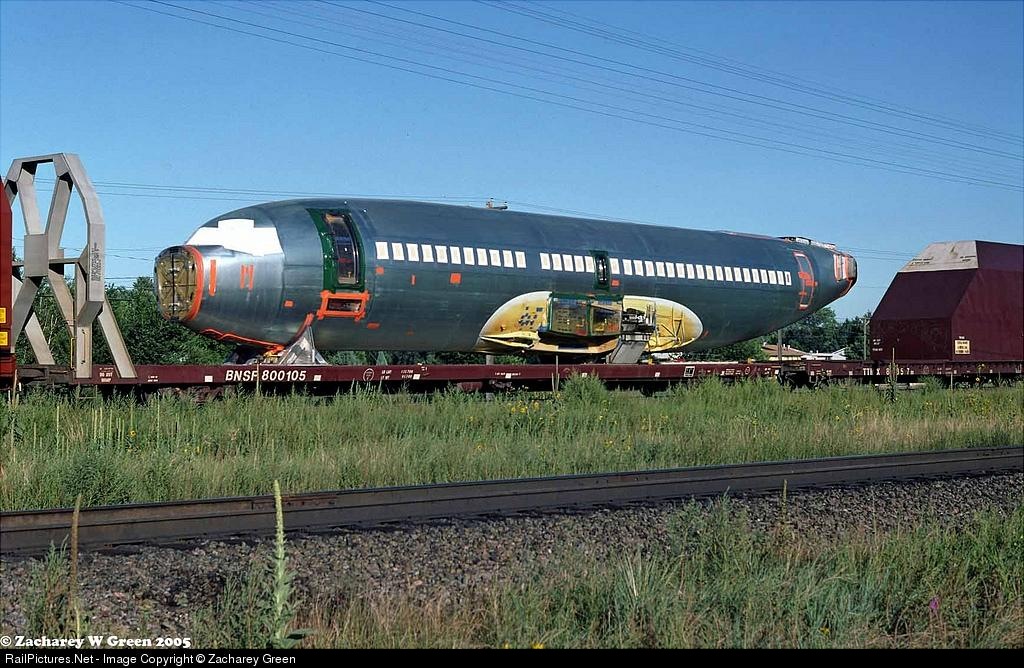
Hi Ed, While the Army Air Force apparently experimented with aerial firefighting in the summer of 1947, these tests were performed in Florida and Montana and further development of aerial firefighting did not occur until the 1950's. I was unaware of the time period and location of your layout when I made the previous suggestion. After seeing your detailed post about aerial firefighting in California, I assumed you had set your layout in that area and in a time in which aerial firefighting was in practice. While I have far more module/layout ideas then I could ever hope to built in ten lifetimes, building one where one of these planes is either re-filling itself in a rail adjacent lake or putting out a fire that threatens the track is certainly one of the ideas I've been kicking around for my planned layout/modules which will (hopefully) include several locations all set in the mid 1980's http://www.airforce-magazine.com/MagazineArchive/Documents/2010/October%202010/1010fire.pdf The Scramble In the summer of 1947, a Republic P-47N Thunderbolt at Eglin Field, Fla., performed a military test of firefighting theory by releasing a pair of water-filled 165-gallon drop tanks. In July, two P-47Ns and a B-29 flew to Great Falls AAB, Mont., on the eastern edge of Montana's divide between open range and forest land, to explore aerial firefighting. Test fires in the Lolo National Forest were targeted, followed by sorties against actual wildfires in western Montana. Forest Service emblems were applied to the B-29 and at least one of the Thunderbolts. The Thunderbolts dropped a total of 56 tanks, some fitted with stabilizing fins as well as unfinned teardrops. The pilots employed both glide bombing and dive bombing approaches to fires. Finned tanks were used for the P-47 dive bombing runs, which were discontinued in favor of glide bombing passes with unfinned tanks. Tanks dropped by the P-47s were expected to rip open on impact, spewing water over the fire area. Initial results indicated the P-47 drops were superior to those made by the B-29. The giant B-29 Superfortress, nicknamed the Rocky Mountain Ranger, cast a big shadow from its 141-foot wingspan over the Montana forest tests as it hefted eight 165-gallon drop tanks in its bomb bays. Weighing about 1,000 pounds each when filled with water, these tanks were armed with proximity fuses set to explode and rupture the tanks 50 feet above the ground to foster maximum dispersion of the water and some chemical fire retardants. The Superfortress dropped 46 tanks on test fires during seven missions flown typically at 3,000 feet. One tank could cover a swath 48 feet wide and 108 feet long. An Aerial Bombing Evaluation Board composed of seven forestry specialists and one lieutenant colonel from the Army Air Forces Air Proving Ground Command observed the tests. The summer of 1947 was a transitional period at once filled with hope and uncertainty, and not yet infused with the Cold War urgency that would follow. Into this arena, a vastly downsized military stood to benefit from meaningful missions. The Aerial Bombing Evaluation Board opined that deployment of warplanes as firefighters "will help maintain high esprit de corps of military personnel in peacetime by assignment to productive missions that contribute to training." "After this brief survey, we feel that this method of fire suppression offers definite promise for the better protection of lives and property," the board members confidently reported. "The present project already has proved that military aircraft can be flown in mountainous areas and that tanks containing extinguishing agents can be dropped with sufficient accuracy to hit and retard the spread of small fires." A proposal to deploy 75 fighters and 30 B-29s as fire bombers for the 1948 wildfire season went fiscally stillborn. If hindsight questions the use of fuzed bombs over domestic forests, the Air Force tests nonetheless pointed the way toward aerial delivery of water and fire retardant over wildfires. The concept of aerial firefighting was not yet deemed practical. Water bombs weren't the answer, and according to one Forest Service official, the value of wildland resources had not yet appreciated enough to overtake the considerable costs of retardants and aircraft to deliver them. That began to change in the 1950s. Here's an example of the "airplane fleet" I'm currently attempting to build http://www.railpictures.net/images/d1/1/3/3/6133.1133269200.jpg ------------------------------------ Yahoo! Groups Links <*> To visit your group on the web, go to: http://groups.yahoo.com/group/S-Scale/ <*> Your email settings: Individual Email | Traditional <*> To change settings online go to: http://groups.yahoo.com/group/S-Scale/join (Yahoo! ID required) <*> To change settings via email: [email protected] [email protected] <*> To unsubscribe from this group, send an email to: [email protected] <*> Your use of Yahoo! Groups is subject to: http://docs.yahoo.com/info/terms/