---------- Forwarded message ----------
From: "Eric Reeves" <[email protected]>
Date: 14 Jan 2017 21:01
Subject: “The Final Betrayal of Sudan: Obama administration’s lifting of
economic sanctions; UN Ambassador Samantha Power justifying the move,
claiming a ‘sea change’ of improvement in humanitarian access”
To: "Eric Reeves" <[email protected]>
Cc:
“The Final Betrayal of Sudan: Obama administration’s lifting of economic
sanctions; UN Ambassador Samantha Power justifying the move, claiming a
‘sea change’ of improvement in humanitarian access”

Eric Reeves, *The Huffington Post*, January 17, 2017 |
http://www.huffingtonpost.com/eric-reeves/the-final-betray
al-of-sud_b_14167508.html   |   http://wp.me/p45rOG-20F

The moral hypocrisy, the mendacity, and the sheer foolishness of the Obama
administration’s claim that there has been a “sea change” of improvement in
Khartoum’s facilitating of humanitarian access in Sudan is staggering. This
isn’t some shading of the truth; this isn’t slightly disingenuous; it is a
bald lie.

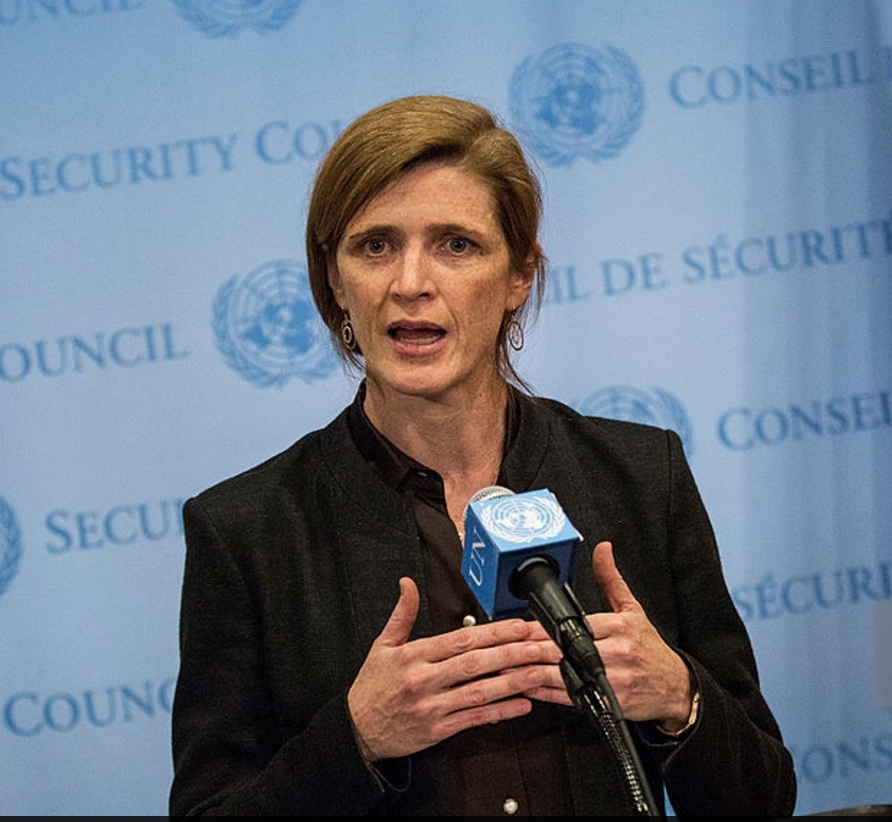
[image: Screen Shot 2017-01-14 at 12.35.29 PM]
<http://sudanreeves.org/wp-content/uploads/2017/01/Screen-Shot-2017-01-14-at-12.35.29-PM.png>

*U.S. Ambassador to the United Nations, Samantha Power, claims there has
been a "sea change" of improved humanitarian access in Sudan*

A humanitarian with extensive experience on the ground in the Nuba
Mountains of South Kordofan made this clear in a communication to me today,
noting:

“there's been absolutely no change in humanitarian access [in the Nuba
Mountains—suffering under Khartoum’s humanitarian embargo for over five and
a half years].  Not a single grain of sorghum nor one tablet of medicine
has entered Nuba from any of the usual humanitarian agencies.” (email
received January 17, 2017)

The same is true for hundreds of thousands of people in Blue Nile, also
under humanitarian embargo for over five years.

What has been the effect of these humanitarian embargoes—still in place
because the international community refuses to put sufficient pressure on
the Khartoum regime to compel their lifting?

One example of many: the *South Kordofan/Blue Nile Coordinating Unit
| Flash update #13 – 2nd March 2016: Emergency in Kau-Nyaro-Warni area
(Southeastern Jebel, South Kordofan State): An estimated 65,000 people are
in urgent need of assistance.*

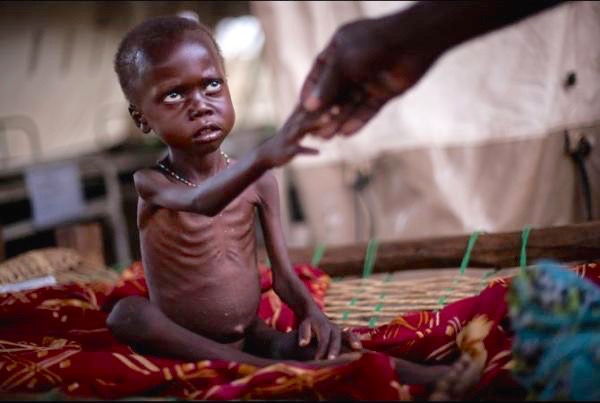
[image: south_kordofan_5_6_2012_11]
<http://sudanreeves.org/wp-content/uploads/2016/04/south_kordofan_5_6_2012_11.jpg>

*Starving child in the Nuba Mountains of South Kordofan---denied all
humanitarian access by the Khartoum regime*

The *"Special Bulletin: Food security situation in Warni and
Kau-Nyaro"* released
by the Food Security and Monitoring Unit (FSMU), reports levels “of food
insecurity unprecedented” in their regular monitoring of the Two Areas.

*As many as sixty four percent (64%) of households in the area are severely
food insecure*; and a further thirty six percent *(36%) are moderately food
insecure (total 97%)*. This degree of food insecurity is not without its
manifestations. *Two hundred and forty two (242) people are reported to
have died between July and December 2015, in the 8 villages assessed, 145
of which were attributed to lack of food. Almost 10 percent of those who
died from lack of food were under the age of five.*

The households assessed had no food available to eat for an average of 16
days (out of the last 30 days). For an average of 10 days in 30 they went a
whole day and night without any food. All households reported having no
remaining food stock from the current harvest and are consuming wild foods,
including wild roots and green leaves, as their main food source.

High levels of insecurity around the area have prevented people from
accessing land to harvest during the last agricultural season. This, along
with low levels of rainfall and insufficient seeds, has contributed to the
poor harvest. Insecurity has further deteriorated with the beginning of the
new season of fighting. Fear of attacks by government-supported militias
was assessed as the most prevalent factor preventing people from moving out
of the area, and the main limiting factor when searching for wild foods. As
quoted in the report, people “preferred to stay put and die, rather than
undertake moving."

Nothing has changed in the months since this assessment; conditions only
worsen because Khartoum’s embargo continues to block food aid. Moreover, in
Sudan generally *UNICEF estimates that there are 2 million children under
five in Sudan who are either severely or acutely malnourished* (
http://sudanreeves.org/2014/09/05/an-internal-unicef-malnutrition-report-
on-sudan-and-darfur-5-september-2014/ ).  This staggering figure is a
direct result of the gross mismanagement of the Sudanese economy by
the *National
Islamic Front/National Congress Party regime.*

And in Darfur, the fact that humanitarians now have access to *Golo town* (in
the Jebel Marra region of Central Darfur)—while important—doesn’t begin to
make up for the denial of humanitarian assistance in countless areas of
Darfur, including the Sortony camp for persons displaced from Jebel Marra
during the massive 2016 offensive: Radio Dabanga reported the same
obstruction by Khartoum-backed militias in May of 2016:

*Militiamen's road block causes water shortage in Sortony, North Darfur* |
May 23, 2016 | https://www.dabangasudan.org/en/all-news/article/militiame
n-s-road-block-causes-water-shortage-in-sortony-north-darfur

…and then again in October of 2016:

*North Darfur militiamen halt water for Sortony* | October 24, 2016 |
SORTONY, North Darfur | https://www.dabangasudan.org
/en/all-news/article/north-darfur-militiamen-halt-water-for-sortony

So severe were the shortages caused by Khartoum’s militia blockades that
the UN was forced, at great expense, to airlift many displaced persons to
camps near el-Fasher, capital of North Darfur. The Jebel Marra assault
entailed some of the most brutal and comprehensively destructive tactics
used by Khartoum during the the entire genocidal counter-insurgency,
including the use of chemical weapons; and it was directed overwhelmingly
against civilians.

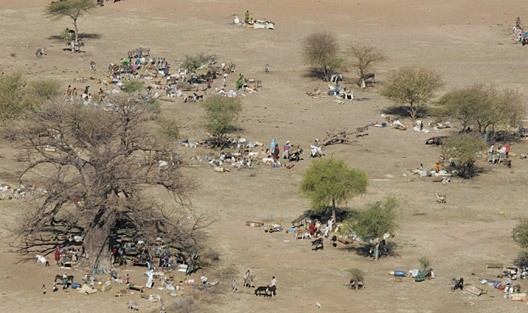
[image: 54c8dc9b0723d]
<http://sudanreeves.org/wp-content/uploads/2015/12/54c8dc9b0723d.jpeg>

*More than 200,000 people were displaced by Khartoum's regular and militia
forces during the Jebel Marra offensive of 2016; thousands were killed,
hundreds of them by chemical weapons*

See: *“Scorched Earth, Poisoned Air: Sudanese Government Forces Ravage
Jebel Marra,Darfur,”* September 29, 2016 | Amnesty International |
http://www.amnestyusa.org/research/reports/scorched-earth-
poisoned-air-sudanese-government-forces-ravage-jebel-marra-darfur

See also: *“Men with No Mercy: Rapid Support Forces Attacks Against
Civilians in Darfur,"* Human Rights Watch | September 9, 2015 |
https://www.hrw.org/report/2015/09/09/men-no-mercy/rapid-s
upport-forces-attacks-against-civilians-darfur-sudan

The Obama administration would have us believe that we should use a “look
back” period of six months in assessing the various benchmarks that
justified the move toward lifting sanctions on a regime led by Omar
al-Bashir, a man indicted by the International Criminal Court for genocide
and massive crimes against humanity in Darfur. But the case of Sortony just
three months ago is certainly not unique; and more broadly, years of
Khartoum’s relentless assault on humanitarian relief have taken a terrible
toll. More than 30 humanitarian organizations have been expelled by the
regime—thirteen in March 2009 alone; these organizations continue to face
harassment, bureaucratic obstructionism, and physical assaults; and after
fourteen years of violence and one of the most expensive humanitarian
operations in history, donor fatigue has set in with profound
consequences—consequences that figure nowhere in Ambassador Power’s
mendacious claims about humanitarian access. An example I reported this
past November is all too telling:

*Massive Funding Shortages Leave a Vast Population at Acute Health Risk in
Darfur, South Kordofan, and Blue Nile*

Eric Reeves | November 19, 2016 | http://wp.me/p45rOG-1Yn

For Khartoum, these shortages—in part engineered by the regime—are welcome
news from the three marginalized areas in which they are engaged in
genocidal counter-insurgency efforts.  The news comes even as reports
indicate that UN actions have forced some more than 27,500 Nuba to return
to South Kordofan from South Sudan, including some 15,000 from Yida refugee
camp in Unity State, South Sudan.

OCHA Sudan Bulletin #46 (November 7 - 13, 2016) |
http://reliefweb.int/report/sudan/sudan-humanitarian-bulle
tin-issue-46-7-13-november-2016

   - *11 clinics have closed and 49 are at risk of closure *in Darfur,
   South Kordofan and Blue Nile due to funding shortages.


   -  About *769,000 people (IDPs and host communities) are affected by
   these funding shortages.*

The following is the *Radio Dabanga dispatch* on this disturbing OCHA
report | https://www.dabangasudan.org/en/relief-news/article/sudan-
ocha-bulletin-46-funding-shortages-cause-closure-of-health-units-in-sudan

*OCHA Sudan Bulletin #46: Funding shortages cause closure of health units
in Sudan* | November 19, 2016 | KHARTOUM

*The UN Office for the Coordination of Humanitarian Affairs (OCHA) in Sudan
reports in its latest weekly bulletin that a* *lack of funding is forcing
humanitarian organisations to either hand over or close down their health
facilities in some parts of Sudan*. In Um Keddada in North Darfur, about
140 suspected cases of diphtheria have been recorded. From January to
September, *173,973 children* suffering from acute malnutrition have been
treated across Sudan. About 27,500 Sudanese refugees have returned from
Yida camp in South Sudan to Sudan’s South Kordofan.

The latest Sudan Health Sector Quarterly bulletin reports that the Sudanese
Ministry of Health and the World Health Organization (WHO) assessed 60
health facilities in North, South, and West Darfur, Blue Nile and South
Kordofan states. *They found that 11 clinics have already closed and 49 are
at risk of closure.*

*The bulletin said that 769,000 people, including displaced and their host
communities, in these states may face significant difficulties in accessing
primary health care services as a result of funding shortages*. About $7
million is needed to keep these facilities running for one year.

According to the report, consequences of funding shortages include *people
not being able to access health services or buy medicine; no access to
immunisation services; less assistance in the control of communicable
diseases and outbreaks; *and lack of referrals of complicated cases to
other facilities.
*As Obama Exits the Presidency*

There are many reasons to be outraged at the decision by the Obama
administration in its closing days to commit to a lifting of sanctions
imposed on a genocidal regime—and strengthened during the Bush
administration precisely because of genocide in Darfur. But most outrageous
is the justification on the basis of “improved” humanitarian access—a “sea
change” of improvement according to the Obama administration’s ambassador
to the UN.

I will be returning in subsequent analyses to the destructive consequences
of this lifting of sanctions:

   - encouraging Europe to pursue its even more aggressive policies of
   *rapprochement *with the Khartoum regime;


   - undermining the International Criminal Court by rewarding a regime
   that comprises individuals charged, or destined to be charged, with massive
   crimes against humanity (and in the case of President al-Bashir, with
   multiple counts of genocide);
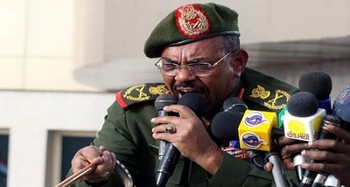
   - [image: 54f109848b172]

<http://sudanreeves.org/wp-content/uploads/2015/08/54f109848b172.jpeg>*President
   al-Bashir, indicted by the ICC on multiple counts of genocide and massive
   crimes against humanity*
   -
   - undermining any international efforts to secure real humanitarian
   access in South Kordofan and Blue Nile: having already celebrated
   Khartoum’s “sea change” of improvement on this score, the Obama
   administration has hopelessly compromised meaningful negotiations;


   - undermining any sense on the part of the regime that it need end its
   present, increasingly repressive domestic policies: mass arrests of
   political activists; unprecedented newspaper confiscations; President
   al-Bashir’s recent threat to issue again “shoot to kill” orders of the sort
   used in December 2013—the list is extremely long;


   - undermining the political pressure deriving from a collapsing economy,
   a collapse that is galvanizing Sudanese civil society.

Obama has, until the end, remained committed to a catastrophic policy view
animated by the words of his former special envoy for Sudan, Princeton
Lyman:

*“We [the Obama administration] do not want to see the ouster of the
[Khartoum] regime, nor regime change.* We want to see the regime carrying
out reform via constitutional democratic measures.” (Interview with *Asharq
al-Awsat*, December 3, 2011, http://english.aawsat.co
m/2011/12/article55244147/asharq-al-awsat-talks-to-us-specia
l-envoy-to-sudan-princeton-lyman )

Obama is leaving office disgracing his 2008 campaign commitments to Darfur
and the other victims of “slaughter” in Sudan. Those who continue to be
“slaughtered,” or die because humanitarian access remains so severely
attenuated, have no such easy exit. They must remain under the repressive,
violent rule of the men Obama yesterday so richly rewarded.[image: Screen
Shot 2016-09-04 at 11.22.51 AM]
<http://sudanreeves.org/wp-content/uploads/2016/09/Screen-Shot-2016-09-04-at-11.22.51-AM.jpg>

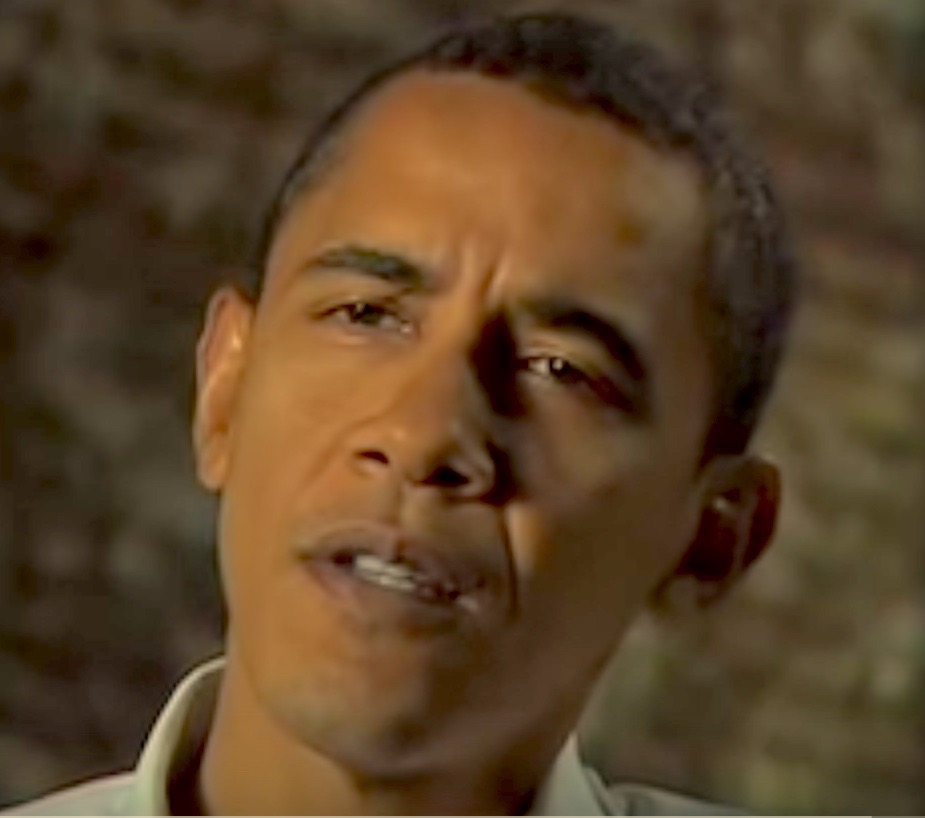
*Candidate Obama traded heavily on Darfur during his 2008 presidential
campaign, calling it a "stain on our souls"; President Obama reneged
entirely on his promise "not to avert his eyes from human slaughter"*

--

Eric Reeves, Senior Fellow at Harvard University’s François-Xavier Bagnoud
Center for Health and Human Rights


[email protected]

www.sudanreeves.org

Twitter@SudanReeves

About Eric Reeves: http://sudanreeves.org/about-eric-reeves

Philanthropy:
*http://ericreeves-woodturner.com/woodturnings-available-for-purchase-dire
<http://ericreeves-woodturner.com/woodturnings-available-for-purchase-dire>*

--
To post to this group, send email to [email protected]
To unsubscribe from this group, send email to
[email protected]
Visit this group at https://groups.google.com/d/forum/southsudankob
View this message at
https://groups.google.com/d/msg/southsudankob/topic-id/message-id
For more options, visit https://groups.google.com/d/optout
---
You received this message because you are subscribed to the Google Groups
"South Sudan Info - The Kob" group.
To unsubscribe from this group and stop receiving emails from it, send an email
to [email protected].
To post to this group, send email to [email protected].
Visit this group at https://groups.google.com/group/SouthSudanKob.
To view this discussion on the web visit
https://groups.google.com/d/msgid/SouthSudanKob/CAJb14or4q5VO4zBiB%3D81oA%3DfHLy9VmhZ3VhpY9xoDKkC2nPm6w%40mail.gmail.com.
For more options, visit https://groups.google.com/d/optout.