What you'd like is in act similar to the zero-width joiner, between two
combining sequences, to make them overlap. A sort of "negative-width"
joiner that we could call "overlay joiner".
So  '!' + OVERLAY JOINER + '?' = '‽'.
But in legacy charsets, this role was encoded as a BACKSPACE control (it
was used to produce combining accents as well, by combining a letter and a
*spacing* accent), and I think it is still a solution for the same problem
without needing a new character.
So   '!' + BACKSPACE + '?' = '‽'.


2015-05-28 22:33 GMT+02:00 Leonardo Boiko <[email protected]>:

> Serious question: Has someone discussed a generic combining mechanism? I
> mean, characters with an effect like "combine the last two".  Say, '!' +
> '?' + COMBINING OVERLAY = '‽'.  '!' + '!' + COMBINING SIDE BY SIDE = '‼',
> and so on.  Similar in spirit to the Ideographic Description Characters,
> but meant to actually tell the rendering system to combine stuff.
>
> 2015-05-28 17:25 GMT-03:00 Shervin Afshar <[email protected]>:
>
> Makes sense. But it doesn't seem like we need any new symbols. I think one
>> of these should do for hard and extra-hard slopes:
>>
>>
>> http://unicode.org/cldr/utility/list-unicodeset.jsp?a=%5B%3Aname%3D%2FDIAMOND%2F%3A%5D&g=
>>
>> Also, I'm not at all against making use of the actual [image: 🐇]we
>> have. I will not hold my breath for a combining rabbit symbol though.
>>
>> ↪ Shervin
>>
>> On Thu, May 28, 2015 at 1:16 PM, Philippe Verdy <[email protected]>
>> wrote:
>>
>>> I saif it: there's no symbol in Europe for pistes, just colors. The
>>> American "Bunny hill" maps to "green" pistes in Europe.
>>> (the European piste colors are used also for drawing their ways on maps,
>>> not just found in signages).
>>> Piste signs are typically all the same shape in the same station (most
>>> often discs) and the text on it (if present) shows the name or number of
>>> the piste in the station, or just an arrow showing the direction to follow.
>>>
>>> 2015-05-28 22:11 GMT+02:00 Shervin Afshar <[email protected]>:
>>>
>>>> Well...to pick the nit, these shapes are rhombi; known colloquially as
>>>> "diamonds".
>>>>
>>>> So what's the symbol for "bunny hill" in Europe?
>>>>
>>>> ↪ Shervin
>>>>
>>>> On Thu, May 28, 2015 at 1:03 PM, Philippe Verdy <[email protected]>
>>>> wrote:
>>>>
>>>>> Well also these symbols, if you want (these are not really
>>>>> "diamonds"), but the wordpress page forgets the "bunny hill". It starts
>>>>> only with the green circle (in fact a black disc colored in green) which
>>>>> maps to blue pistes in Europe.
>>>>>
>>>>> 2015-05-28 21:59 GMT+02:00 Shervin Afshar <[email protected]>:
>>>>>
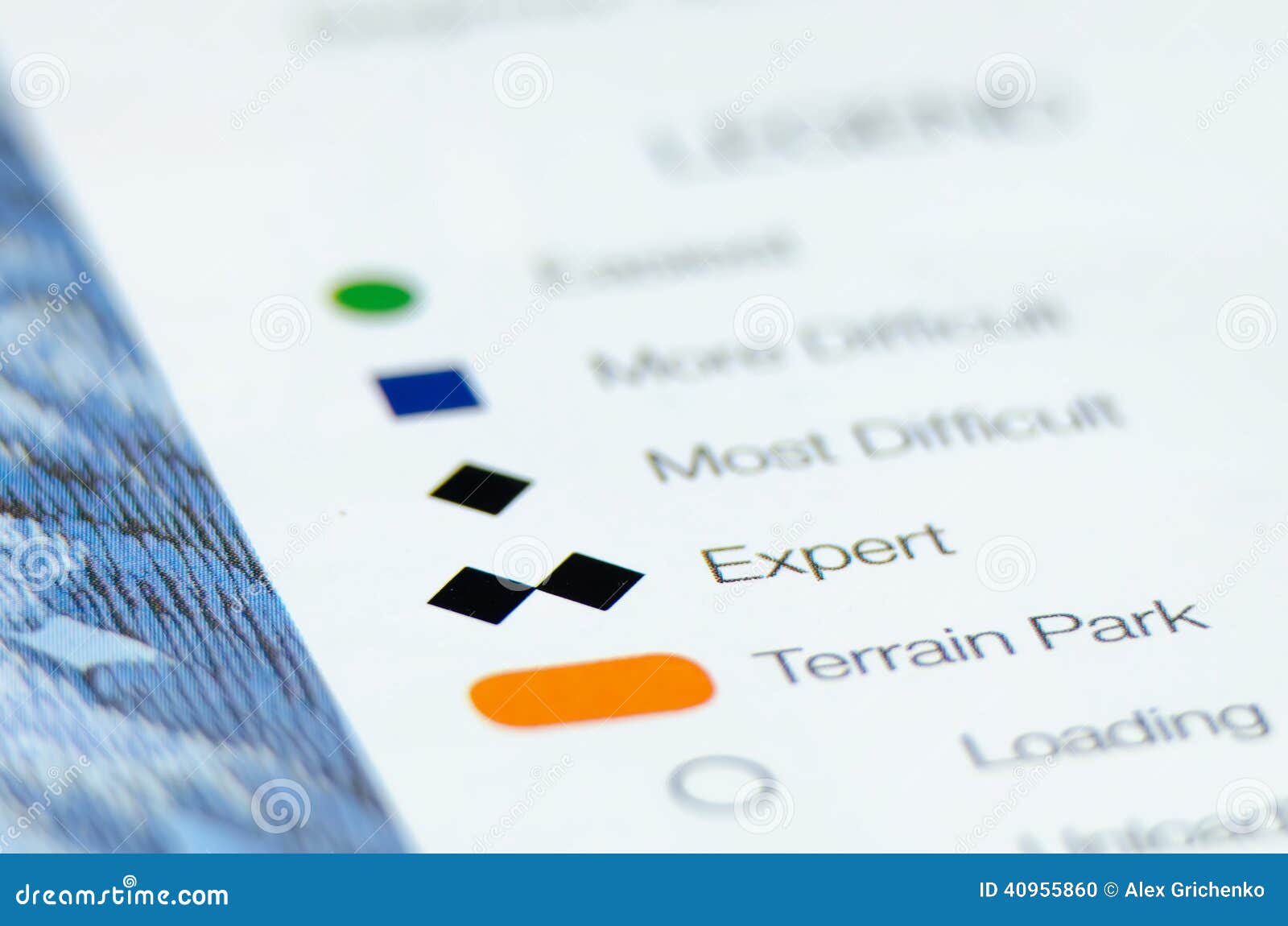
>>>>>> Single and double diamond?
>>>>>>
>>>>>> https://bbliss176.files.wordpress.com/2011/02/symbols2_jpg.jpg
>>>>>>
>>>>>> http://1.bp.blogspot.com/_2Rc9ifOGLYg/TO5fF0XNTSI/AAAAAAAAIxE/RJPvVDD6gLM/s1600/caution-double-black-diamond.jpg
>>>>>>
>>>>>> http://thumbs.dreamstime.com/z/double-black-diamond-sign-legend-ski-slopes-map-40955860.jpg
>>>>>>
>>>>>>
>>>>>> ↪ Shervin
>>>>>>
>>>>>> On Thu, May 28, 2015 at 12:46 PM, Philippe Verdy <[email protected]>
>>>>>> wrote:
>>>>>>
>>>>>>> Is there a symbol that can represent the "Bunny hill" symbol used in
>>>>>>> North America and some other American territories with mountains, to
>>>>>>> designate the ski pistes open to novice skiers (those pistes are
>>>>>>> signaled
>>>>>>> with green signs in Europe).
>>>>>>>
>>>>>>> I'm looking for the symbol itself, not the color, or the form of the
>>>>>>> sign.
>>>>>>>
>>>>>>> For example blue pistes in Europe are designed with a green circle
>>>>>>> in America, but we have a symbol for the circle; red pistes in Europe
>>>>>>> are
>>>>>>> signaled by a blue square in America, but we have a symbol for the
>>>>>>> square;
>>>>>>> black pistes in Europe are signaled by a black diamond in America, but
>>>>>>> we
>>>>>>> also have such "black" diamond in Unicode.
>>>>>>>
>>>>>>> But I can't find an equivalent to the American "Bunny hill" signal,
>>>>>>> equivalent to green pistes in Europe (this is a problem for webpages
>>>>>>> related to skiing: do we have to embed an image ?).
>>>>>>>
>>>>>>>
>>>>>>
>>>>>
>>>>
>>>
>>
>