http://www.marxist.com/egyptian-workers-take-the-lead.htm
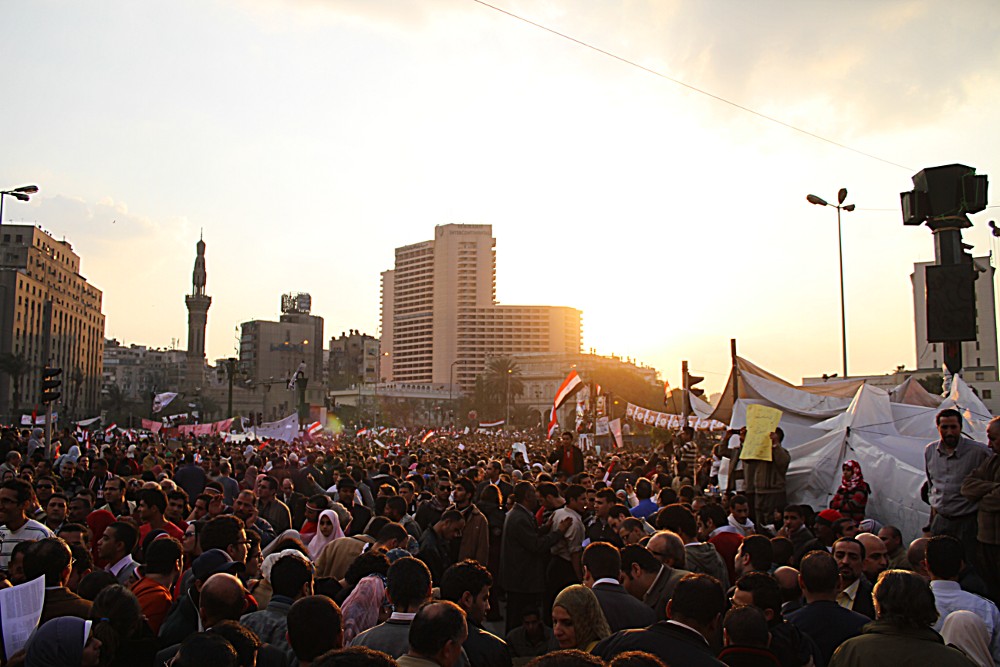
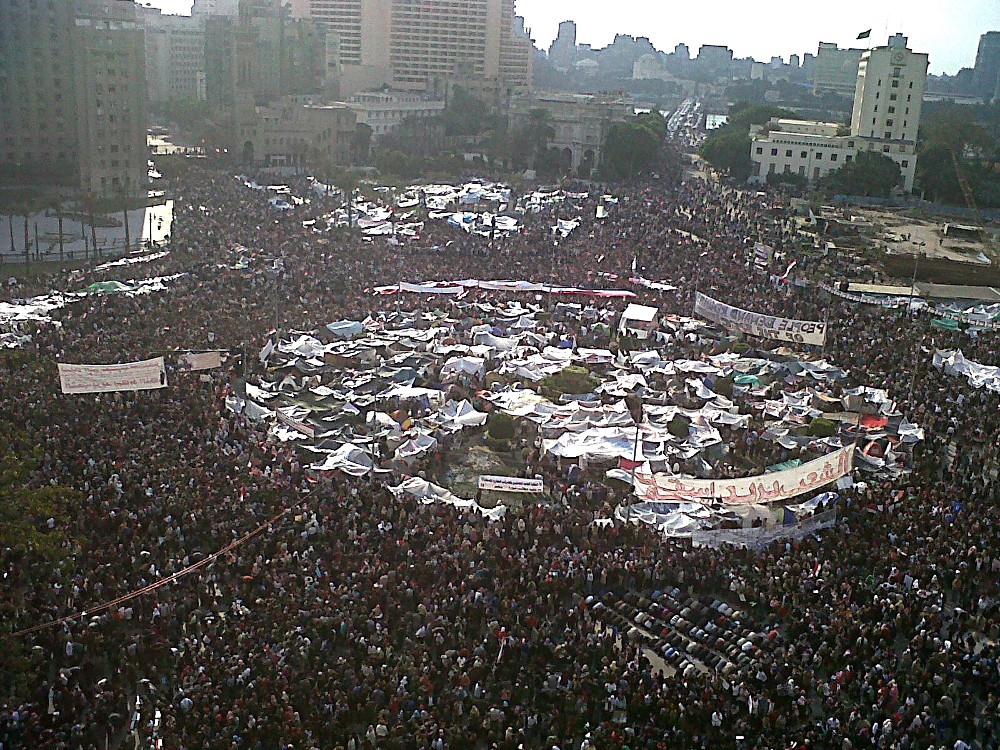
Egyptian workers take the lead<http://www.marxist.com/egyptian-workers-take-the-lead.htm> Written by Alan Woods Wednesday, 09 February 2011 [image: Print]<http://www.marxist.com/egyptian-workers-take-the-lead/print.htm#> *There are situations in which mass demonstrations are sufficient to bring about the fall of a regime. But Egypt is not one of them. All the efforts of the masses to bring about the overthrow of Mubarak through demonstrations and street protests have so far failed to achieve their principal objective. * <http://www.marxist.com/images/stories/egypt/Feb_8-omarroberthamilton.jpg> [image: Tahrir Square, 8 February. Photo: omarroberthamilton] The protests have left three hundred people dead and thousands more injured. They have forced the cabinet to resign, brought the army onto the streets and paralyzed Egypts economy. But it had not yet succeeded in overthrowing the government. On the other hand, the latter had not succeeded in re-establishing control. By Monday the situation in Egypt appeared to have reached a kind of stalemate. But every time the regime thinks it has succeeded in regaining the initiative, their hopes are dashed by the masses on the streets. Contrary to all expectations, the movement is continuing to advance and is reaching a new high point. Far from subsiding, the fury against Mubarak is increasing. Egyptian society is becoming sharply polarised. All the commentators were predicting that the movement was in decline. But the dramatic entry of the Egyptian proletariat on the stage of history marks a turning point in the destinies of the Revolution. Egypt is now being shaken to its very foundations by a mighty movement of the working class. In one city after another there are strikes and occupations. The revolution is moving onto a higher level. Yesterday *Ahram Onlin *reported: Labour protests escalated in Suez with textile workers joining in and demonstrating with 2000 others demanding their right to work. Ali Fuad, a worker at the station, said: We are having a sit-in today to demand our rights, which are in the text of the workers' law, our right to obtain the annual increase in salary which the management refuses to give us so we strike with all the laws that uphold the right of workers. Mohamed Abdel-Hakam factory, head of the factory syndicate, confirmed workers have continued their sit-in for a third day. In the city of Suez itself, around 2000 youths demonstrated to demand the chance to work. Amid expectations of growing labour protests in Suez, officials from the local council have attempted to meet the protesters and end the crisis. In Mahalla, more than 1500 workers of the Abu El-Subaa company in Mahalla demonstrated this morning, cutting the road, demanding their salaries and stating that it is not the first time. The workers have staged repeated sit-ins for two years as they demand their rights and mediation between the workers and the company's owner, Ismail Abu El-Subaa. More than 2000 workers from the Sigma pharmaceutical company in the city of Quesna have gone on strike demanding higher wages and benefits that have been suspended for years. The workers are also calling for the dismissal of managers who have ill-treated workers. New layers are being drawn into the struggle not just by the day but by the hour. The same report says: Around 5000 unemployed youths demonstrated this morning in front of Aswan governorate building, which they tried to storm. The protesters chanted their demand that the governor be dismissed. In Kom Ombo, around 1000 protesters called for the president, Hosni Mubarak, as security remained absent. Dozens of liver patients gathered in the governorate of Menoufeya at noon today over the lateness of their vaccinations. They were due to receive their treatment from the Hilal hospital three days ago. Dr. Murhaf El-Mougy, Menoufeya's general director of medical insurance, stated that the governorate was late in receiving the vaccination from its manufacturer. He attributed the delay to the curfew imposed during the demonstrations in Egypt. In Cairo, more than 1500 public authority for cleaning and beauty workers demonstrated in front of the authority's headquarters in Dokki. According to a statement by the head of the authority on Egyptian television, their demands include an increase in their monthly wages, to LE1200, and a daily lunch meal. The workers are also demanding for permanent contracts and the dismissal of the authority's president. And in Menya, thousands demanded the removal of the ruling regime in Egypt and Mubarak's resignation. Amid heavy security, the demonstrators marched towards the governorate building. In recent days, Menya has witnessed several demonstrations, most of them opposed to the regime. However, demonstrations in favour of Mubarak have been staged. Violence as a result of these protests has lead to 72 people being injured, demonstrators and security personnel, according to Dr Adel Abu Ziad, deputy of the ministry of health in Menya. The regime hangs on Up to this point the state was attempting to regroup its forces as the regime tried to capitalise on fears of insecurity. But the new upsurge in the movement has changed everything. Within sections of the army the belief was already growing that only Mubaraks departure can calm Egypts streets. The latest developments will have strengthened this belief. The ruling clique would be prepared to ditch Mubarak, but so far has not dared do so. They are under conflicting pressures. On the one hand, the Saudis and Israelis are demanding that Mubarak must stay. This is also the position of the CIA, which works in cahoots with the Saudis and Israelis. On the other hand, Obama and the State Department are pressing him to leave. At the centre of this complex parallelogram of forces is Mubarak himself. He has lost power, yet he retains power. The balance of forces cancels itself out, leaving him where he was before. The proposed compromise, basically that he should stay in power while in practice relinquishing, is an expression of the impasse at the top, which in turn is a reflection of the impasse of the Revolution itself. In Tunisia, a popular uprising forced Ben Ali into exile and overthrew the ruling party, although here also the fight is not finished. The Tunisian events convinced many Egyptians that their regime might prove equally fragile. The speed of Ben Alis flight to exile in Saudi Arabia persuaded Egypts dissidents that the correct demand was that Mubarak must go. The problem is that Mubarak refuses to go. Mubarak has shown that he is made of sterner stuff than Ben Ali. He is still hanging on, although with two black eyes. He has also shown a certain amount of low animal cunning. Mubarak eventually said he would gobut only at the end of his term in September. He is resigned to his fate but wishes to leave office with dignity. This promise which is rejected indignantly by the people on the streets, was accompanied by a subtle threat: accept my offer or prepare for the worst. Hosni Mubarak reminds one of other figures in history: Charles I of England, Louis XVI of France and Tsar Nicholas of Russia. The poet Blok described the Tsar during the last months of the monarchy as follows: Stubborn, but without will; nervous, but insensitive to everything; distrustful of people, taut and cautious in speech, he was no longer master of himself. He had ceased to understand the situation, and did not take one clearly conscious step, but gave himself over completely into the hands of those whom he himself had placed in power. These lines could be applied precisely to Mubarak in the hour of his final eclipse. For a man with not many cards in his hand, Mubarak has played his hand well. His calculations are quite astute. All the concessions offered by the regime have a fraudulent character. The new cabinet contained half the ministers of the previous government. Suleiman, the former head of Egyptian Intelligence, is his right hand man. As the French say: *Plus ça change, plus c'est la même chose*: The more things change, the more they stay the same. By offering a bare minimum of concessions, Mubarak hoped to drive a wedge between the revolutionaries and the more inert layers of the population who fear chaos and want a return to normality. On February 2 the two sides were fighting for possession of Tahrir Square. Mubarak was hoping the revolutionaries would clear the square, but they failed. The revolutionaries held their ground and grew in confidence. Hosni Mubarak is fighting for his survival. Suleiman is fighting for the survival of the regime. But the imperialists are fighting for the survival of capitalism and their puppet regimes in the Arab world. The latter are worried about where Egypts revolt will go, and how far it will spread. These are the big questions, and they are still unanswered. In the end the old man may announce an early retirement on health grounds. But so far Mubarak has shown himself to be extremely stubborn. He is placing his interests and those of the clique around, above those of the imperialists. Exactly thirty years ago Anwar Sadat was assassinated by his own guards. This could happen again. It would not be impossible to arrange for Mubarak to go in the same way. But the clique that controls the army and the state is afraid to resort to such measures. The removal of Mubarak would open the floodgates and they fear that the raging waters would sweep them all away. Negotiations The ruling class has many strategies for defeating a Revolution. If it cannot do so by force, it will resort to cunning. The old regime attempted to crush the uprising with force on Wednesday, 2 February, but it failed. The defeat in Tahrir Square unnerved the ruling clique completely. Mubarak has disappeared from the scene. Behind locked doors the rulers of Egypt argued about what was to be done. And all the time the phone was ringing. Washington is demanding action in increasingly imperious tones. And Washington pays the bills. After Wednesday the regime was staring defeat in the face, and when the ruling class faces the prospect of losing everything they will always offer concessions. Belatedly, the ruling clique realized that it would be necessary to do a deal with the leaders of the opposition. Another face must be presented to the people. Mubarak was quietly pushed into a side room. Without a word, Suleiman took the reins of power. Facing the danger of losing everything, Suleiman and all his generals and ministers, are now for a compromise. But it must be a compromise that will maintain their power and privileges. Suddenly the regime is willing to talk. Suleiman offered to negotiate with the opposition. Last week they were only prepared to talk the language of concrete slabs, clubs and Molotov cocktails, now it is all smiles, handshakes and conference tables. Following advice from Washington and London, they have not renewed the attempt to take the Square by force. Suleiman says: We will not disperse them by force. The tanks do not move. Nor do the pro-Mubarak mobs make an appearance. Their masters have ordered them to keep out of sight, as the owner of a dog calls it to come to heel. Since they have been defeated on the streets they are trying to strike a bargain, that is, try to fool the leaders of the opposition, so that they in turn can fool the masses. The idea is that once the initiative is in the hands of the negotiators, the masses will become mere passive onlookers. The real decisions will be made elsewhere, behind locked doors, behind the backs of the people. And what can the people do? Remain on the Square shouting slogans? But the regime has already taken this into account. Obama and the Europeans say to Suleiman: Why go to the bother of using force? That has already failed and only creates public sympathy for the troublemakers. It can split the army down the middle and then you will be in serious trouble. Better leave them alone. Close off the Square and box the protesters in there. Then you only have to wait until they get tired. The movement will collapse like a balloon that runs out of air. After a while there will only be a handful left. Then you can do what you like with them. The problem is that the movement is not prepared to give up the fight. What the regime is now counting on is that the so-called leadership of the protest movement may be able to rein in the masses for them. What does the Muslim Brotherhood stand for? The leadership of the protest movement, like the movement itself, contains diverse elements and different ideological tendencies. At this stage there is a lot of emphasis on unity. One of the leaders of the youth told Al Jazeera that the demands of the youth were not "classist," and that corruption and repression weigh on all layers of society. This is typical of the early stages of the Revolution. Initially every revolution appears to be a great carnival of national unity, where the illusion is created that all classes are united in a common struggle for change. However, as the struggle proceeds, there will be changes. As the movement becomes more radicalized, some of the elements who played a leading role in the early stages will fall behind. Some will abandon it; others will go over to the enemy. This corresponds to different class interests. The poor people, the unemployed, the workers, the men of no property have no interest in maintaining the old order. They want to sweep away not only Mubarak but the entire regime of oppression, exploitation and inequality. But the bourgeois Liberals see the struggle for democracy as the path to a comfortable career in parliament. They have no interest in carrying through the Revolution to the end or of disturbing existing property relations. This process of inner differentiation has already begun. By offering to negotiate, Suleiman wished to win over the moderate (i.e. bourgeois) elements in the opposition. He even offered to negotiate with the Muslim Brotherhood, which is a banned organization. The purpose of this is to gain time, to confuse and disorient the movement and to trick the opposition into making a deal with the oligarchy and preserve the system. There is an old saying: if you sup with the Devil, use a long spoon. But these gentlemen, in their indecent haste, fell right into the soup. A serious revolutionary leadership would understand that this was a confession of extreme weakness. It would continue to attack until the regime fell. It would give it no time to recover its nerves and rally its forces. But a section of these leaders is neither revolutionary nor serious. For them the mass movement is only a convenient bargaining chip, something with which they can threaten the government to give them a few more crumbs. The Muslim Brotherhood had declared that it would not negotiate with the government until Mubarak steps down. ElBaradei has described pro-Mubarak demonstrations as criminal acts by a criminal regime. But the moment the regime beckoned with its little finger the leaders of the opposition fell over themselves to accept Suleimans offer, forgetting all their brave words about not negotiating until Mubarak goes. Significantly, the leaders of the Muslim Brotherhood, after initially refusing to negotiate, changed their minds and joined this pleasant little party. One of their leaders went onto Tahrir Square, where the protestors were standing firm and preventing the tanks from occupying the Square with their bodies, appealing to them not to clash with the army. Clearly, the hard line Islamists are as frightened of the revolutionary masses as the regime itself. The poor people who support the Brotherhood are one thing. The leaders are another thing altogether. In the 1980s leaders of the Brotherhood were key beneficiaries of economic liberalizationthe programme of *infitah* or openingunder which Sadat and then Mubarak dismantled the state sector, favouring private capital. One study of Brotherhood businessmen suggests that at this point they controlled 40 percent of all private economic ventures. They are part of the capitalist system and have every interest in defending it. Their conduct is not determined by the Holy *Quran *but by class interest. Sitting next to the Muslim Brothers on the negotiating table are certain individuals who call themselves the representatives of the youth on Tahrir Square. Since nobody ever elected them, it is hard to see who they really represent, other than themselves. But their presence around the table is important for the regime, which can present itself before the television cameras as eminently reasonable and willing to listen to all points of view. In this way the people who remain on the Square can be presented to public opinion as extremists, people who are not willing to engage in dialogue to solve the nations problems. The laws of revolution The laws that govern revolution have many features in common with those that govern wars between nations. War is not a continuous battle. There are a series of battles, which are won or lost, or end inconclusively. But between battles there are long periods of inactivity when nothing seems to happen. But there is a constant ebb and flow. Certain layers get tired and drop out of activity. But they are constantly replenished with new, fresh layers moving into struggle. The Revolution still has considerable reserves. These reserves are now mobilizing for action. <http://www.marxist.com/images/stories/egypt/Feb_8_Tahrir_Square-monasosh.jpg> [image: February 8, Tahrir Square. Photo: monasosh] To say that a revolution has begun is not to say that it has been completed, or even that victory is assured. It goes without saying that revolution is a struggle of living forces. The counterrevolutionaries have a lot to lose and they are acting intelligently and with decision. But the leadership of the revolutionaries is divided and does not speak with one voice. That is the main problem. The enemy noticed this hesitation and began to recover its nerve. They began to feel more confident and redouble their manoeuvres and intrigues, basing themselves on the more moderate sections of the opposition. This was a dangerous situation. If the movement had been allowed to stagnate the confidence of the streets would have begun to ebb and the initiative would have passed into the hands of the regime. That was the aim of Suleiman when he offered to negotiate with the opposition. These negotiations were only a trick of the regime to gain time and to deprive the demonstrators of the initiative. That could have been fatal to the Revolution. On Monday, 7 February the banks were opened for the first time since the protests began but the stock exchange remained closed for fear that it would lead to a rush to sell. This pessimistic perspective was confirmed the very next day. Unwittingly, by ordering a resumption of business, the regime miscalculated. This has allowed workers and students to come together, hold mass meetings, discuss the situation and take collective action. As a result, students are agitating on the campuses. Workers are staging strikes and factory occupations, driving out hated managers and corrupt trade union leaders. The sudden entry of the workers onto the scene as an independent revolutionary force has changed everything. On Tuesday, the protesters mounted their biggest demonstrations so far. Thousands again took to the streets and squares of Egyptian towns - from the Western desert on the Libyan border up to the northern Sinai town of El Arish in the east. In Cairo, Alexandria, the Delta Cities, the industrial belt around Mahalla-el-Kebir and the steel city of Heluan, the masses came onto the streets shouting "Death to Mubarak!" and "Hang Mubarak!" The Revolution cannot stand still A Revolution cannot stand still. It must constantly advance, striking blows against the enemy, capturing one position after another until the old order is utterly overthrown. If it hesitates, it is lost. Marx pointed out that the Paris Commune failed because it did not march on Versailles. This gave time for the counterrevolutionary forces to regroup and prepare a decisive counteroffensive against revolutionary Paris. At several moments during the past two weeks power was in the streets. But having won power in the streets, the leaders of the movement did not know what to do with it. The idea that all that is necessary is to gather a large number of people in Tahrir Square was fatally flawed. Firstly, it leaves the question of state power out of account. But this is the central question that decides all other questions. Secondly, it is a passive strategy, whereas what is required is an active and offensive strategy. It is true that in war defence can be transformed into offense. A decisive moment was on Thursday and Friday. After the revolutionaries had defeated the attacks of the counterrevolutionaries and regained the initiative, they should have gone onto the offensive. By confining the action on Friday to a mass demonstration in Tahrir Square, they allowed the initiative to slip from their hands and into those of the enemy. Suleiman is playing for time because time is not necessarily on the side of the Revolution. Society cannot continue indefinitely in a chaotic situation. People must live. The economy is losing 300 million Euros a day in lost tourist revenues alone. Bread becomes scarce in the shops as time goes on, people cannot get to work. Wages are not paid. People can start to blame the protesters for provoking chaos. The call for order can get an echo in these conditions. There are certain indications that this process was beginning. An Al Jazeera report summed up the situation thus: It was clear the government was attempting to return a sense of normalcy to the city; businesses and banks were set to open on Sunday, and the army was intent on clearing away all signs of discord but for the crowd in the square. Men in fluorescent vests even went about clearing debris and trash from the streets where protesters had died just nights before. Fortunately, the most revolutionary wing of the opposition realized the danger. The same report from Al Jazeera quoted one of the youth leaders as follows: But as high-ranking opposition figures negotiate a transition with Mubarak's right-hand man, former intelligence chief and newly appointed Vice-president Omar Suleiman, Mohammed Sohail and the men on the rooftops remain dug in, hoping for a complete overhaul. After the thugs' attack on Wednesday, they will not accept negotiation with Mubarak. He's hiding a dagger behind his back. These words express the real situation very well. The problem of leadership The Revolution in Tunisia and Egypt came from below. It was not organized by any of the existing political parties or leaders. All of them were left far behind by a movement they had not foreseen and for which they were completely unprepared. The spontaneous character of the Revolution has inclined some observers to believe that it in some way represents a confirmation of the theories of anarchism. But the opposite is rather the case. The argument that we do not need leaders does not bear the slightest scrutiny. Even in a strike of half an hour in a factory there is always leadership. The workers will elect people from their number to represent them and to organize the strike. Those who are elected are not arbitrary or accidental elements, but generally the most courageous, experienced and intelligent workers. They are selected on that basis. Leadership is a very important element in war. This is not to say that it is the only element. Even the most brilliant leaders cannot guarantee success if the objective conditions are unfavourable. In the American Civil War the South had far more capable generals than the North, and this was an important factor in its initial victory. The Northern generals were mostly very bad, but the North had a far bigger population and was more able to sustain heavy losses. Above all it had a powerful industrial base, which the agricultural slave states of the South lacked, and it had a lot of money. The combination of financial wealth, industry and manpower ultimately guaranteed success, in spite of poor generals. In the end it is the most determined revolutionary elements that will remain standing: those who are not prepared to compromise and are willing to go to the end. And in this it is the youth who play a key role. In 1917 the Mensheviks accused the Bolsheviks of being just a bunch of kids, and they were not entirely wrong. The average age of the Bolshevik activists was very low. The first section to move is always the youth, who are free from the prejudices, fear and scepticism of the older generation. In Egypt we again see the same thing. The protestors who have poured onto the streets all over Egypt are mainly young Egyptians, unemployed and without any future. One young Egyptian told the BBC: We are poor. We have no work, no future. What should we do? Should we burn ourselves? The only hope these young people have is to fight for a fundamental change in society. They have cast aside all fear and are prepared to risk their lives in the fight for freedom and justice. The youth and the most revolutionary elements do not want the movement to be hijacked by the moderates who are bargaining with the regime like merchants haggling in a bazaar. But the question remains: how to carry the Revolution forward? What needs to be done? The demonstrators have done everything possible. They have shown great courage and determination. But the limitation of the tactics pursued up till now are becoming clear by the hour. In order to carry the Revolution to a higher level, another force is necessary. This can only be provided by the working class. An all-out general strike would transform the entire situation. It would demonstrate clearly who the real master of the house is. The role of the proletariat The economic growth of Egypt in the last years was a very positive development from the standpoint of the Marxists because it strengthened the working class. However, it did not solve any of the fundamental contradictions of Egyptian society. The last few years have seen a sharp upswing in strike activity in Egypt, notably the heroic struggle of textile workers of Mahalla. This reawakening of the proletariat was one of the main factors that prepared the present situation. It is also the key to the situation. <http://www.marxist.com/images/stories/egypt/real_estate_tax_collectors-3arabawy.jpg> [image: Workers from the militant independent union of real estate tax collectors. Photo: 3arabawy] Recent reports speak of large groups of workers, mainly in Cairo, rebelling against state-appointed managements and setting up "Revolutionary Committees" to run factories and other work places, including Egyptian state TV and Egypt's biggest weekly "Ros el-Yusuf." There is a wave of strikes, many of them involving different forms of sit-ins and factory occupations. The telecom workers in Cairo are on strike, and the strike seems to be spreading to other cities: Maadi, Opera, MisrElgedida, Ramsis, and Alexandria. The workers are protesting against corruption and low salaries. In the key city of Suez, the workers have occupied the Suez Trust Textile plant. Around 1000 workers in the Lafarge cement factory in Suez are also on strike. Among their demands: the forming of a union and support for the revolution. The Tora cement workers have started a sit in to protest against their intolerable working conditions. At the same time there is a movement to get rid of the old corrupt leaders of the unions (syndicates) who are agents of the ruling party and the bosses. The employees at the Workers University in Nasr City are staging a sit in, and according to one report, there has been the kidnapping of the vice president of the official ETUF union, Mustapha Mungy, by employees of the Workers University, which is affiliated to the General Trade Union Federation "ETUF". In the course of a sit-in the workers detained him and demanded his removal and the opening of investigations into widespread corruption in the Workers University. The official Al-Ahram news agency carried a report entitled: "Employees detain vice president of Egyptian workers union, which reported: The vice president of the Egyptian Workers Union, Mostafa Mongy, has been detained since Monday morning by employees demanding his immediate resignation. (*Ahram Online , Monday 7 Feb 2011*) The Center for Trade Union & Workers' Services (CTUWS) presented a Communication to the Public Prosecutor demanding the issue of an order against Hussein Megawer, president of the ETUF, preventing him from travelling abroad and investigating the sources of his wealth. On Tuesday 8th university professors staged a march in support of the revolution, joining the protesters in Tahrir. Also at 12 noon, journalists will gather at their union HQ, in an emergency meeting to lobby for the impeachment of their state-backed union chief, Makram Mohamed Ahmed. The journalists are also on the move. They have attacked the state backed head of the syndicate shouting: murderer, murderer! Journalists marched from their union HQ to Tahrir Square, denouncing the government. Journalists have started collecting signatures to impeach the state backed press syndicate head. In all the state run newspapers journalists are in revolt against their pro-government editors. The movement is spreading like a forest fire. The railway technicians in Bani Suweif are on strike. At least two military production factories in Welwyn are on strike. Public transport workers in three garages are on strike. Thousands of oil workers are protesting in front of the oil ministry. Tomorrow more oil workers from the provinces will descend on Nasr City to join protests in front of the oil ministry, and the Ghazl Mahalla workers will also start a strike Many of the strikes are economic, but others are political in character. An interview with Hossam El-Hamalawy on Sunday 6 stated: "It's been two days since the workers said that they wouldn't return to work until the fall of the regime. There are four hotbeds of economic struggle: a [steel] mill in Suez, a fertilizer factory in Suez, a textile factory near Mansoura in Daqahlia (the Mansoura-España garment factory in the Nile Delta region) on strike they have fired their CEO and are self-managing their enterprise. There is also a print shop in southern Cairo called Dar al-Matabi: there, too, they fired their CEO and are self-managing the enterprise. But, while workers are participating in the demonstrations, they are not developing their own independent action as workers. We still have not seen workers independently organize themselves en masse. If that comes, all the equation of the struggle will change."( http://mrzine.monthlyreview.org/2011/hamalawy080211.html) On Wednesday the three independent unions that exist in Egypt (Property Tax Collectors, Health Technicians and Pensioners Federation) demonstrated in front of the headquarters of the state backed Egyptian Federation of Trade Unions, in Galaa Street, calling for the prosecution of the federation chief on corruption charges, and demanding the lifting of all restrictions on establishing free unions. The civil servants then marched to Tahrir Square in support of the revolution. They are not the only ones. Delegation after delegation of workers is arriving on the Square to express their solidarity with the demonstrators and discuss the future of the Revolution. These reports are of tremendous importance. *They mean that the Revolution is entering the factories and workplaces.* They signify that the workers of Egypt are proceeding from the struggle for democracy in society to the struggle for economic democracy in the workplace. It means that the Egyptian working class is beginning to participate in the Revolution under its own banner, fighting for its own class demands. This is a decisive factor for the future of the Revolution. The idea of a general strike is in the air. The demands of the workers have a clear revolutionary and class character. The workers of Egypt are drawing the most advanced conclusions. This is strikingly revealed in the statement of the Iron and steel workers in Helwan, who are calling for a major workers rally next Friday to Tahrir Square. They are advancing the following demands: 1. the immediate stepping down of Mubarak and all the figures of the regime and its symbols 2. the confiscation of wealth and property of all the regime's symbols and all those to be proven to be corrupt, on behalf of the interest of the masses 3. the immediate resignation of all workers from the trade unions controlled by or affiliated to the regime and declaring their independent unions now preparing their general conference to elect and form their syndicate 4. the acquisition of public sector companies that have been sold or closed and the declaration of nationalizing them on behalf of the people and the formation of a new administration to run it, involving workers and technicians 5. the formation of committees to supervise workers in all work sites and monitor the production and distribution of prices and wages 6. call for a constituent assembly of all classes of people and trends for the drafting of a new constitution and the election of people's councils without waiting for the negotiations with the former regime. What now? These demands are absolutely correct. They show a very high level of revolutionary consciousness and coincide completely with the programme that has been advanced by the Marxists. This programme provides the Egyptian Revolution with all it needs to succeed. The immediate demands are naturally democratic in character. But the fight for democratic demands, if it is pursued consistently, must lead directly to the demand for economic democracy. The poor people of Egypt do not fight for democracy in order to provide ministerial positions for careerists but as a means of solving their most pressing problems: the lack of jobs and houses, the high cost of living. These economic and social problems are too deep to be solved by any bourgeois government. *The Economist* writes: Some 40% of Egyptians still live on less than $2 a day. In recent years, even as Egypts overall economy has grown apace and more consumer goods have filled even lower-income households, the poor have won little relief from relentlessly rising food prices and sharper competition for secure jobs. Such anxieties have found expression in a growing number of strikes and local protests across the country. Yet in a sense, persistent poverty has helped prop up the regime. People survive on a day-to-day basis, says a young Cairo lawyer. They cant go for long without a daily wage and daily bread, so they cant afford to make trouble. The present movement cannot succeed unless it is taken to a new and higher level. This can only be done by the working class. Mass demonstrations are important because they are a way of bringing the formerly inert masses to their feet, giving them a sense of their own power. A new and higher level involves the calling of a general strike. In such a situation Mubarak and Suleiman may have the formal titles. They may sit in the presidential palace. They may stand at the head of the army and the police. But they will have no telephones, no electricity, no transport, no fuel, no food and no water. Under these conditions, a general strike accompanied by massive demonstrations would pose the question of power. An all-Egyptian general strike would deal a mortal blow to the regime, which is already in crisis. The old state power is breaking up. It must be replaced with a new power. The workers of Egypt have a tremendous power in their hands but it must be organized. That can only be done through revolutionary committees. Under these conditions, a general strike accompanied by massive demonstrations would pose the question of power. This poses the central question, that of the state. The general chaos and disorder and the persistent reports of security agents engaging in arson and thievery convinced people that the chaos was planned. This has now led to the organisation of citizens militias in many parts of the country. Hossam el-Hamalawy, in the same interview quoted above, describes how they were formed: "Following the collapse of the police force on January 28th, people stepped in to protect their neighbourhoods. They have set up checkpoints, armed with knives, swords, machetes and sticks and they are inspecting cars that are coming in and out. In some areas, such as the province of Sharqiya, the popular committees are more or less completely running the town, and organizing the traffic. Here we have the embryo of a peoples militia of an alternative state power. The latest reports indicate that, in desperation, Suleiman is even considering a coup. The problem he faces is that the army is already split. In these conditions an open confrontation with the working class and the revolutionary masses would strain its internal cohesion to breaking point. If the Egyptian regime attempts to use the army, it can break in pieces in its hands. Suleiman, the new strongman may stand at the head of the army and the police. But if he went down the road of organising a coup he could find himself with no telephones, no electricity, no transport, no fuel, no food and no water. The old state power is breaking up. It must be given a final push and replaced with a new power. Only the proletariat can show a way out by placing itself at the head of the Nation. The workers of Egypt have a tremendous power in their hands but it must be organized. That can only be done through the establishment of revolutionary committees. In some areas committees exist, but they must be extended to every workplace, neighbourhood, school and college, and they must be coordinated on a national scale. Imperialist intimidation Faced with a revolution that continues to march forward, all the plans of the imperialists are now in ruins. The situation that they hoped was under control is out of control. Ahram Online yesterday reported that the Suez Canal Company workers from the cities of Suez, Port Said, and Ismailia had begun an open-ended sit in. This threatens to disrupt shipping movements if the strike continues. Over 6000 protesters have agreed that they will continue their protest in front of the company's headquarters until their demands are met. They are protesting against poor wages and deteriorating health and working conditions. In desperation, Washington has sent U.S. naval, marine and air forces to the Suez Canal's Greater Bitter Lake. This is the mailed fist that is concealed within the velvet glove of Obamas democracy. The imperialists are worried about the effects of the Egyptian revolution on the Suez Canal through which about 40 percent of the world's marine freight passes. Should it be disrupted for any length of time it could have repercussions far beyond Egypt itself, directly affecting oil transportation and subsequently the price of oil. In reality this is an empty gesture on the part of Washington. The U.S. burned its fingers in Iraq. A new military adventure in Egypt is highly unlikely. It would provoke a storm in the USA and on a world scale. There would not be a single U.S. embassy left standing in the Middle East and all the other pro-US Arab regimes would be faced with overthrow. However, it does represent an attempt to intimidate the people of Egypt. This attempt at imperialist bullying must receive a powerful rebuff by the international labour movement. Let us raise our voice in support of our class brothers and sisters in Egypt: - Hands off Egypt! - Down with imperialism! - Solidarity with the Egyptian Revolution! Every class conscious worker in the world will rejoice at this marvellous movement of the Egyptian workers and youth. Whatever happens in the next days and weeks Egypt, the Middle East and the whole world will never be the same again. *London, 9 February, 2011* [Non-text portions of this message have been removed] ------------------------------------ --------------------------------------------------------------------------- LAAMN: Los Angeles Alternative Media Network --------------------------------------------------------------------------- Unsubscribe: <mailto:[email protected]> --------------------------------------------------------------------------- Subscribe: <mailto:[email protected]> --------------------------------------------------------------------------- Digest: <mailto:[email protected]> --------------------------------------------------------------------------- Help: <mailto:[email protected]?subject=laamn> --------------------------------------------------------------------------- Post: <mailto:[email protected]> --------------------------------------------------------------------------- Archive1: <http://www.egroups.com/messages/laamn> --------------------------------------------------------------------------- Archive2: <http://www.mail-archive.com/[email protected]> --------------------------------------------------------------------------- Yahoo! Groups Links <*> To visit your group on the web, go to: http://groups.yahoo.com/group/laamn/ <*> Your email settings: Individual Email | Traditional <*> To change settings online go to: http://groups.yahoo.com/group/laamn/join (Yahoo! ID required) <*> To change settings via email: [email protected] [email protected] <*> To unsubscribe from this group, send an email to: [email protected] <*> Your use of Yahoo! Groups is subject to: http://docs.yahoo.com/info/terms/