Very dangerous research.
Hitler, Stalin, etc would love it.


B


http://www.timesofisrael.com/how-to-tame-a-male-weizmann-researchers-may-have-the-answer/?utm_source=Start-Up+Daily&utm_campaign=ead4eeb1d2-2015_11_13_SUI11_13_2015&utm_medium=email&utm_term=0_fb879fad58-ead4eeb1d2-54733725


How to tame a male? Weizmann researchers may have the answerIsraeli
scientists may have found the key to violent, confrontational and all-round
aggressive male behavior

By David Shamah <http://www.timesofisrael.com/writers/david-shamah/> November
13, 2015, 2:34 pm 2
<http://www.timesofisrael.com/how-to-tame-a-male-weizmann-researchers-may-have-the-answer/?utm_source=Start-Up+Daily&utm_campaign=ead4eeb1d2-2015_11_13_SUI11_13_2015&utm_medium=email&utm_term=0_fb879fad58-ead4eeb1d2-54733725#comments>

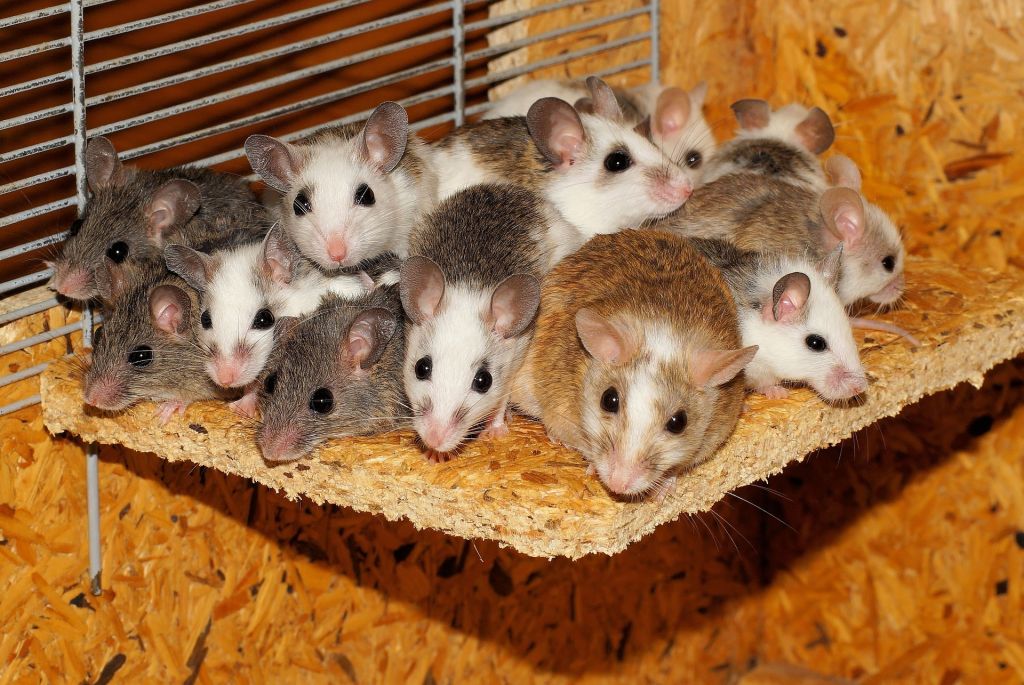
[image: Description: Illustrative photo of mice (Pixabay)]
<http://cdn.timesofisrael.com/uploads/2015/11/mice-800875_1920.jpg>

Illustrative photo of mice (Pixabay)


Researchers at the Weizmann Institute have discovered what could be the
secret to civil behavior in men — a protein that makes them less aggressive
and more accepting of strangers. With further research, the Weizmann team
hopes to better understand how aggressive behavior is set off, and perhaps
better ways to control that behavior.

That “men are from Mars” has been clear for a long time — at least since
1993, when the eponymous book that also pegged women as “being from Venus”
was released. That “martian” aspect of male behavior refers to the warlike
qualities associated with Mars – qualities seen in the male gender in
mammals from humans on down, all the way to mice.

It was research on aggressive and maternal behavior in mice that the
Weizmann Neurobiology Department team, including Dr. Tali Kimchi and her
graduate student Niv Scott, in collaboration with Dr. Ofer Yizhar and Dr.
Matthias Prigge, a postdoctoral fellow in his lab, that yielded evidence
that a protein known as tyrosine hydroxylase, or TH, was associated with
aggression in males.

Activate TH-containing neurons in male mice, and their aggression level
went down significantly; take some away, and the males were as wild and
violent as ever.

The data on male aggression was actually an unanticipated finding in the
research the team was doing, which was concentrated on trying to determine
if there was a neurochemical trigger that prompted maternal behavior in
females. In research published
<http://www.nature.com/nature/journal/v525/n7570/full/nature15378.html>
last month in the journal Nature, the team described the results of its
research, which highlighted the role of TH in both maternal behavior in
females, and aggressive behavior in males. While TH is found in both male
and female brains, it affects the genders in profoundly different ways.

It’s long been observed that female mice, even those that have never had
offspring, act in ways that can be defined as maternal. For example, they
will carry a baby left in the corner of the cage back to the nest, and
spend time grooming a newborn. This tendency becomes amplified once those
mice turn into mothers. Males, in contrast, are generally aggressive and
territorial. They may ignore strange pups or else violently attack them.
However, males will become parental for a short period after mating with a
female, starting around the birth of their pups.

To understand how parenting behavior works, the researchers zeroed in on a
small structure in part of the brain known as the hypothalamus, called the
anteroventral preventricular nucleus, or AVPV, which is larger in female
mice than in males. TH-containing neurons, they found, are also more
prevalent in females – leading the researchers to suspect that the protein
could be associated with the enhanced female parental behavior.

Using advance genetic and neuro-biochemical tools, the team first increased
and then decreased the amount of TH in both adult male and female mice –
just in neurons of this particular brain region. Then the researchers
recorded how these changes affected the parenting styles of the mice. The
team also employed optogenetic technology, in which neurons are activated
by light, to precisely manipulate the activity of TH-containing neurons –
literally, at the flip of a light switch.

The researchers found that they were able to trigger maternal actions in
female mice – both virgins and mothers – by elevating the TH levels in
these neurons. Even stimulating the neurons optogenetically for just a few
minutes was enough to turn on the female’s motherly instincts, sending her
scurrying back to the nest to ensure that the pups were safe.

Manipulating the neurons even affected other aspects of mothering behavior,
including enhancing blood levels of oxytocin – a hormone associated, among
other things, with lactation and female reproductive behavior in general.
Stimulating the neurons increased activities in those areas as well, while
“turning off” the neurons using the team’s advanced techniques lowered
their levels of oxytocin and severely impaired their maternal instincts.

In males, however, the effects were quite different. Efforts to increase
nurturing behaviors by activating TH-containing neurons failed; the male
mice were no more “fatherly” than they had been before. But they were, it
turned out, less aggressive – less inclined to attack other mice, whether
pups or males, even in circumstances where aggression could be expected,
like when another male got too close to a mouse’s “comfort zone.” The more
TH-containing neurons activated in the brain, the less aggressive a mouse
was; but reducing the neurons caused mice to act more aggressively than
ever.

“By controlling the amount and activities of these unique neurons, we were
able to manipulate the maternal behavior of the females and the aggression
of the males,” says Kimchi. “Our results hint that maternal behavior arises
from neuronal networks that are largely hardwired. These are different from
those of males, and they are at least partly regulated by the hormone
oxytocin.”

The findings may in the future provide insight into the ways that male and
female brains function when it comes to such conventional gender-related
activities as tending to infants, and other innate reproductive and social
behaviors, the researchers said.

Kimchi hopes that this discovery “may ultimately advance our understanding
of the biological factors that contribute to mental disorders, which have a
social aspect, as well as gender differences. These include postpartum
depression, aggression and autism spectrum disorders,” he added.


__._,_.___
------------------------------
Posted by: "Beowulf" <[email protected]>
------------------------------


Visit Your Group
<https://groups.yahoo.com/neo/groups/grendelreport/info;_ylc=X3oDMTJmMzRxNGF0BF9TAzk3MzU5NzE0BGdycElkAzIwMTk0ODA2BGdycHNwSWQDMTcwNTMyMzY2NwRzZWMDdnRsBHNsawN2Z2hwBHN0aW1lAzE0NDc0Mjc3Mzc->


[image: Yahoo! Groups]
<https://groups.yahoo.com/neo;_ylc=X3oDMTJlMnBjdWtoBF9TAzk3NDc2NTkwBGdycElkAzIwMTk0ODA2BGdycHNwSWQDMTcwNTMyMzY2NwRzZWMDZnRyBHNsawNnZnAEc3RpbWUDMTQ0NzQyNzczNw-->
• Privacy <https://info.yahoo.com/privacy/us/yahoo/groups/details.html> •
Unsubscribe <[email protected]?subject=Unsubscribe>
• Terms of Use <https://info.yahoo.com/legal/us/yahoo/utos/terms/>

__,_._,___

--
--
Thanks for being part of "PoliticalForum" at Google Groups.
For options & help see http://groups.google.com/group/PoliticalForum

* Visit our other community at http://www.PoliticalForum.com/
* It's active and moderated. Register and vote in our polls.
* Read the latest breaking news, and more.

---
You received this message because you are subscribed to the Google Groups
"PoliticalForum" group.
To unsubscribe from this group and stop receiving emails from it, send an email
to [email protected].
For more options, visit https://groups.google.com/d/optout.